The main points
- Put down as reef structure, exactly like the ships.
- Almost nobody arrives expecting an aircraft on the bottom.
- Light alloy airframes open up faster than a steel hull.
- A fuselage is a tube full of holes, which is exactly what fish want.
Yes, there are aeroplanes down there
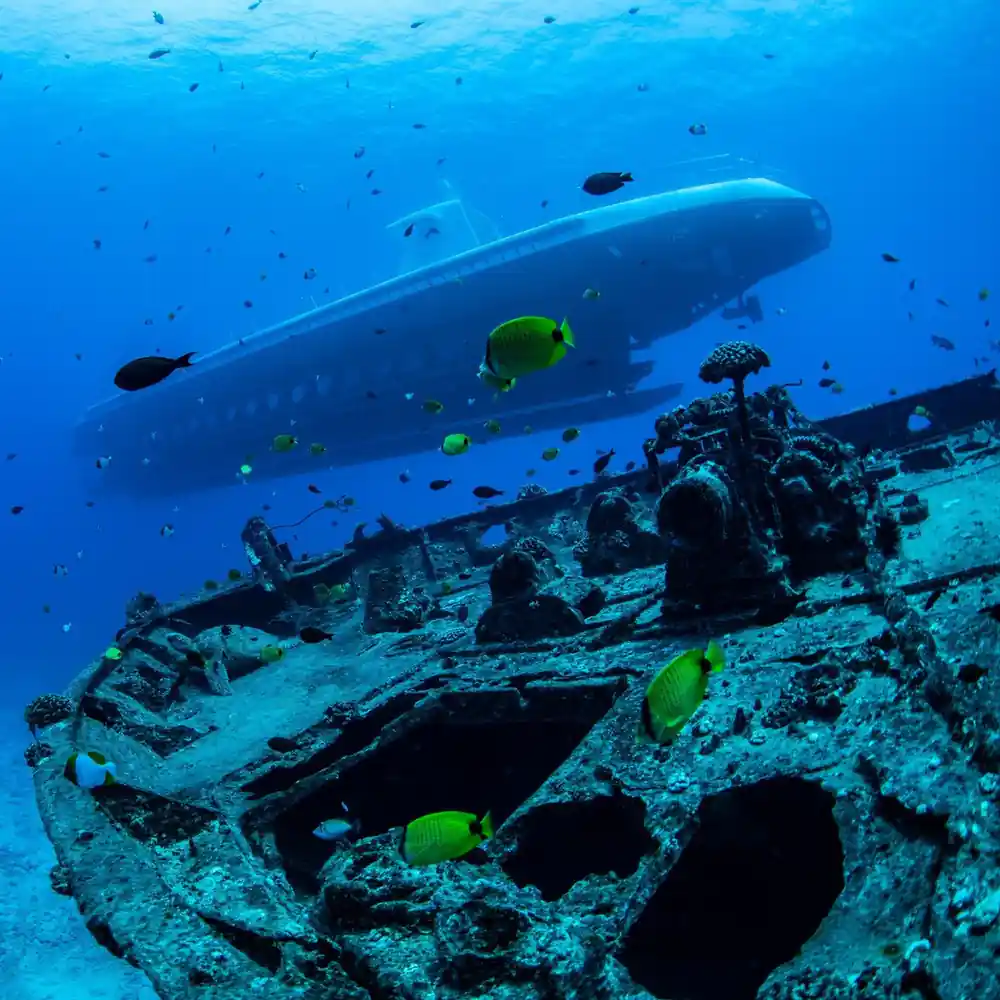
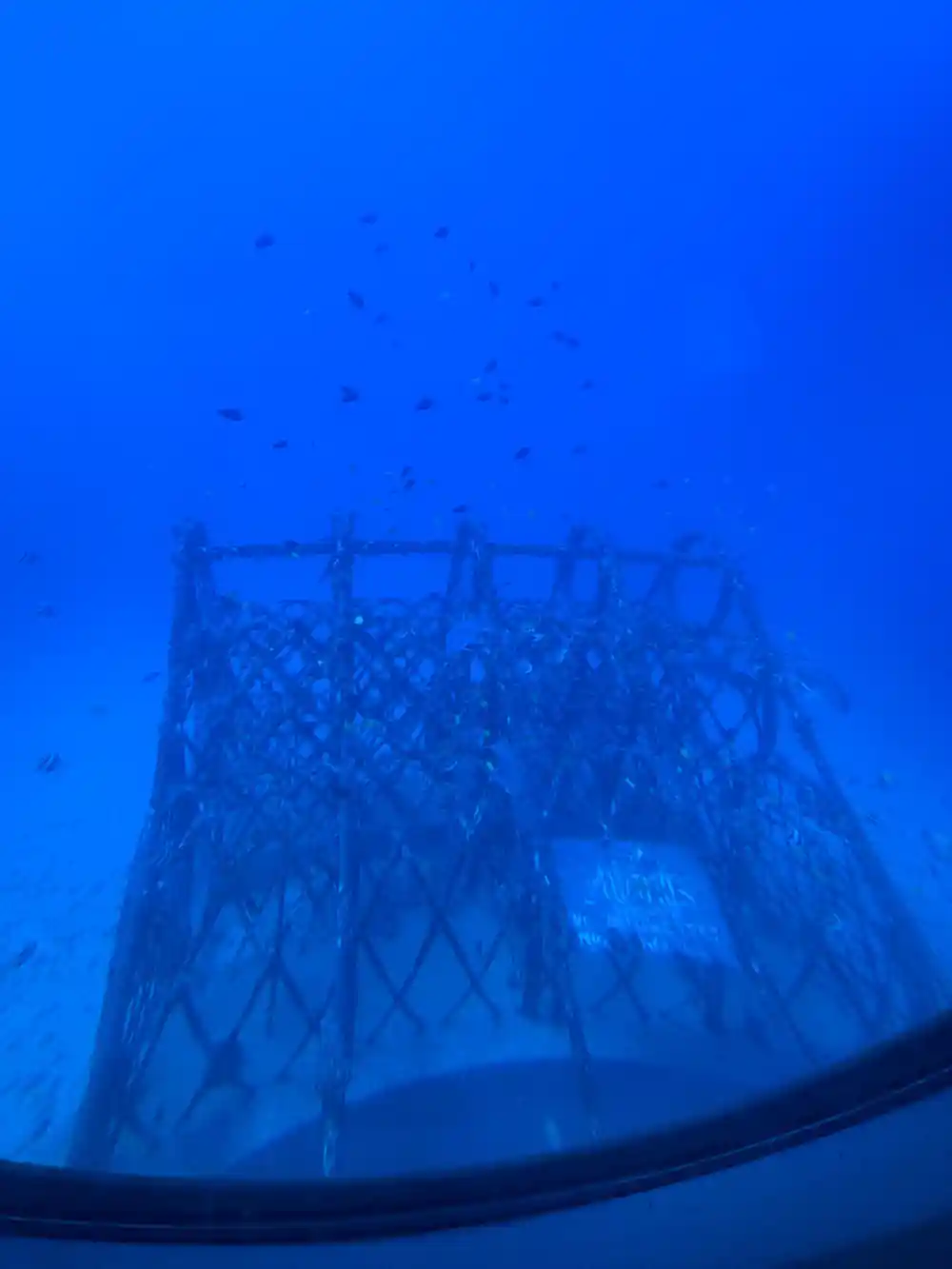
It is mentioned once in the tour description, in a list, and it deserves considerably more than that. Somewhere on the route the submarine passes an aircraft lying on the seabed a hundred feet below Waikiki.
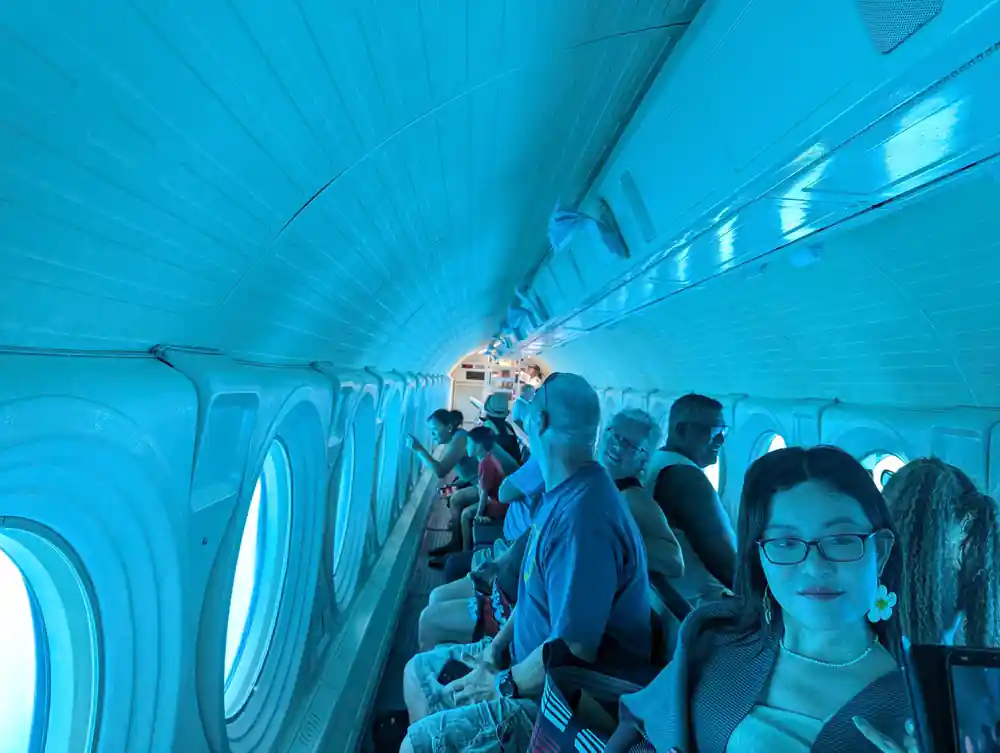
The reaction in the cabin is consistent. A wreck is startling but broadly expected; an aircraft is not, and there is usually a beat of silence followed by everybody asking the same question at once.
They are there for exactly the reason the ships are. An airframe is hard structure with an enormous amount of surface area and a great many openings, and that is the entire specification for an artificial reef.
How an aircraft ends up on a reef
The route is the same as for a vessel and the preparation is, if anything, more thorough.
An airframe reaching the end of its life is a disposal problem: composite and alloy structures, hydraulic fluid, wiring looms, foam, glass. All of it that could pollute or break loose has to come out before anything goes in the water. Engines, tanks, seats, insulation and instruments are stripped. What is left is the shell.
Then it is positioned. An aircraft is far lighter than a ship, which makes it easier to place precisely and harder to keep where it was put: a hull that weighs hundreds of tonnes stays; an airframe can shift in a big swell, and siting has to account for that.
Once down, it does the same job as any other structure, and it does it slightly better per tonne because so much of an aircraft is surface and so little of it is solid.
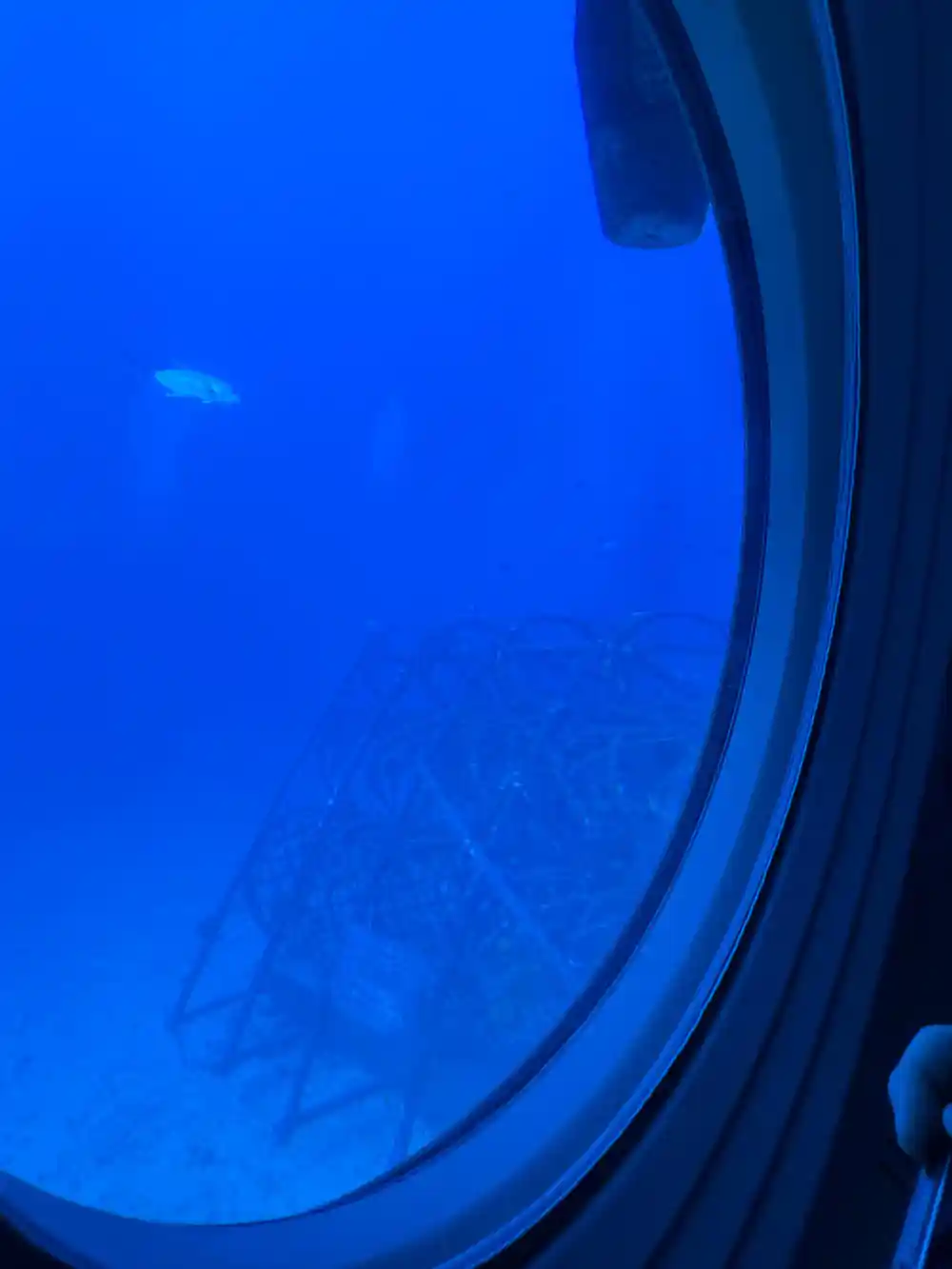
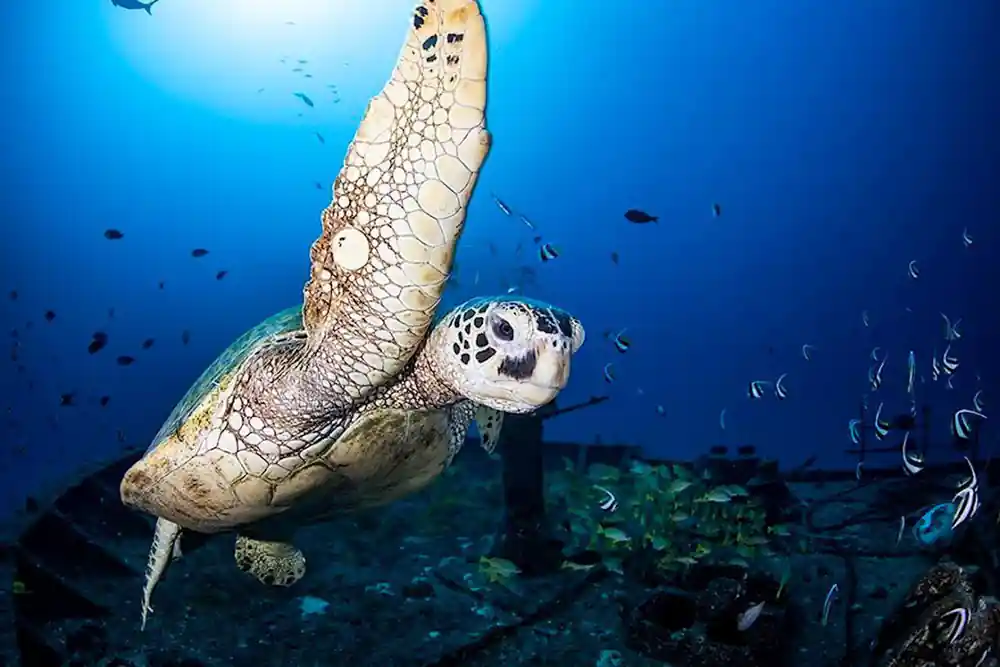
A submerged airframe on the sand with fish around it
What the sea does to an airframe
Differently from a ship, and faster in some respects.
Aircraft are built from thin light alloy in a stressed-skin structure, which is superb in the air and vulnerable in salt water. Panels corrode and detach, rivet lines fail, and the skin opens up. Within a few years the airframe reads as a skeleton with panels rather than a solid object.
That is not decay so much as improvement, from a reef's point of view. Every panel that opens creates another shaded space, and the internal volume of a fuselage becomes accessible rather than sealed.
The recognisable shapes persist longer than you would expect. A tail, a wing root, the line of a fuselage all remain legible well after the surfaces covering them have gone, which is why an aircraft is still obviously an aircraft on the bottom long after a ship has become terrain.
Aircraft as reef, elsewhere
This is not a Hawaiian eccentricity. Sinking retired airframes as habitat is done in a number of places, and some of the results are well known to divers: airliners off Turkey and Bahrain, military aircraft in the Gulf of Mexico and the Caribbean, smaller types all over.
The appeal is consistent wherever it is done. Aircraft are abundant at end of life, they are already stripped-down structures rather than solid masses, and they are visually arresting in a way that a concrete module is not, which matters for a site that also has to attract people.
The objections are consistent too, and they are worth acknowledging. An airframe is light, so it can move. It is full of materials that must be removed properly rather than approximately. And a badly sited one can damage what was already there.
None of those are arguments against the practice; they are arguments for doing it carefully, which is the same conclusion the ships lead to.
Airframes
So much of an aircraft is surface and so little of it is solid that per tonne it makes better reef structure than a ship does.
What lives in one
A fuselage is a tube with holes in it, which happens to be the ideal architecture for reef fish. Shelter, shade, multiple entrances and a defensible interior.
The pattern is the same as on the wrecks: dense shoals in the shaded interior volumes, grazers on the outer surfaces, hunters working the edges. The difference is scale. An aircraft is small enough that you take in the whole community at once rather than passing along a section of it.
Morays like the enclosed spaces particularly. If you are going to see one on this dive, an aircraft or a similar confined structure is where it will be, usually as a head protruding from an opening and nothing else.
Seeing it, and photographing it
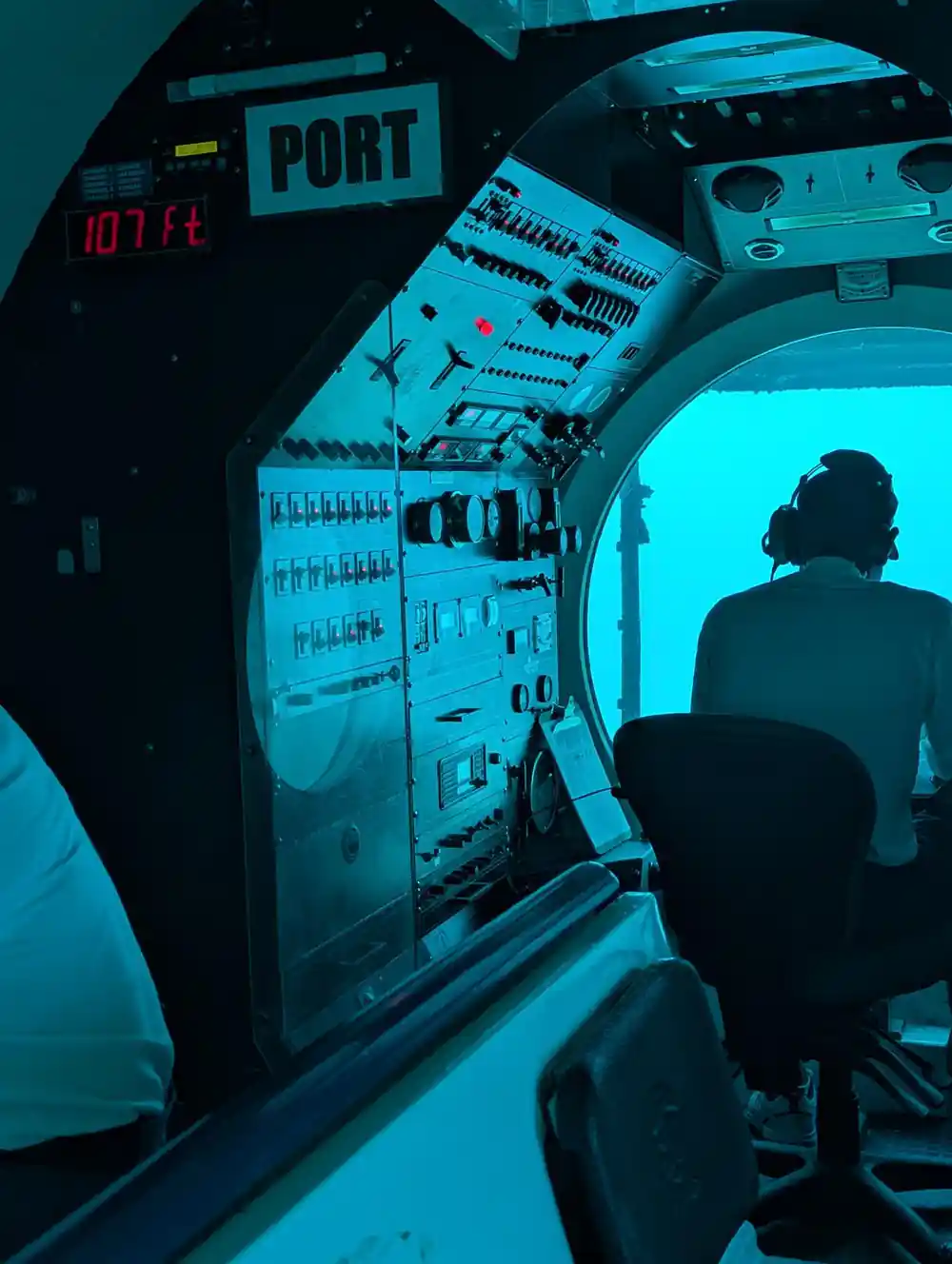
It goes past quickly and it is worth being ready. The pilot will call it, and the whole thing is visible for well under a minute from any one viewport.
The shape is easiest to read at a slight angle rather than side-on. Head-on it is a confusion of struts; from three-quarters the wing line and the fuselage separate and the object resolves.
For a photograph, the same rules apply as everywhere else on this dive: expose for the structure rather than the water, keep the camera against the glass to kill reflections, and accept that everything will come back blue. An aircraft silhouette on a sand bottom is one of the few subjects here that reads well even in monochrome blue, because the shape carries the picture without needing colour.
And take one photograph rather than twelve. The thing is past in forty seconds and it is a better memory than a burst of frames.
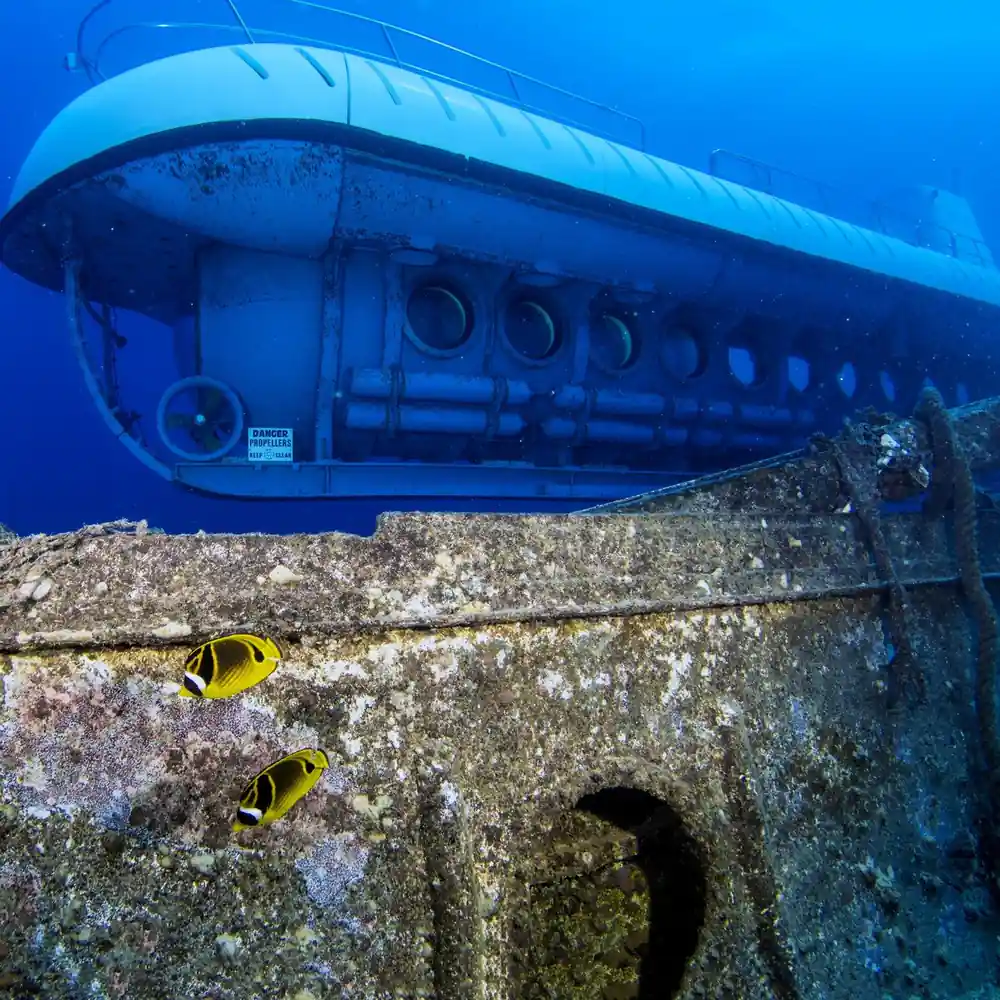
An aeroplane on the seabed, a hundred feet down
from US$168Reserve now & pay later