The main points
- Flat, pale and close to empty. Nothing grows on it and nothing hides in it.
- Vessels and aircraft, cleaned and sunk to create hard structure.
- Shelter first, then the things that eat what shelters.
- Deep enough that the colour has gone and shallow enough for daylight.
What the seabed off Waikiki is really like
The image most people carry into this trip is a coral reef: a crowded, coloured, structurally complex place. That exists in Hawaii, in bright shallow water close inshore, and it is not where this submarine goes.
A mile or so out and a hundred feet down, the bottom is sand. It is pale, largely flat, and biologically very quiet. Sand offers no attachment for anything that needs to fix itself in place, and no shelter for anything that needs to hide, which between them covers most of what lives on a reef.
That is the blank page the dive site was drawn on, and it is the reason the site had to be built rather than found.
How you build a reef
The principle is simple and slightly counter-intuitive: what a reef ecosystem needs first is not coral but structure. Something hard, complex and full of holes.
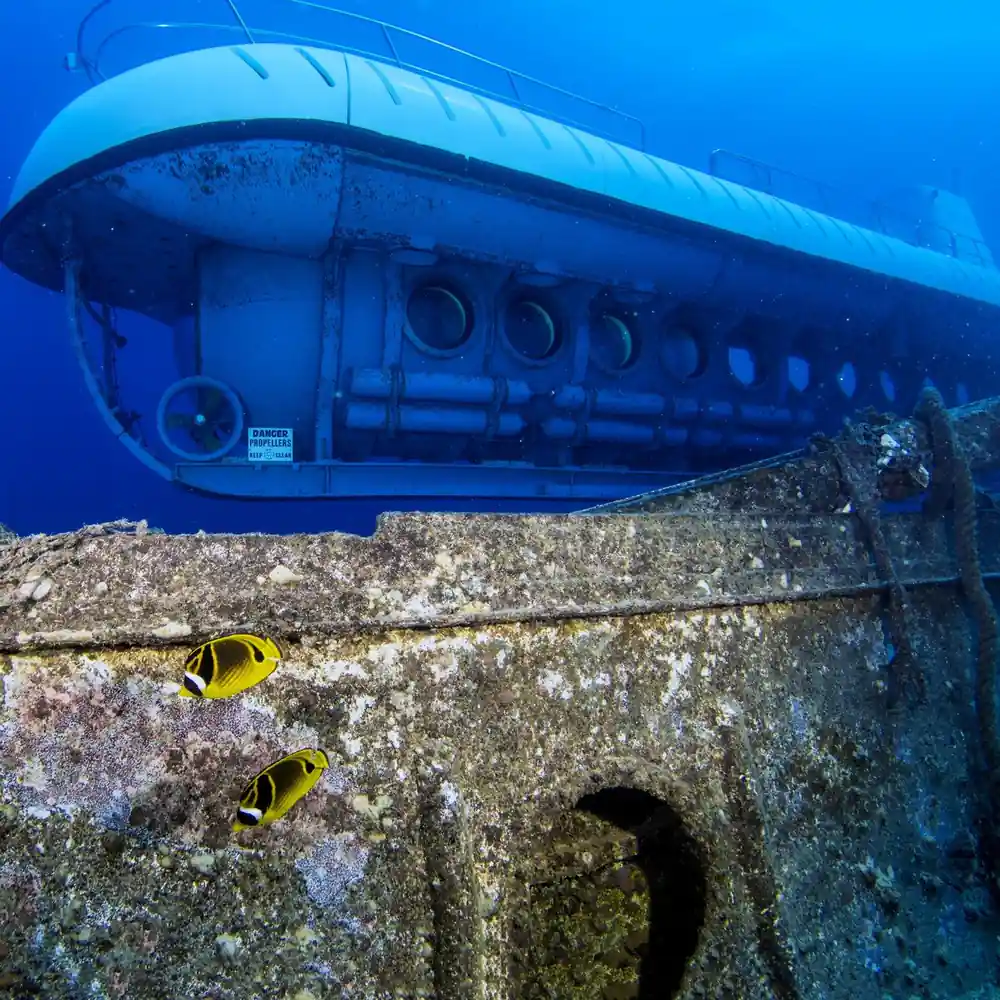
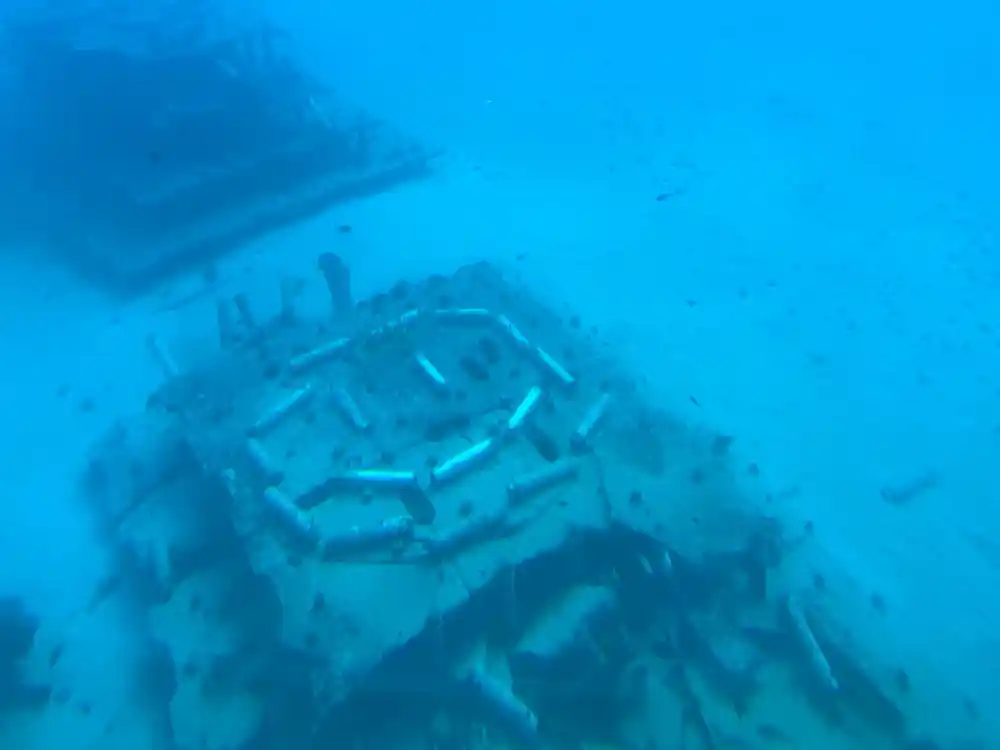
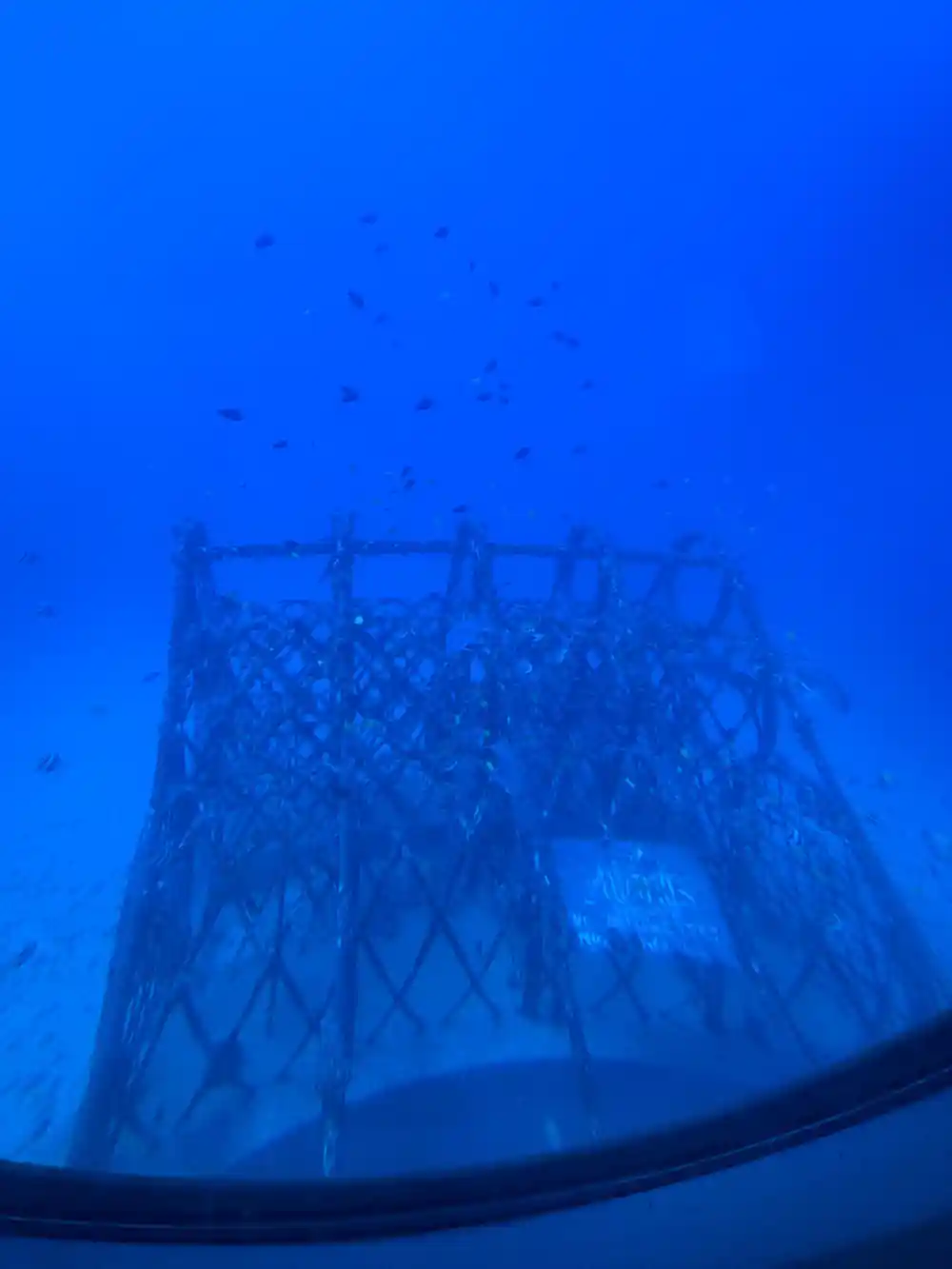
So structure is provided. Vessels are stripped of anything that could pollute or float away, cleaned, and sunk onto the sand in a chosen position. Aircraft go down for the same reason. Purpose-made frames and modules are added. The result is a scatter of hard objects on a soft plain, with an enormous amount of surface area and a great many places to hide.
Colonisation begins almost immediately. Algae and bacterial films within days. Invertebrates - hydroids, sponges, small corals - within weeks and months. Small fish arrive early for the shelter, and the larger fish that eat them follow. Within a few years the structure is furred over and the fish population is orders of magnitude beyond what the surrounding sand supports.
None of that is speculative. It is the reason artificial reefs are built all over the world, and the reason this one exists.
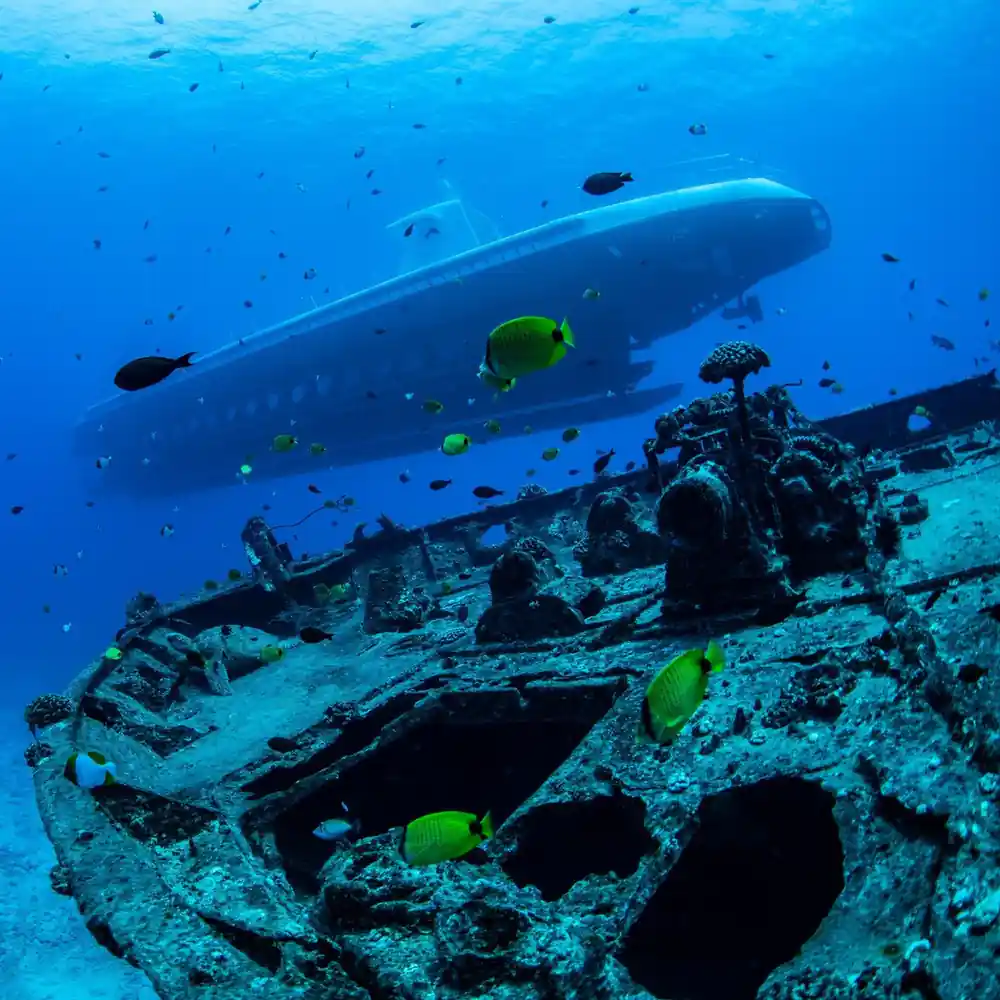
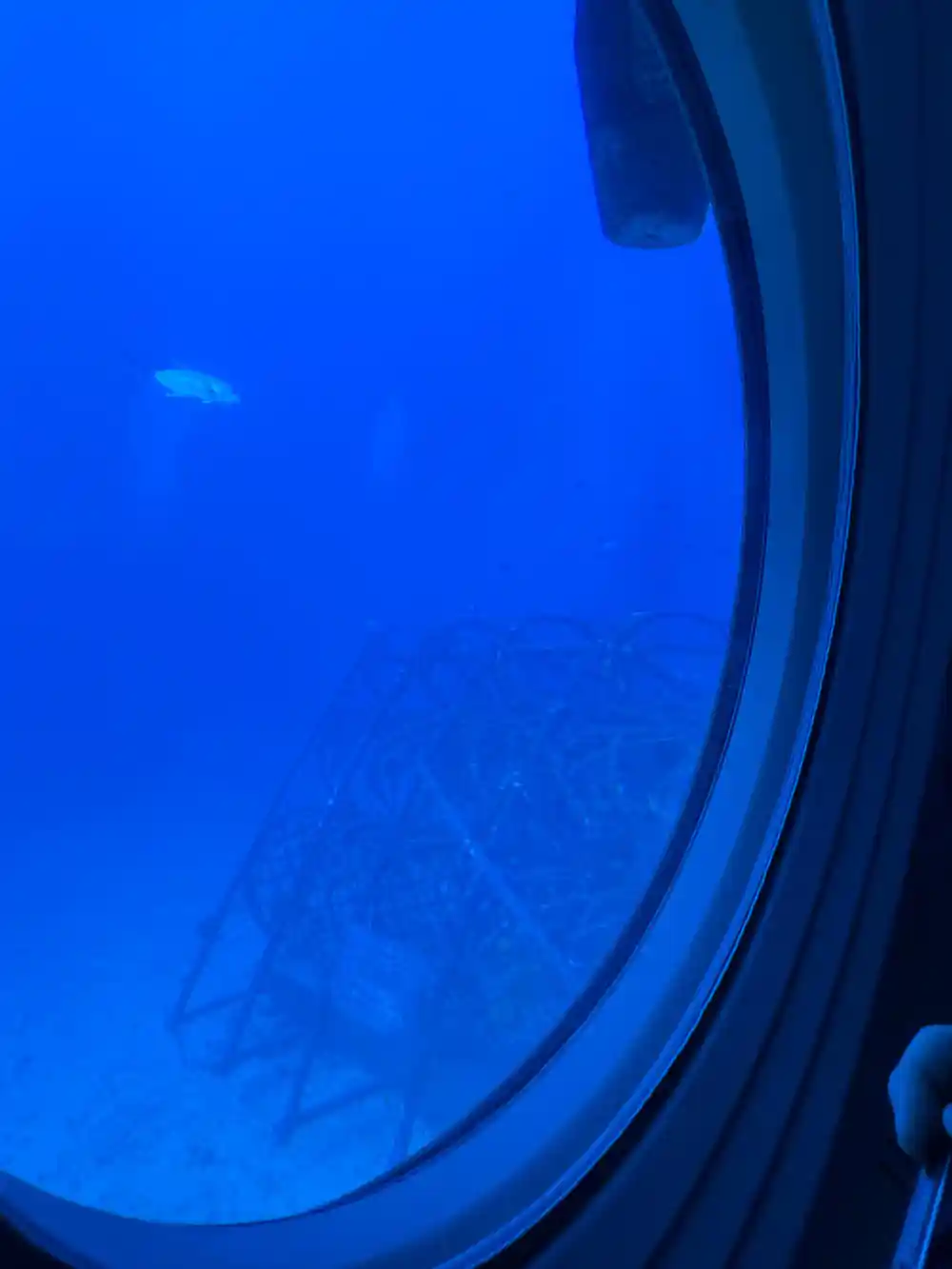
Structure on the seabed with fish concentrated over it
What the submarine actually covers
The site is a scatter rather than a single object, and the dive is a route between its features rather than a circuit of one wreck.
You descend, level off, and move between structures with the pilot narrating. Individual features come into view, pass along the length of the hull, and fall behind. Between them there is open sand and blue water, which is part of the experience rather than dead time: the contrast between empty bottom and crowded structure is the clearest possible demonstration of what the reef is doing.
The pace is deliberate and slow. A submarine is not a fast vehicle and there is no advantage in hurrying past the only interesting things down there.
Why this piece of seabed
Several things have to line up for a site like this to work, and they are worth knowing because they explain the character of the dive.
It has to be deep enough to be genuinely underwater in a way shallow snorkelling is not, and shallow enough for daylight to reach. A hundred feet is a good compromise: properly deep, and still lit by the sun rather than by lamps.
It has to be close enough to the departure point that a short outing is possible, which is why the whole trip fits in under two hours from a hotel pier.
It has to be sheltered enough that a submarine can work there reliably. The lee side of Oahu in the summer months is about as reliable as tropical ocean gets.
And the bottom has to be sand rather than existing reef, because you do not put a ship down on living coral. The very emptiness that makes the site unpromising is what makes it available.
Sand
What the bottom off Waikiki was before anything was put on it. Every fish the submarine passes is there because somebody sank something.
How it changes
An artificial reef is not a finished object. It is a process with a slow shape, and a site that has been down for years looks nothing like one sunk last season.
The structures soften. Sharp edges round off under growth, plating corrodes and opens up new holes, and things that were recognisably a ship become recognisably a reef with a ship inside it. That opening-up is good news: more holes means more shelter means more fish.
The fish community changes with it. The first arrivals are small and generalist. Over time the population shifts towards species that need particular kinds of hole, and towards the predators that live off the whole arrangement.
Which means the site your submarine visits is not the site it visited a decade ago, and the pilots who have worked it for years can tell you exactly how it has moved on.
What the empty sand tells you
Spend a moment on the stretches between structures rather than treating them as gaps. They are the control experiment, and they make the rest of the dive make sense.
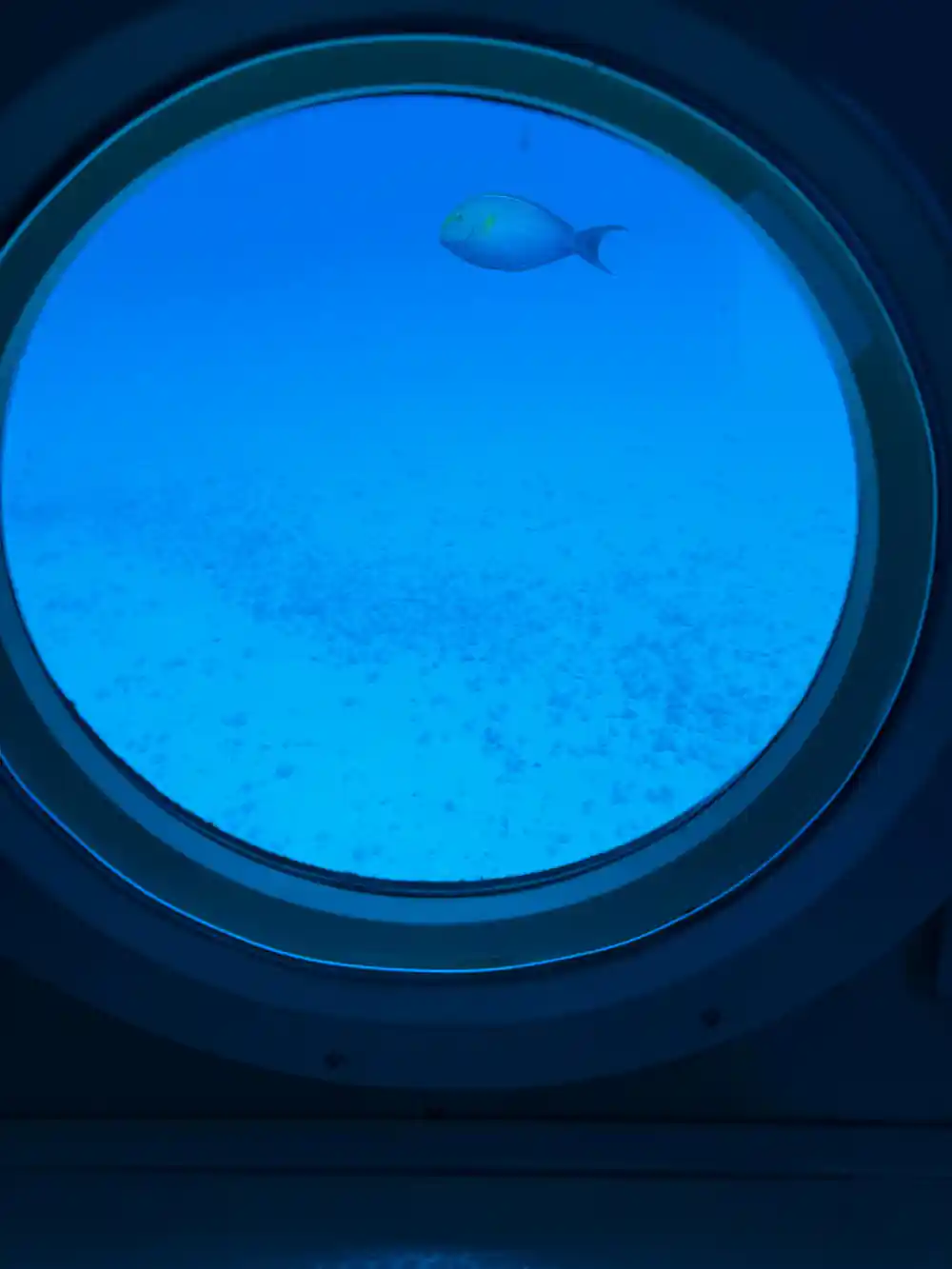
Over open sand there is very little: the occasional flatfish, some drifting particles, a passing fish going somewhere else. It is not lifeless, but the density is a tiny fraction of what you see forty seconds later over a wreck.
That contrast is the argument for artificial reefs made visible. Nobody added fish to this site. Somebody added places to live, and the fish came from the surrounding ocean and stayed.
It also explains why the dive is routed the way it is. The pilot is not padding the time between features; the empty water is doing part of the explaining.
A reef with a ship inside it, 100 feet down
from US$168Reserve now & pay later