The main points
- These vessels were placed. That is a different kind of wreck.
- Fuel, oil, wiring and anything loose comes out first.
- A hull full of holes is a block of flats for fish.
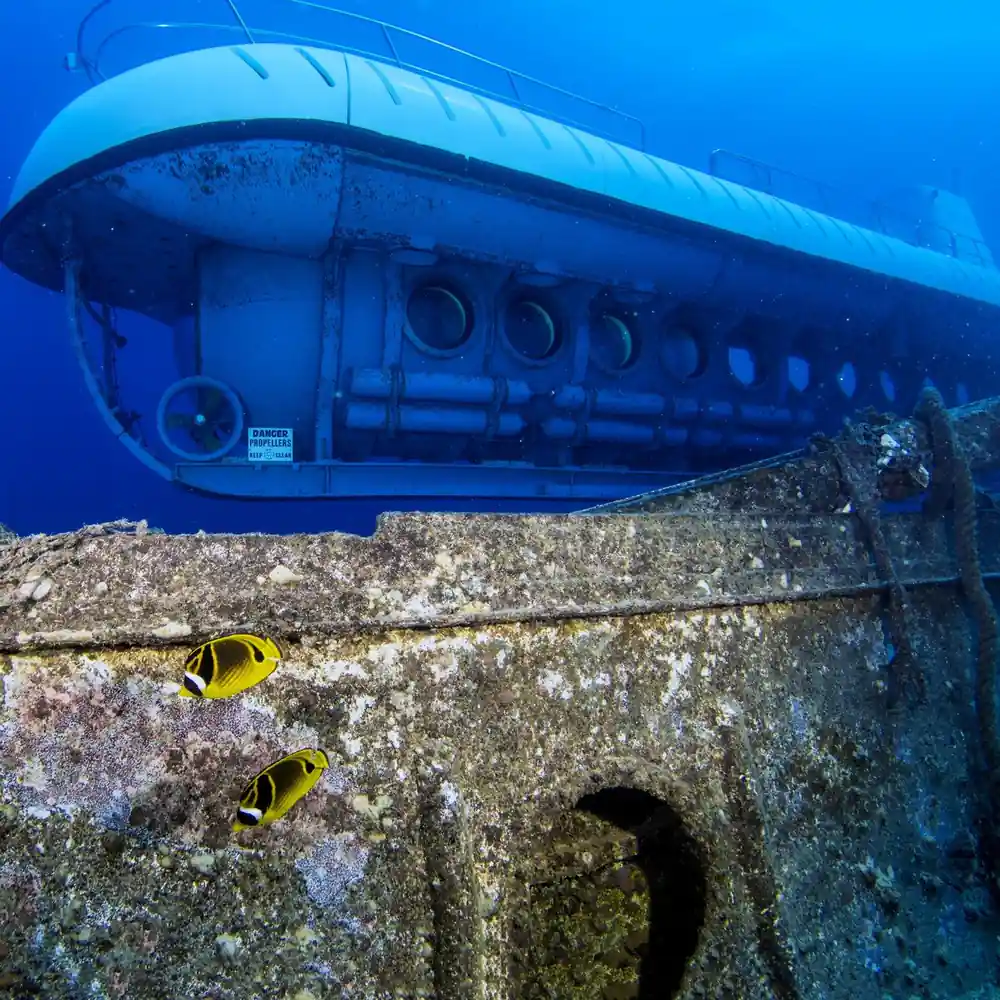
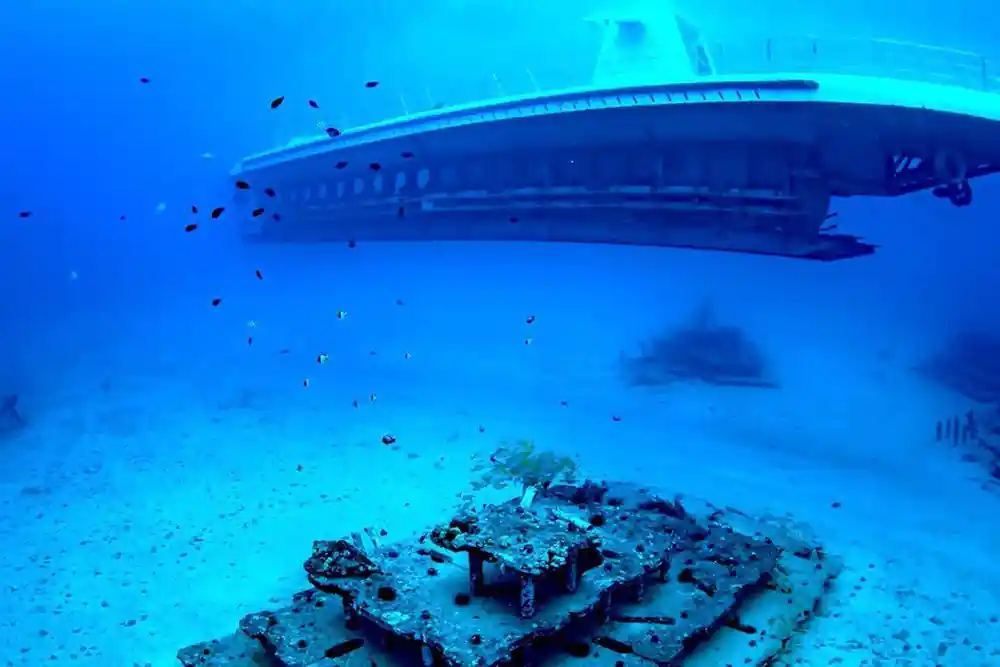
- The submarine runs along the length rather than circling at a distance.
A wreck that was meant to be one
The word shipwreck carries a story with it: a storm, a mistake, people in the water. It is worth separating that from what is on the bottom here, because these vessels went down on a calendar rather than in an emergency.
A ship placed as reef is chosen, bought or donated, and then prepared. Fuel and oil are removed. Wiring, insulation, paint in poor condition and anything that could break loose and drift are stripped out. Openings are cut to let divers and fish move through safely and to stop the hull becoming a trap. Then it is towed out, positioned, and flooded in a controlled way so that it settles where it is meant to and the right way up.
That preparation is the difference between a reef and a pollution incident, and it is a substantial piece of work.
What they look like now
Time underwater does specific and fairly predictable things to a steel hull, and knowing them makes a passing wreck far more legible.
First it goes soft-edged. Within months, every surface carries a fuzz of algae, hydroids and small invertebrates that blurs the outline. A wreck that was sharp and geometric when it went down reads as an organic shape within a couple of years.
Then it opens. Steel corrodes fastest at thin plating and welds, so hulls develop holes, decks perforate and superstructures lose panels. This is the process that turns a hollow object into habitat: every new opening is another place for something to live.
And it collects. Sand builds against one side, debris settles inside, and the wreck slowly integrates with the bottom rather than sitting on it.
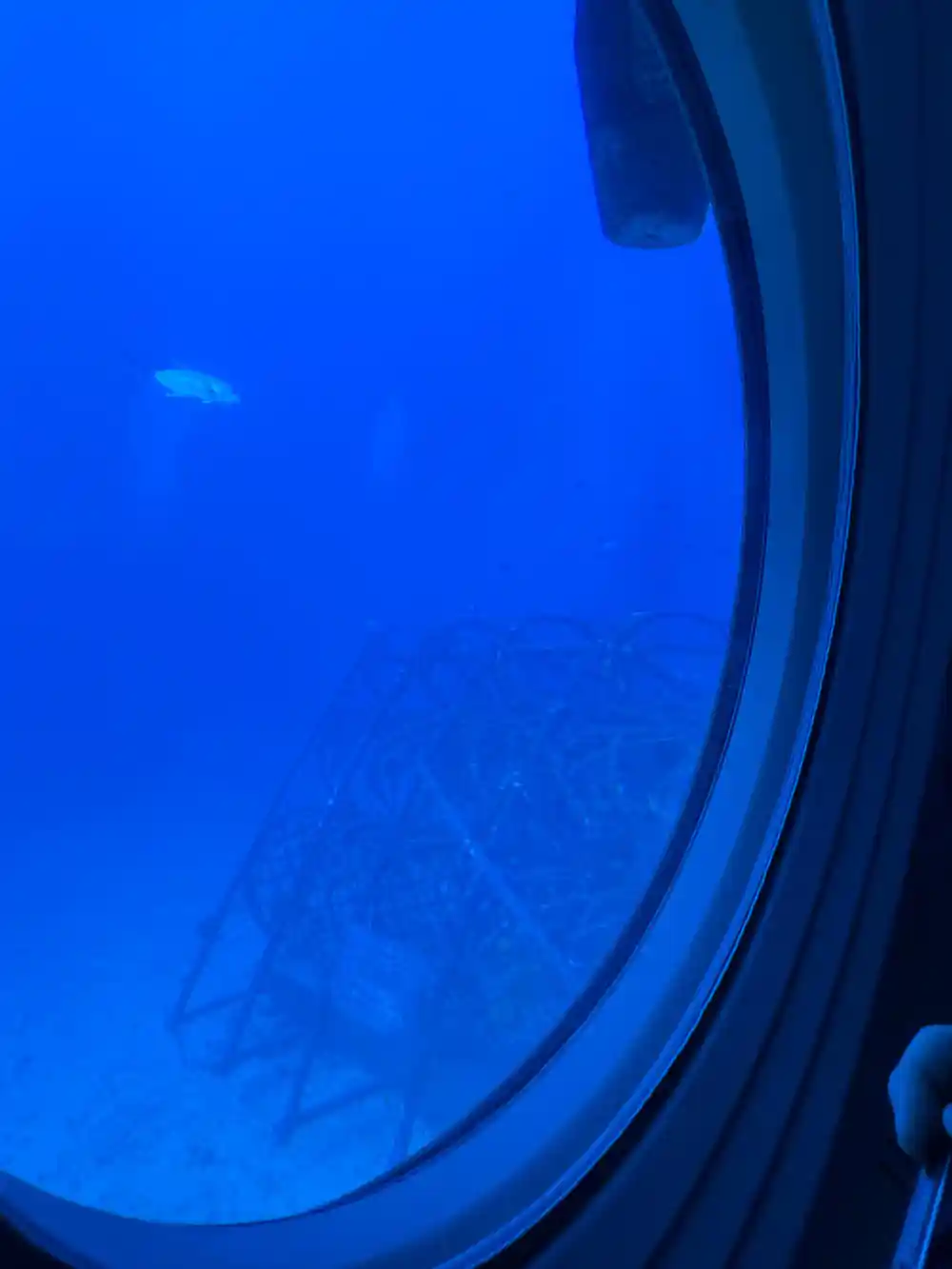
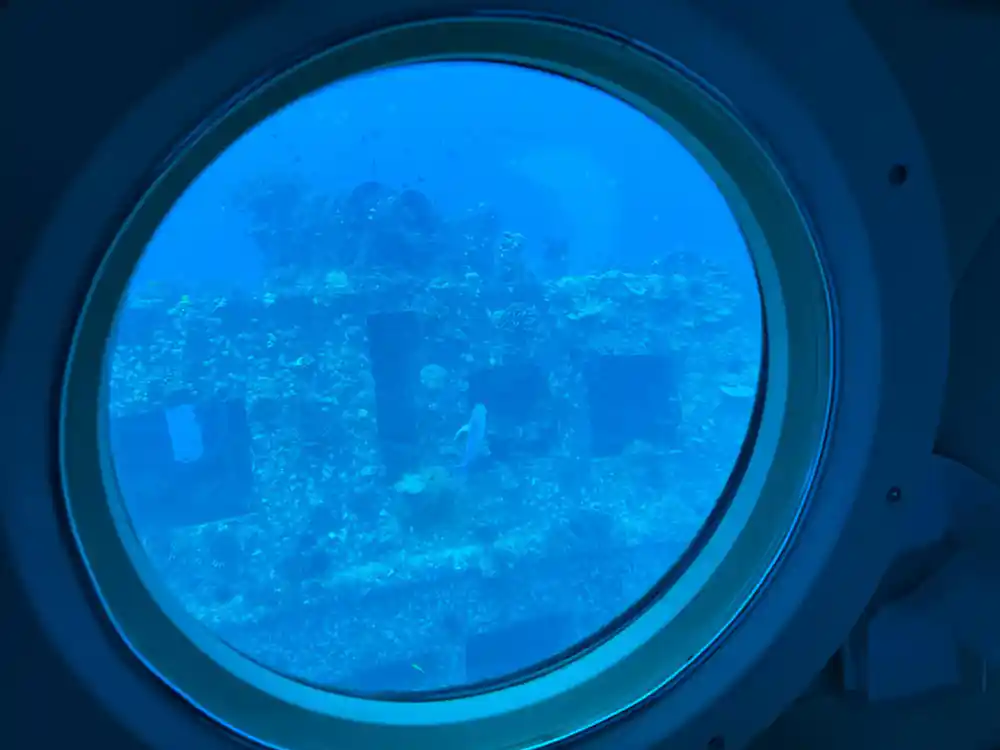
The overall impression from a viewport is of something that used to be a ship and is now a piece of terrain.
The fish that live on them
This is the payoff, and it is dramatic. The sand around a wreck is close to empty. The wreck itself swarms.
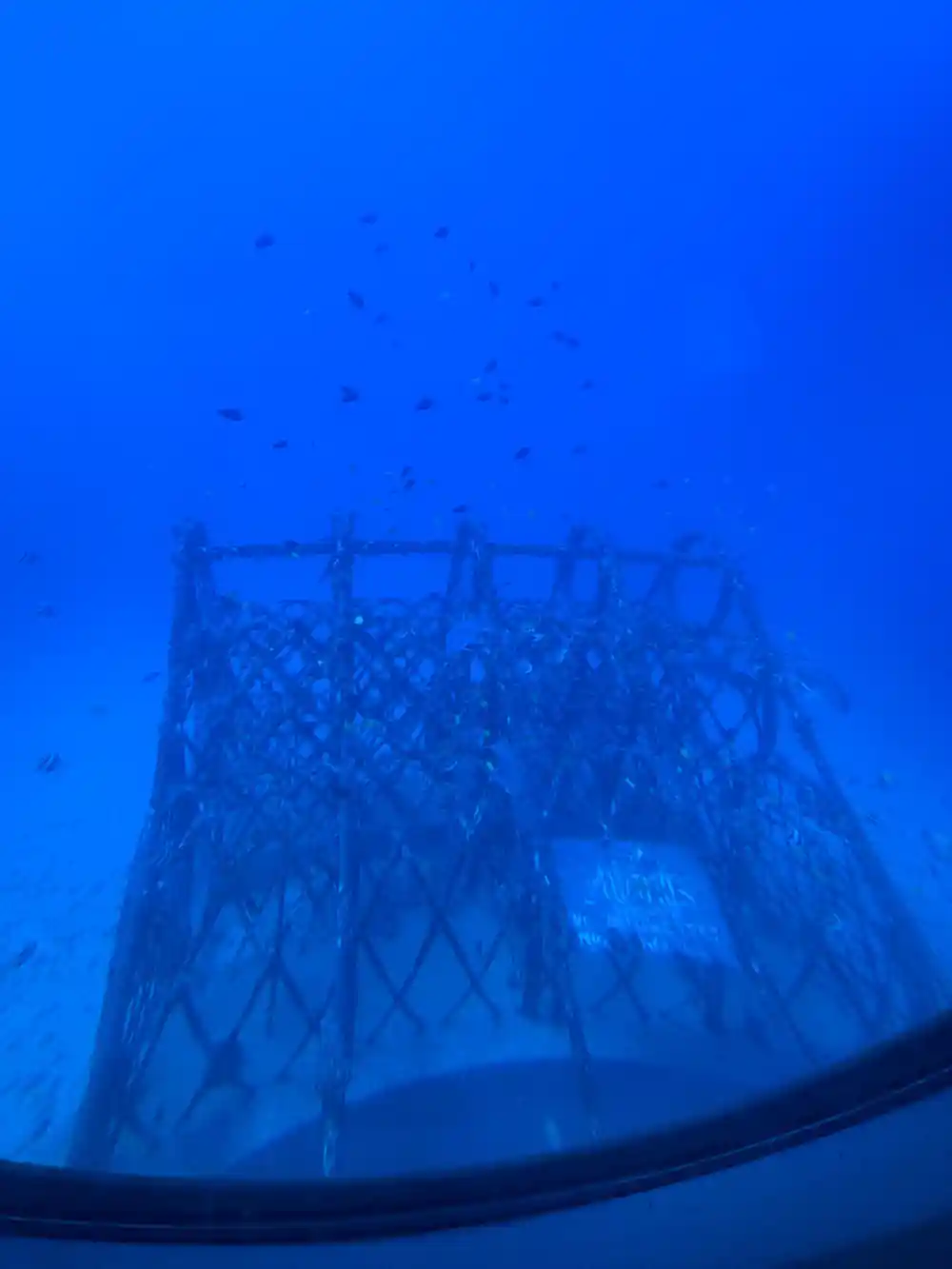
The most striking thing on any pass is the shoals of orange soldierfish that pack into shaded openings, frames and overhangs. They are nocturnal, so during the day they hang in the dark spaces in dense, motionless groups, and a frame that looks like structure at a distance resolves into several hundred fish at close range.
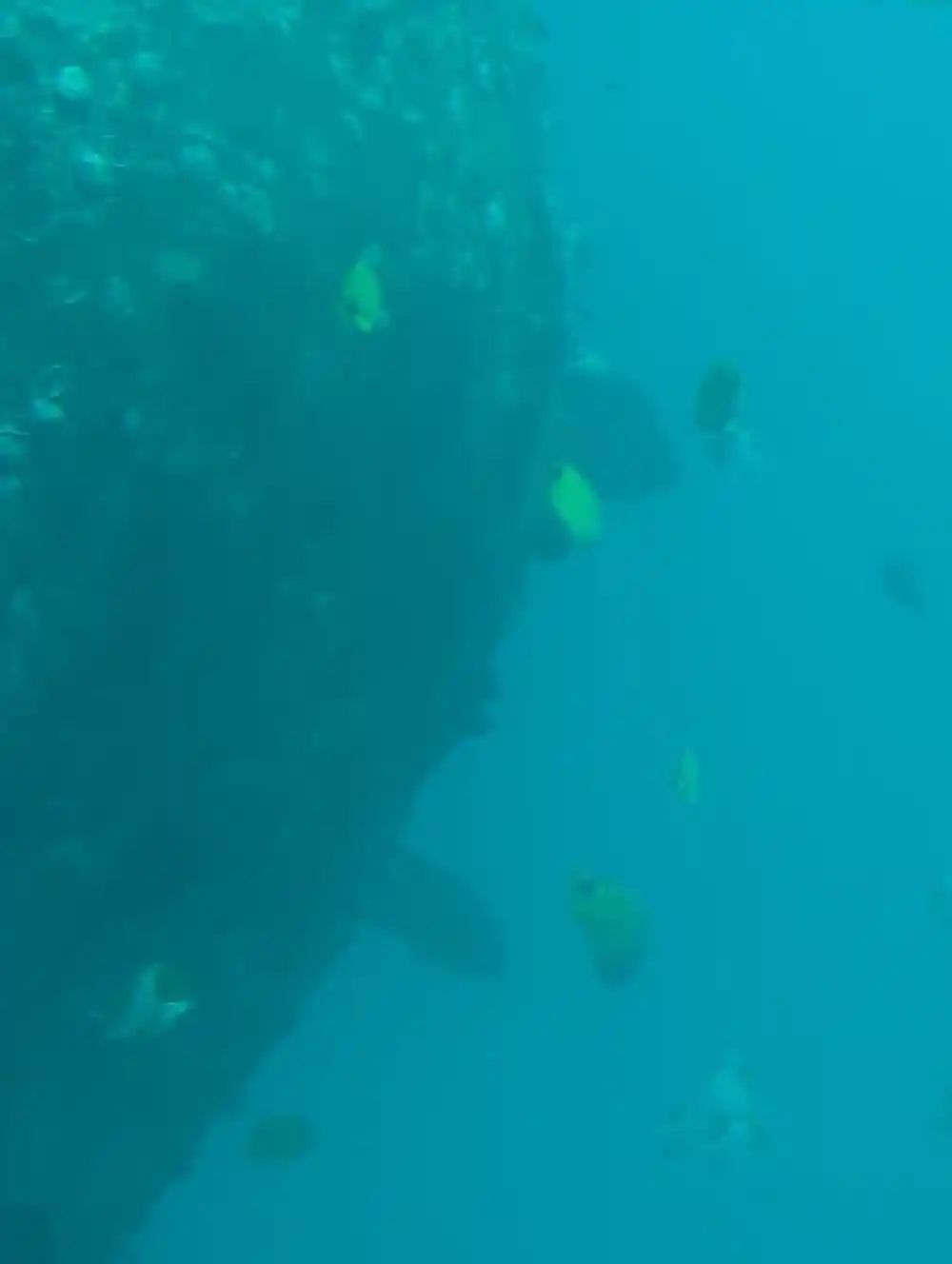
Around them: yellow tangs grazing over the surfaces, butterflyfish working the edges, wrasses hunting in the debris. Larger predators pass through. Morays occupy holes and mostly stay in them.
The concentration is the point. A wreck is not merely a thing to look at; it is the reason there is anything to look at.
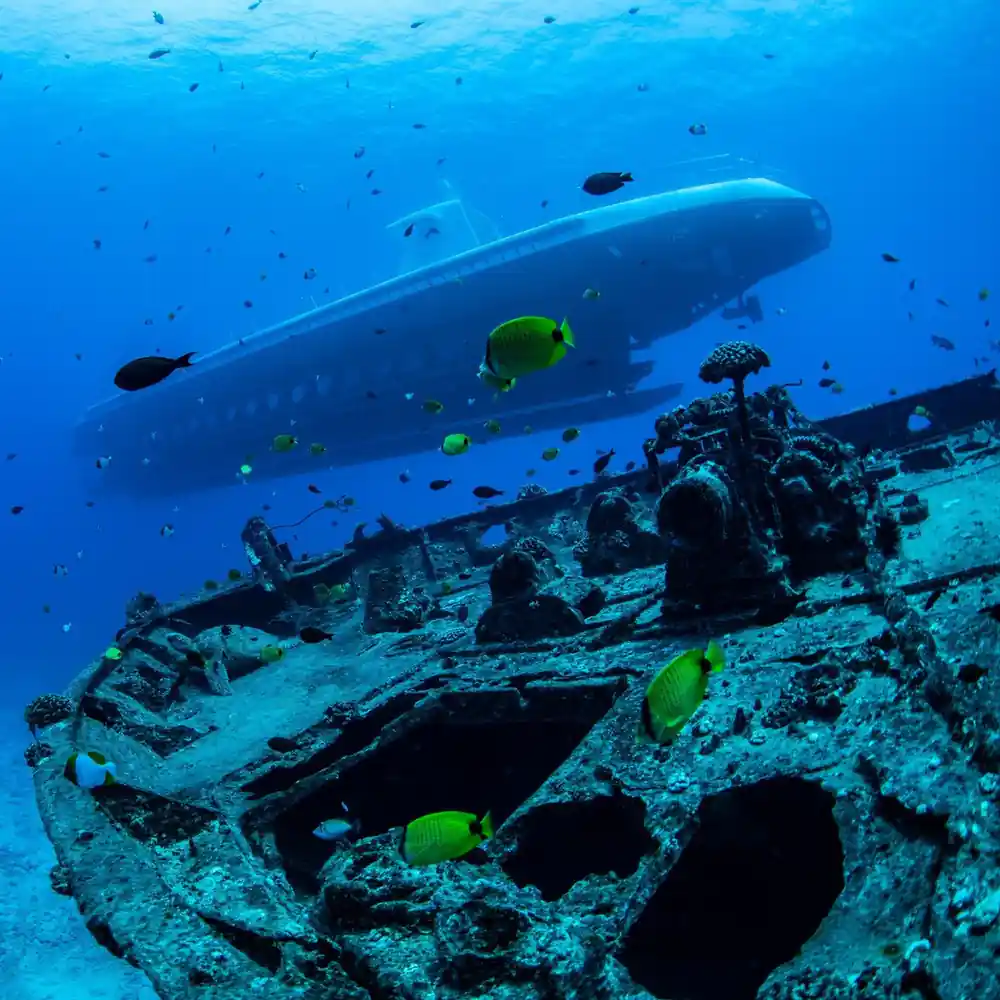
A wreck on the sand with soldierfish packed along its frame
Seeing them from a submarine
A submarine gives you a wreck differently from a dive, and the trade is worth understanding.
You are further away than a diver would be, and you cannot choose where to look from. What you get instead is the whole thing at once: a submarine runs along the length of a hull at a steady distance, so you see the vessel as an object rather than as a series of close-up details. Divers often report the opposite problem, that they never quite perceived the shape of the wreck they were on.
You also get it without any of the constraints. No certification, no gas, no decompression obligation, no cold, and an hour and three quarters from a hotel pier.
And you get commentary. The pilot knows what each structure was, when it went down and what has happened to it since, which is a great deal more than most wreck dives come with.
Why sink a perfectly good ship
Because the alternative is worse and the outcome is better, on both counts by a wide margin.
Disposal of an end-of-life vessel is difficult and environmentally awkward. Scrapping is energy-intensive; abandonment is illegal and destructive. Placing a properly prepared hull as reef converts a disposal problem into habitat, and it demands less than the alternatives do.
The habitat argument is the stronger one. A sand plain supports a small number of specialised animals. The same area with a wreck on it supports orders of magnitude more, and does so within a few years.
There are legitimate criticisms - concentration rather than creation of fish, materials that were not properly cleaned, sites placed badly - and the answer to all of them is preparation and siting rather than not doing it. Done properly, sinking a ship is one of the few interventions in the ocean that reliably makes things better.
What to look for as one goes past
A wreck passes a viewport in something under a minute, and knowing what to look at makes the difference between a shape and a place.
Look at the shaded openings first. Anywhere the structure makes a dark recess - a doorway, a hold, the underside of a deck - is where the density is, and the orange shoals are almost always there rather than out in the open.
Look for the line where the hull meets the sand. That junction collects debris and is worked constantly by fish hunting through it, and it also shows you how far the vessel has settled since it went down.
Look for the difference between the upper surfaces and the sheltered ones. Growth is heavier where there is light, and the top of a wreck is often visibly furrier than its flanks.
And look once at the whole shape rather than the details. A submarine gives you the entire object in a way a diver almost never gets, and that perspective is the thing worth taking away.
Wrecks placed on purpose, and swarming
from US$168Reserve now & pay later