The main points
- Reef species occur along this coast and generally leave before you notice them.
- Morays are resident in the structure and spend the day in it.
- You are inside a sealed pressure hull with the ocean on the other side of it.
- Uncommon enough that seeing one is the story you tell.
Why everybody asks
Sharks are named in the tour description and they are the first thing a large share of passengers ask the crew about. That is entirely reasonable and it deserves a straight answer rather than either reassurance or drama.
The straight answer has two halves. Yes, sharks occur on this coast and are occasionally seen from the submarine. And no, there is no version of this trip in which that matters to you, because you are inside a steel pressure hull with viewports rated for considerably more than a hundred feet of water.
The interesting question is not whether they are dangerous. It is what kind you might see and how likely it is.
What sharks are actually here
Hawaiian waters hold a long list of shark species, and the ones relevant to a reef at a hundred feet off Waikiki are the reef sharks: whitetip and blacktip species, and occasionally a grey reef shark. These are moderate-sized, slender animals that patrol structure and hunt fish.
Whitetip reef sharks in particular are common on Hawaiian reefs and are the most likely candidate. They spend a lot of the day resting under ledges and in caves, which is why divers see them more often than they might expect and why an artificial reef with plenty of overhangs is a plausible place for one.
Larger open-water species exist offshore and are not what a reef dive encounters.
The behaviour to expect is indifference. A reef shark that notices a submarine leaves without hurrying, and the usual sighting is a shape at the edge of visibility moving away rather than an encounter.
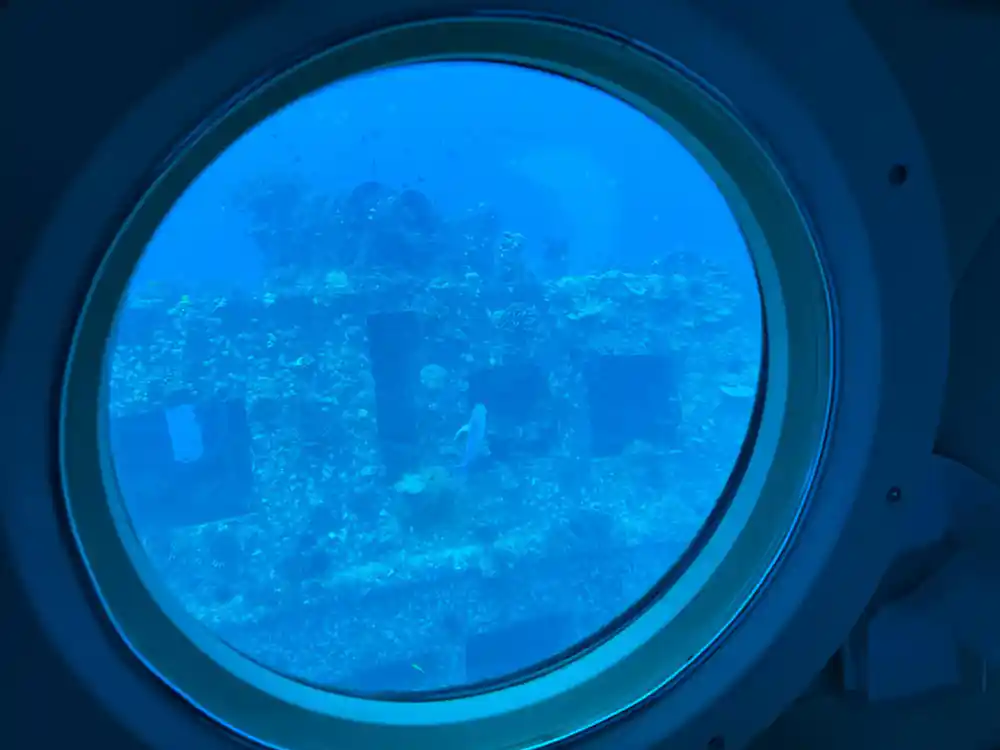
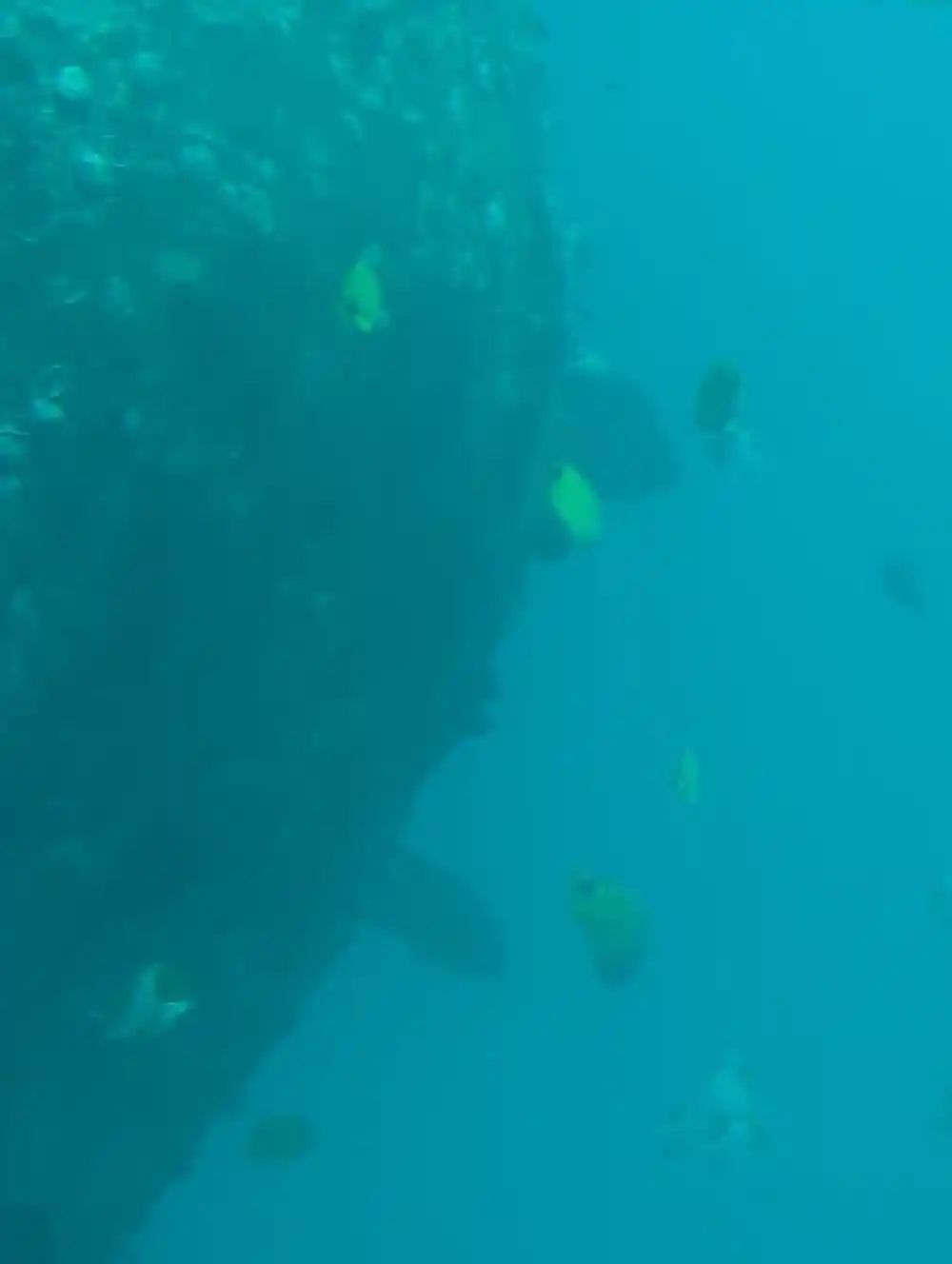
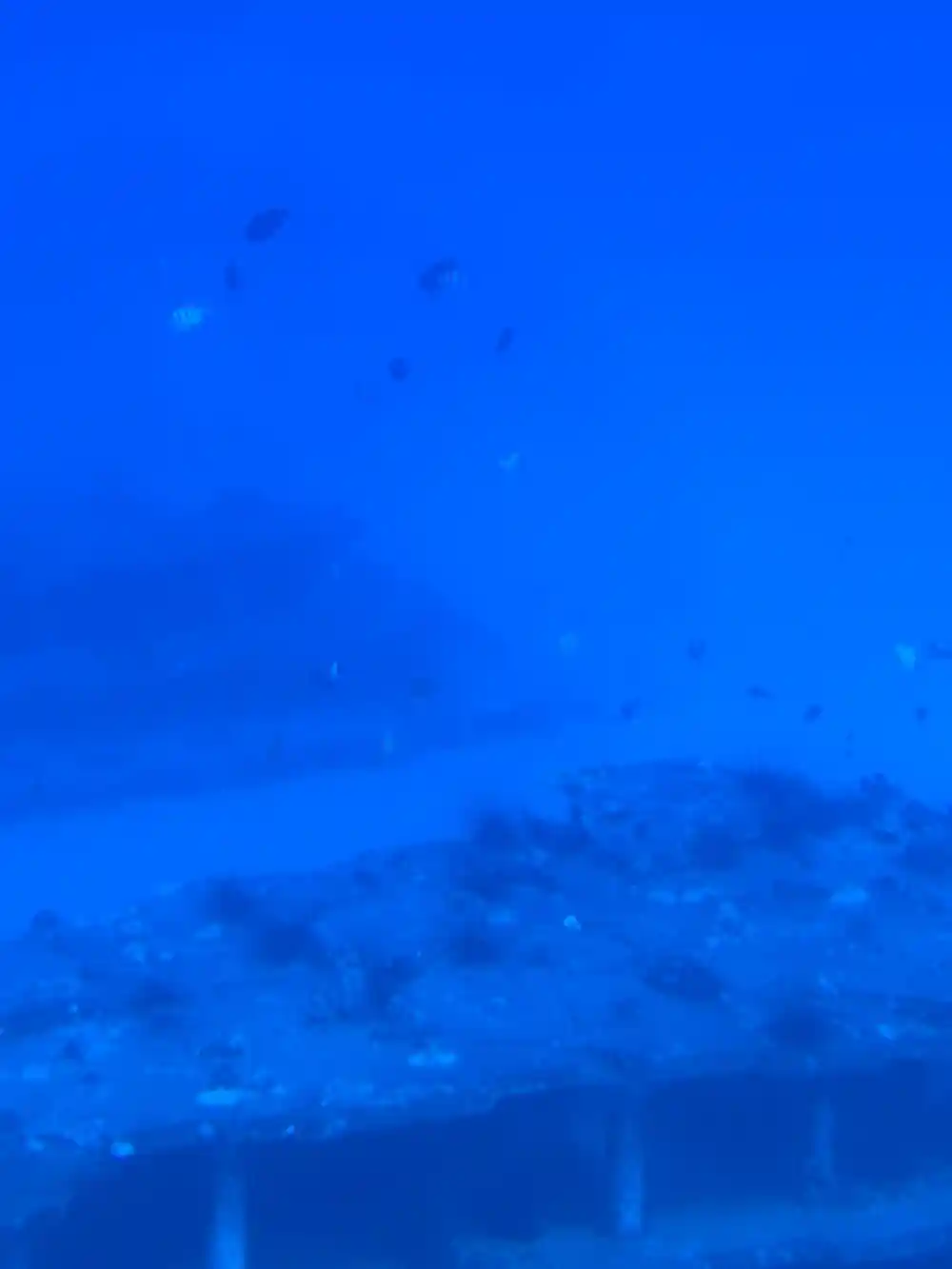
A dark shape at the limit of visibility beyond the structure
How often
Uncommon. This is not a shark dive and no honest operator would sell it as one.
Sightings happen and they are memorable when they do, which is roughly the correct expectation: a real possibility rather than a feature. If seeing a shark is the reason you are booking, this is the wrong trip and a dedicated shark tour is the right one.
It is also worth saying that the animals have every reason to be elsewhere. A reef shark hunts, and a hundred feet down beside a slow-moving object full of people is not where the hunting is.
The shark question Hawaii actually has
It is worth separating the reef animals above from the thing most visitors are really thinking about, which is a news story rather than a reef.
Hawaii does have tiger sharks, they are large, and incidents involving them are rare but real and heavily reported. They are open-coast animals that range widely, and they are not what a hundred-foot artificial reef off a city beach is about. Encountering one from a submarine would be a genuinely notable event rather than a normal one.
The proportion worth holding on to is that the ocean around these islands is used by an enormous number of people every day of the year, and serious incidents are counted in single figures annually across the whole state. The risk to a swimmer is very small and the risk to a submarine passenger is not a category that exists.
None of which is an argument for carelessness in open water. It is an argument for looking at the animals with interest, which is the only option available from behind a viewport anyway.
Shy
The behaviour to expect from both. A reef shark that notices a submarine leaves without hurrying, and a moray spends the day with its body in a hole.
Moray eels, which you have a better chance of
Morays are far more likely and far less asked about, which is the wrong way round.
A moray is a long, thick-bodied, scaleless eel that lives in a hole and stays in it. The classic view is a head protruding from a crevice with the mouth opening and closing rhythmically, which looks like aggression and is nothing of the kind: it is how the animal moves water over its gills, because unlike most fish it cannot pump water efficiently while sitting still.
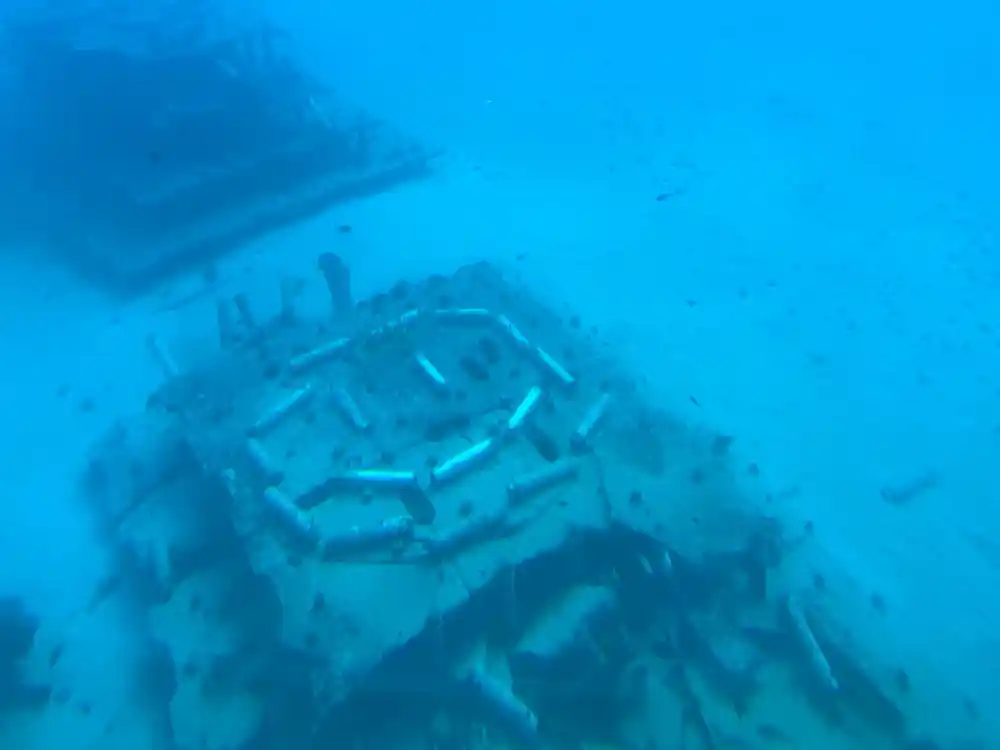
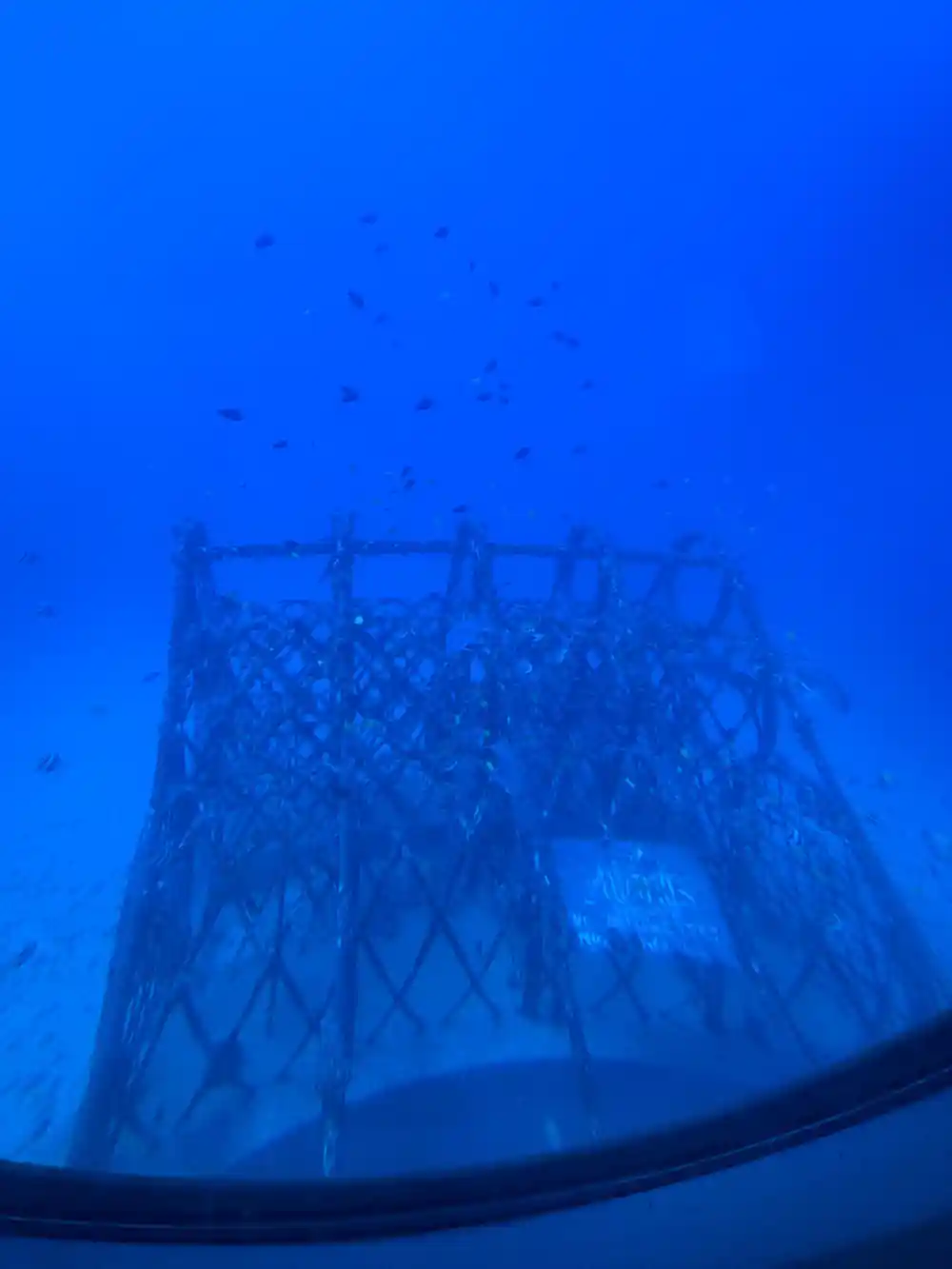
They are resident in artificial reefs for the obvious reason. A wreck is full of exactly the sort of enclosed defensible hole a moray wants, and an aircraft fuselage even more so.
Seeing one is a matter of looking in the right place. Scan openings, doorways, pipe ends and the shaded recesses of frames rather than the open water. A moray is one of the few animals on this dive that you find by looking rather than by waiting.
Is anything down there dangerous
To you, no. Not because the animals are harmless in the abstract but because of the arrangement: you are separated from all of them by a pressure hull, and nothing on this dive involves any contact with the water.
That is worth stating plainly for the passengers who find open water genuinely frightening, which is a larger group than usually admits it. This trip lets people who would never snorkel look at a reef at depth in complete safety, and the animals that make open water feel risky are exactly the animals it becomes safe to be curious about.
The reverse point is also true and worth making. Neither sharks nor morays are hazards to snorkellers and divers behaving sensibly either; both are shy, both avoid people, and both are far more at risk from us than the other way round. Reef sharks in particular have declined substantially worldwide.
So the correct emotional setting for both is interest rather than nerves, and the submarine simply makes that easier to arrive at.
Look at the holes, not the open water
from US$168Reserve now & pay later