The main points
- Roughly 30 metres. A cabin display counts it off as you go.
- It is essentially gone within the first ten metres, long before you arrive.
- Daylight reaches this depth easily. It is bright, and it is blue.
- The cabin stays at surface pressure the whole way.
How deep is 100 feet, really
Thirty metres, give or take. In diving terms it is the conventional limit of recreational scuba, which is a useful marker: this is not a shallow dip, it is the depth at which a qualified diver would be watching their gas and their time carefully.
In everyday terms it is about the height of a ten-storey building, laid downwards.
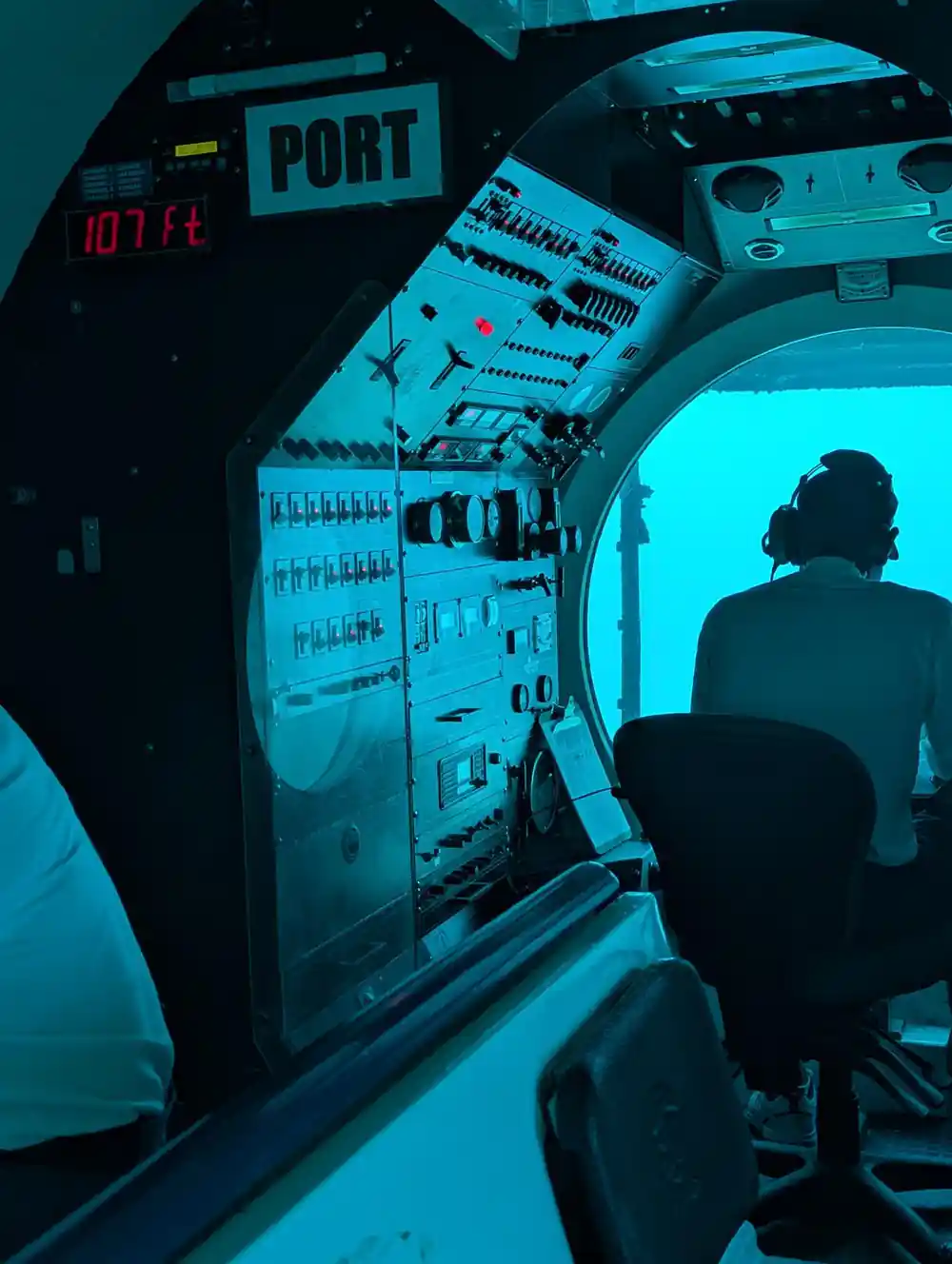
There is a display in the cabin that shows the depth as you descend, and watching it tick past the numbers is one of the small pleasures of the trip. A photograph of it reading 102 feet is a better souvenir than most of the underwater shots people come back with.
Where the colour goes
This is the single most useful thing to understand before the dive, because without it people conclude the water is dirty.
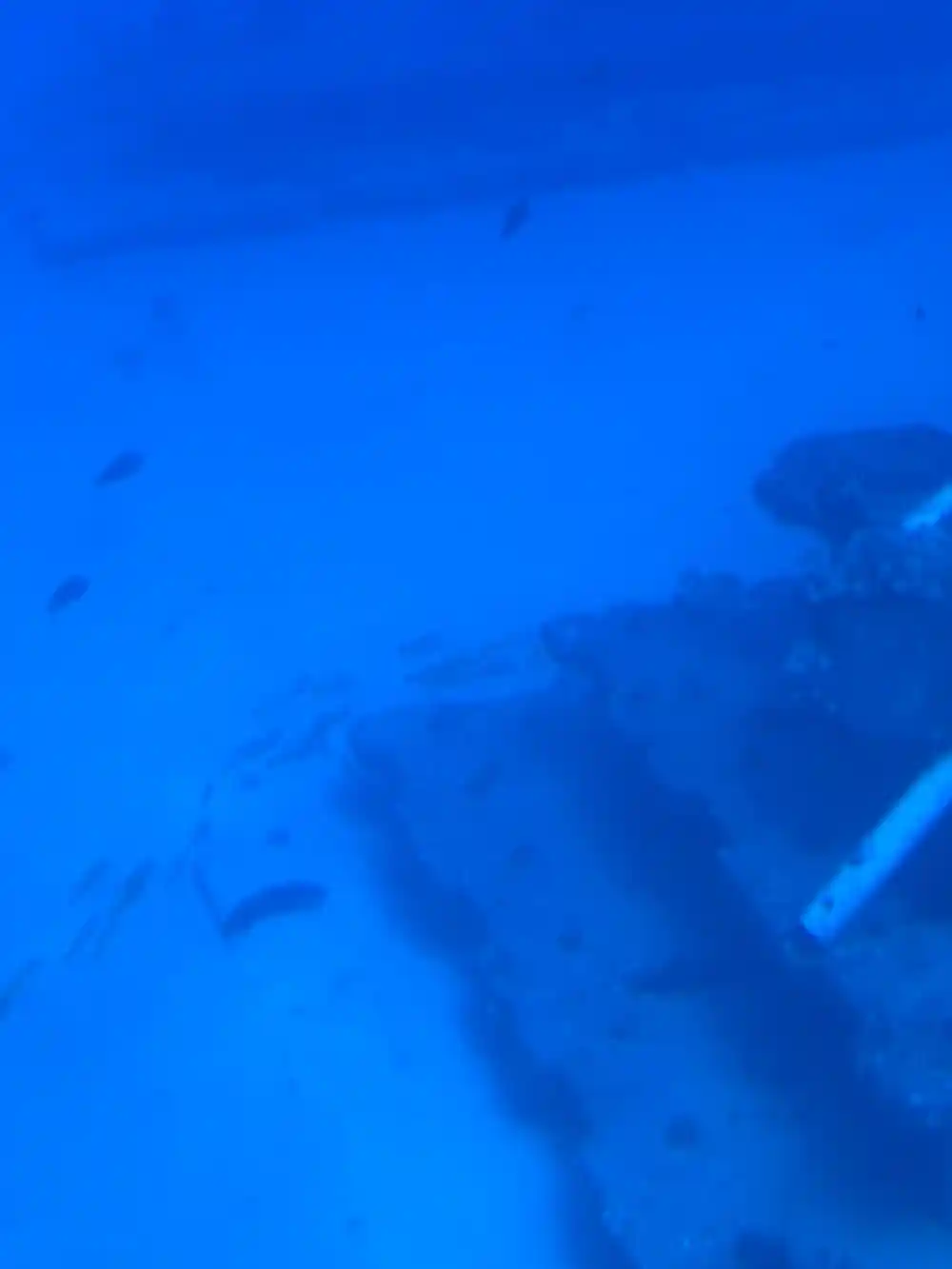
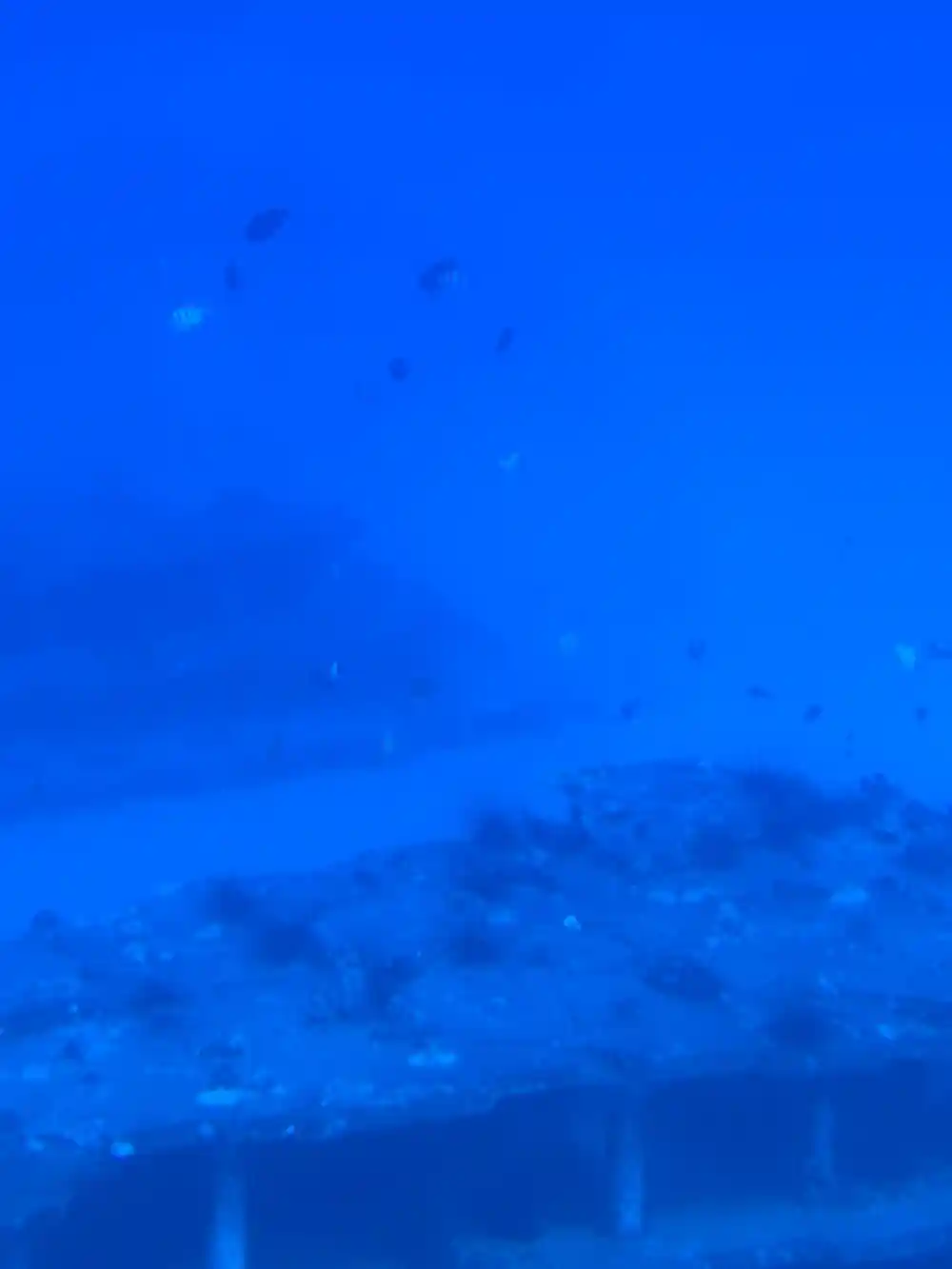
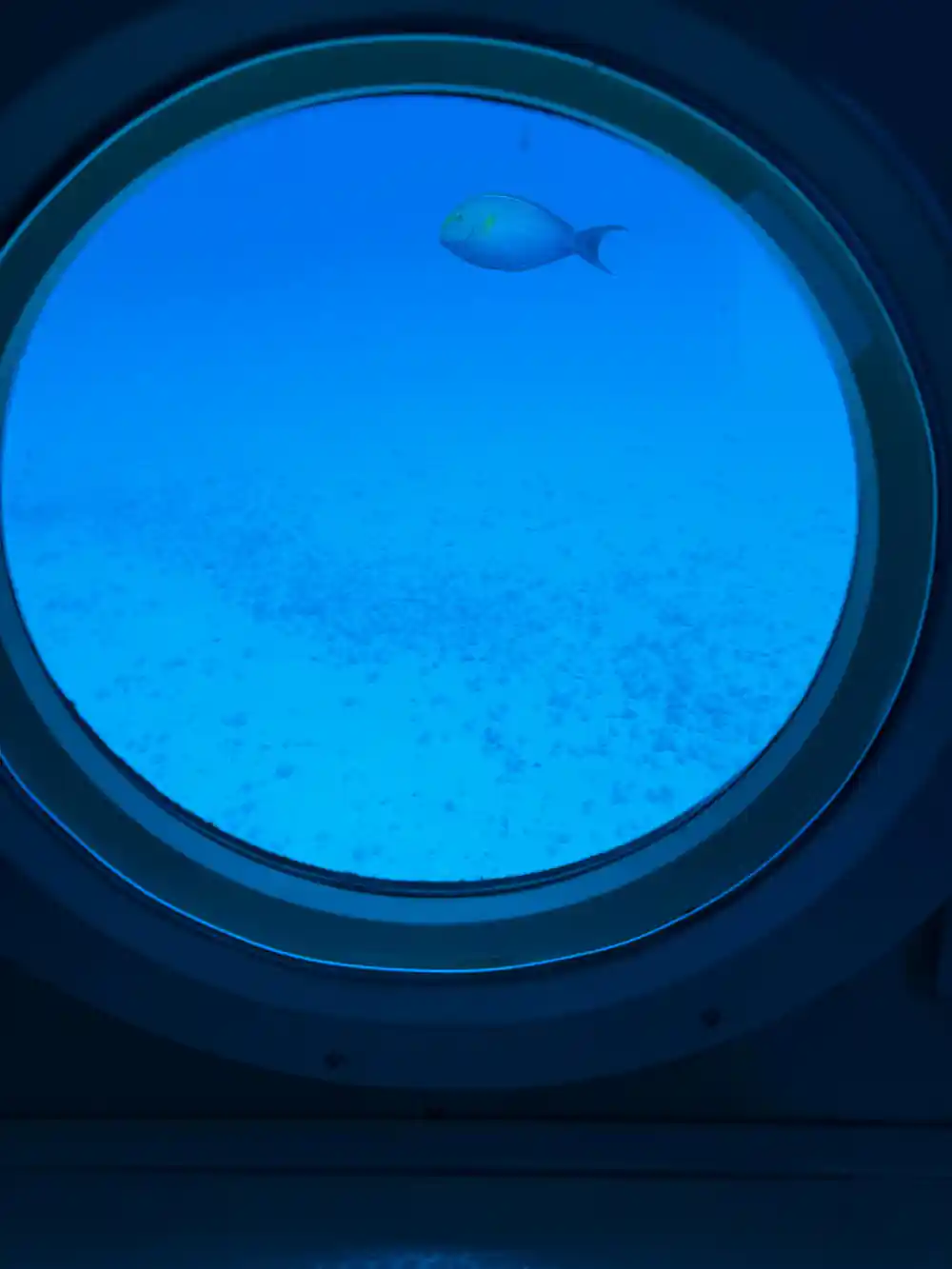
White light is a mixture of wavelengths, and water does not absorb them equally. It takes the long wavelengths out first and fastest. Red is the longest visible wavelength and it disappears almost immediately: by ten metres there is essentially no red light left in the water at all. Orange follows soon after. Yellow persists longer. Green and blue travel furthest, which is why the deep ocean is blue rather than any other colour.
At a hundred feet you are well past the point where red exists. Anything red down there is not dark red or dull red; it is grey, because there is no red light for it to reflect. A red object at that depth is functionally colourless.
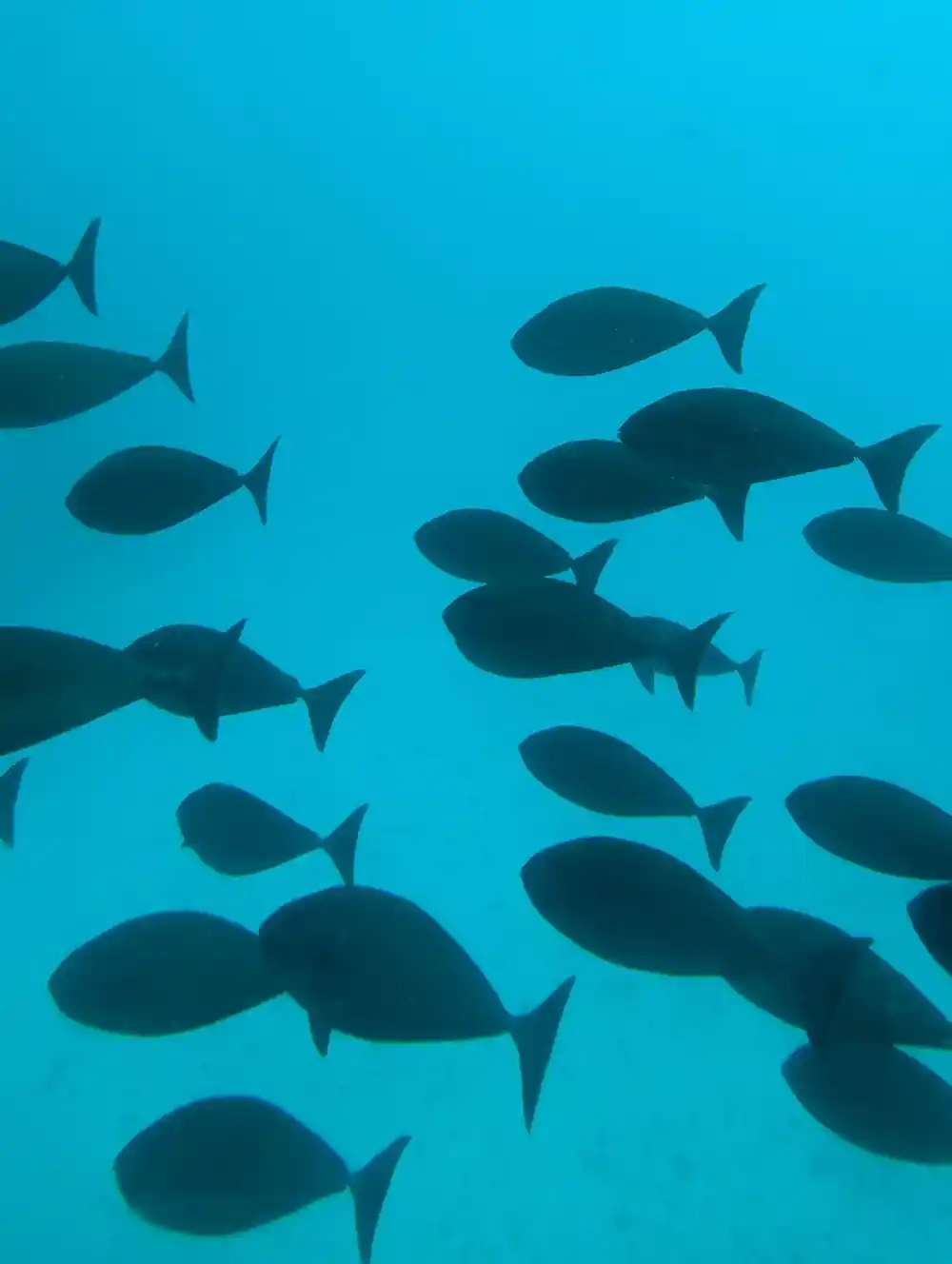
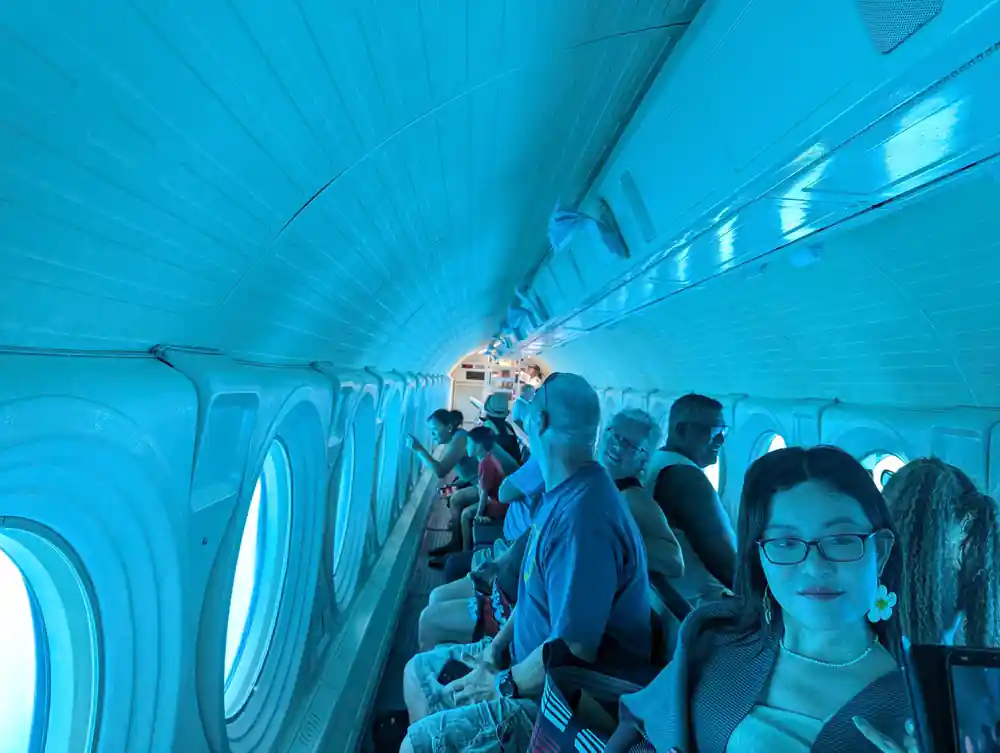
This is why the operator's photographs look so different from what your eyes report. Those images were taken with lighting, and artificial light restores the wavelengths the water removed. It is not deception; it is the only way to photograph colour at depth. But the naked-eye version is a blue world, and knowing that in advance turns a disappointment into a phenomenon.
The cabin depth display reading 102 feet
Is it dark
No, and this surprises people who are braced for gloom.
A hundred feet is well within the sunlit zone. On a bright Hawaiian day with reasonable visibility the seabed is clearly lit, shadows are visible under structures, and there is no need for the submarine to carry lights for you to see by.
What changes is the quality rather than the quantity. The light is diffuse, coming from a broad bright ceiling rather than a point, so shadows are soft and everything is evenly illuminated. That flatness combined with the missing wavelengths is what produces the characteristic underwater look.
Visibility varies with swell and season. On a good day you can see structures well before the submarine arrives at them; on a stirred-up day the world closes in and things appear at shorter range, which is atmospheric in its own way.
There is one lighting decision worth noticing on the way back up. As the submarine ascends the colours return in reverse order, and there is a point somewhere in the last fifteen metres where reds and oranges suddenly exist again. Most people are talking by then and miss it, which is a small waste: it is the clearest demonstration of the whole phenomenon that the dive offers.
What you do and do not feel
Nothing, and that is the whole engineering achievement.
The cabin is a pressure hull held at one atmosphere: the same pressure you were at on the pier. The water outside is at four atmospheres at this depth and the hull takes the entire difference. Nothing happens to your ears, there is no equalising, no discomfort and no adaptation.
That is what separates this from every other way of going to a hundred feet. A diver at thirty metres is breathing gas at four atmospheres and accumulating a decompression obligation with every minute. You are sitting in a chair.
The descent is gentle and slow enough that the main sensory cue is visual: the light dimming slightly and the blue deepening. Some people notice the sound changing as the boat submerges and the surface noise stops.
There is no sense of depth from inside. If the display were covered you would have very little idea how far down you were, which is exactly why the display is there.
102 ft
Photographed on the cabin display during a dive. Deep enough that red light has been absent for twenty metres, and shallow enough that daylight still lights the bottom.
The viewports
Worth a paragraph because they shape what you see more than anything except the water.
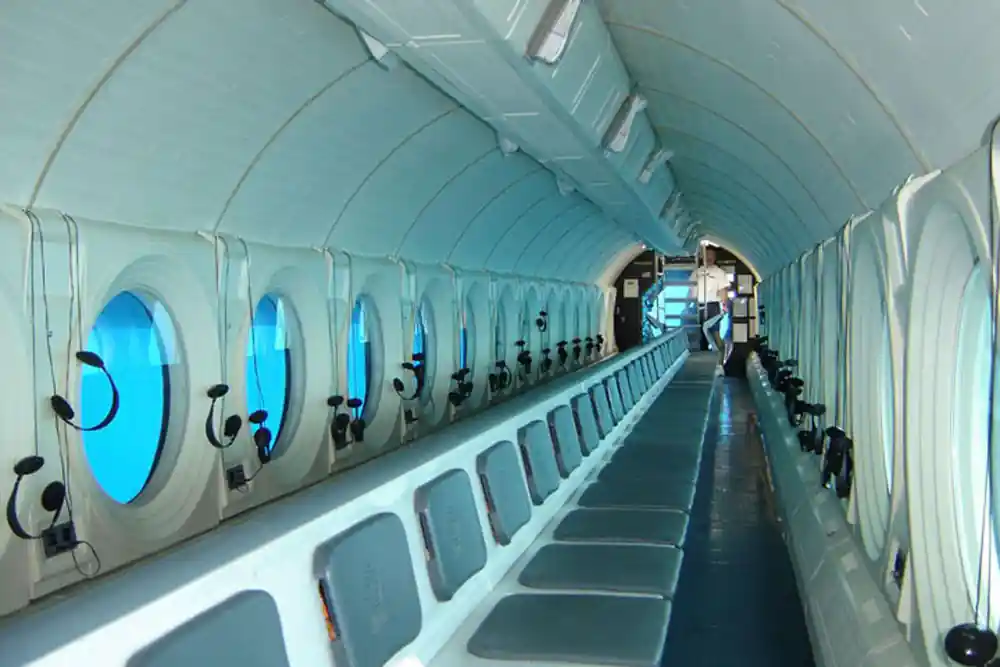
They are thick, curved and made to hold back four atmospheres, which means they are optically substantial objects rather than sheets of glass. A curved port acts a little like a lens, and objects seen through it can appear slightly closer and larger than they are - the same effect a diving mask produces.
Practically, that works in your favour: things look bigger. A turtle at the glass is genuinely impressive partly because the port is helping.
For photography the same curvature is a nuisance, because reflections from the lit cabin bounce off the inner surface. Putting the lens right against the glass eliminates almost all of it and is the single biggest improvement available to anyone taking pictures on this dive.
Thirty metres, and the red is already gone
from US$168Reserve now & pay later