









What is actually down there
The seabed a mile off Waikiki is not a coral reef. It is sand, and sand supports very little: there is nowhere to hide, nothing to grow on, and almost nothing to eat. Left alone it stays close to empty.
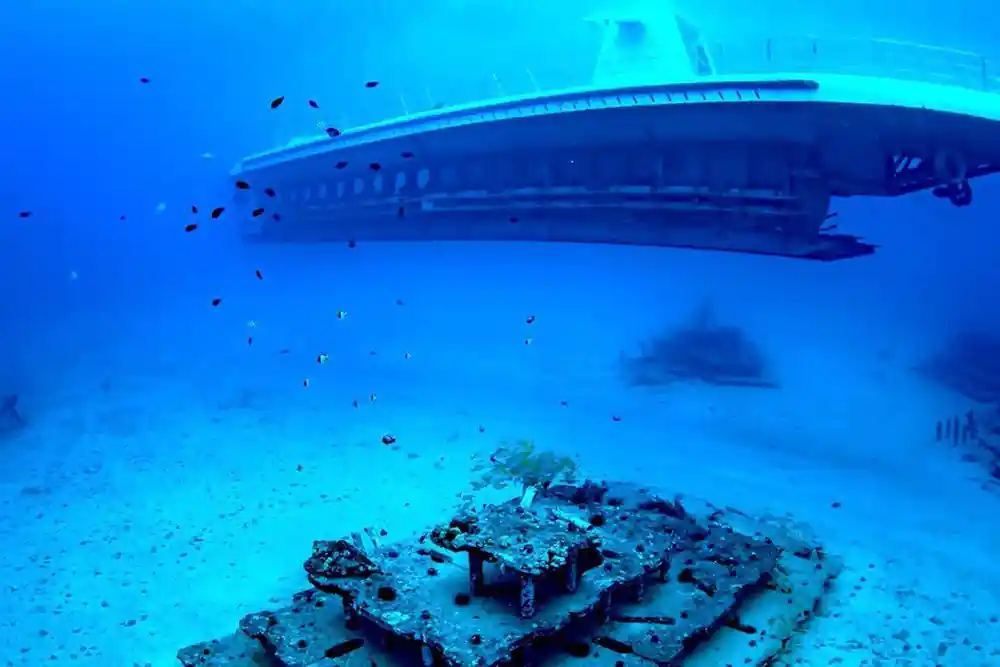
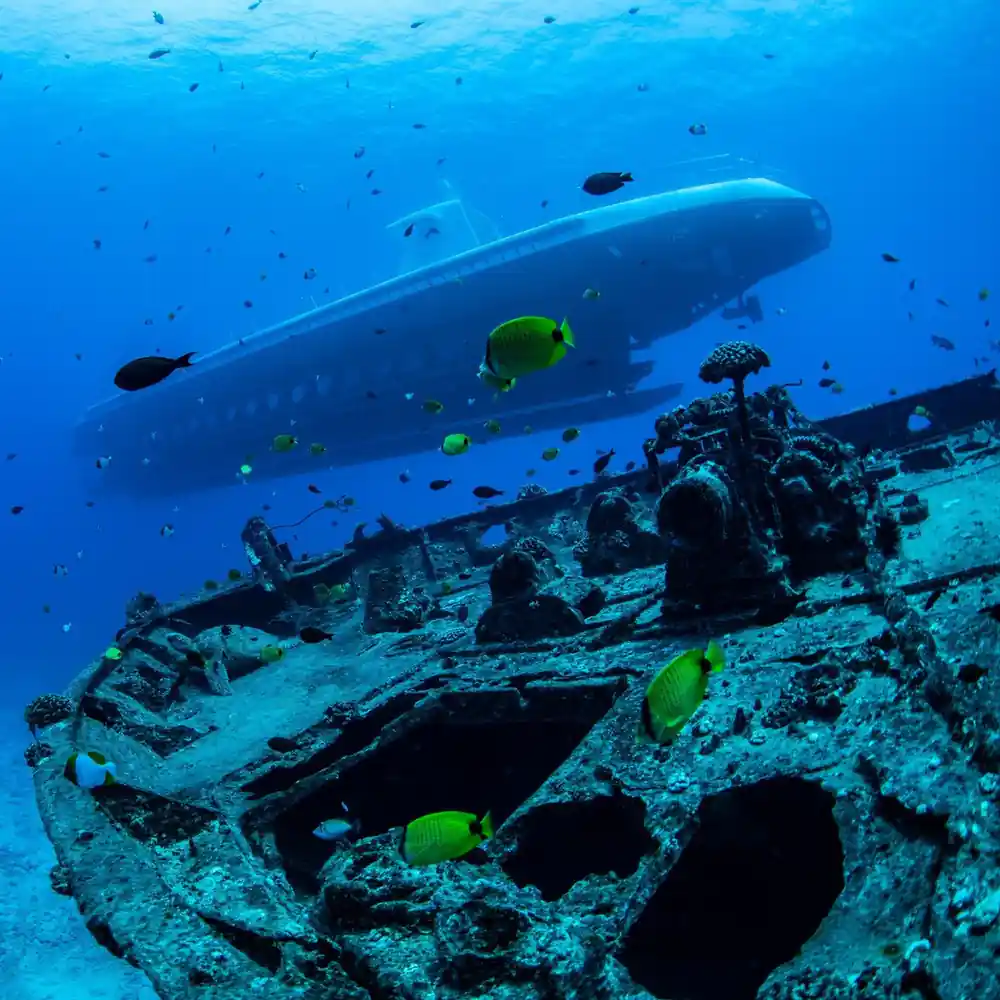
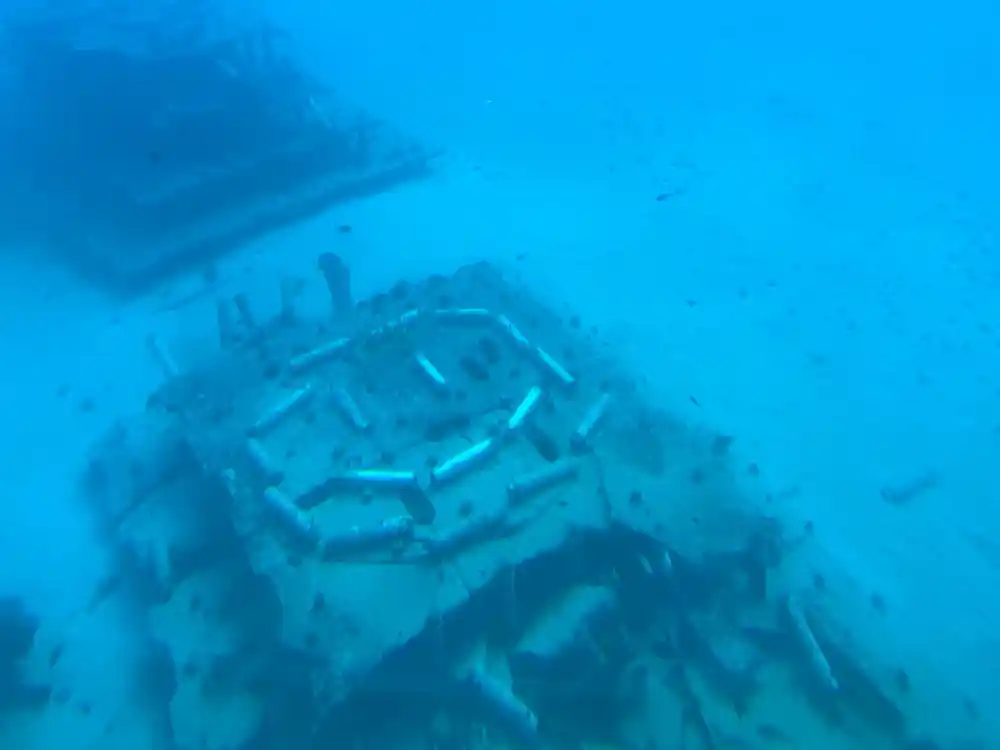
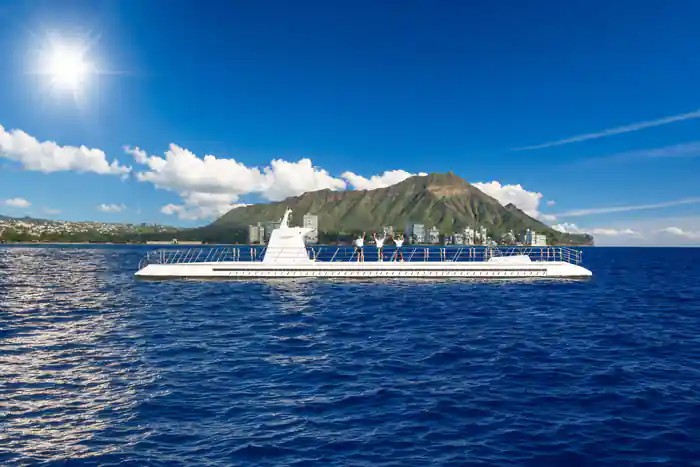
What the submarine visits is an artificial reef. Vessels and aircraft were cleaned, stripped and deliberately sunk onto that sand to create hard structure, and structure is the thing a reef ecosystem is missing. Algae and invertebrates settle on it within weeks. Small fish arrive for shelter. Bigger fish arrive for the small fish. Within a few years a patch of empty bottom becomes a place.
So everything you look at through the viewport is there on purpose, which is a considerably better story than a natural reef and one the booking page tells in half a sentence.
The wrecks and the aircraft
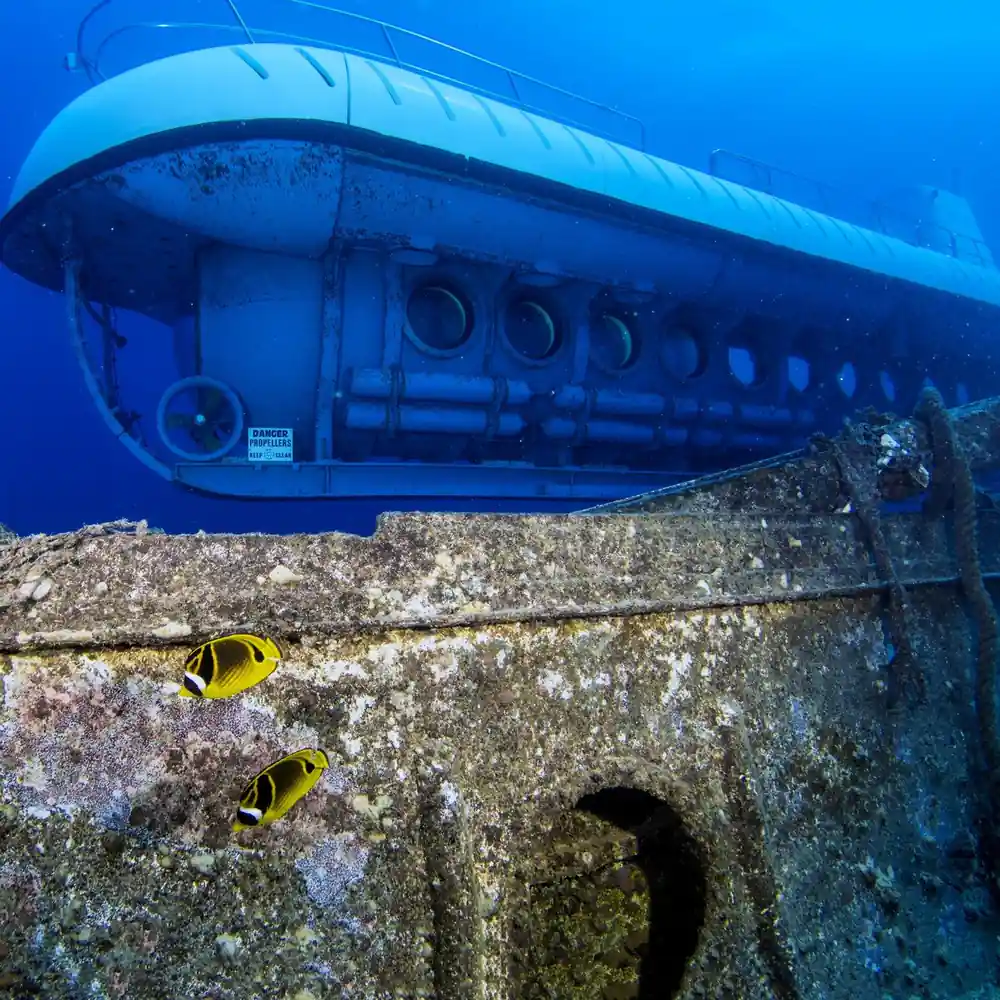
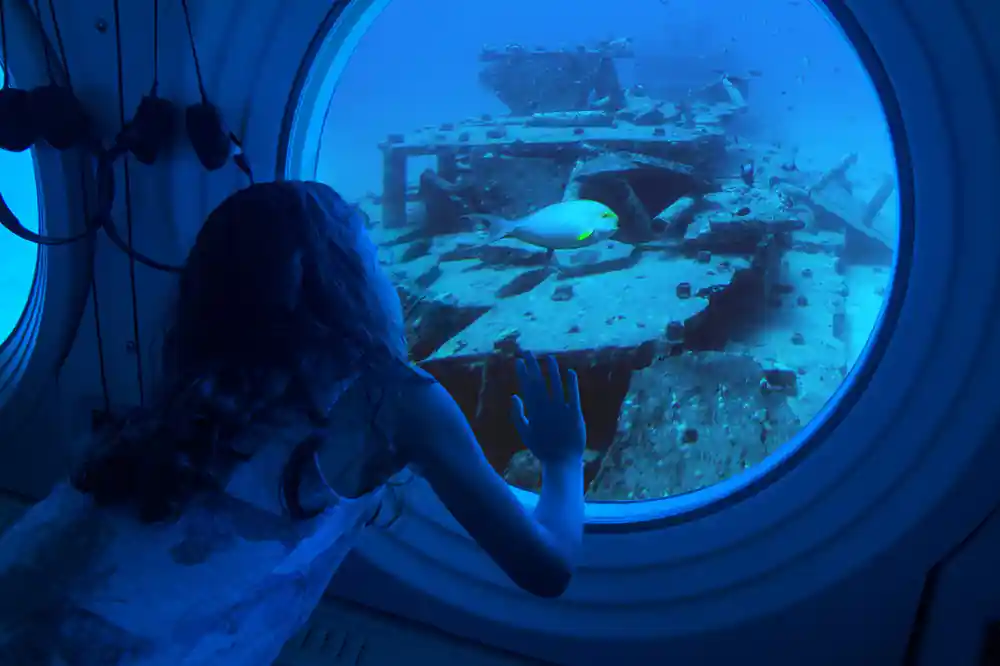
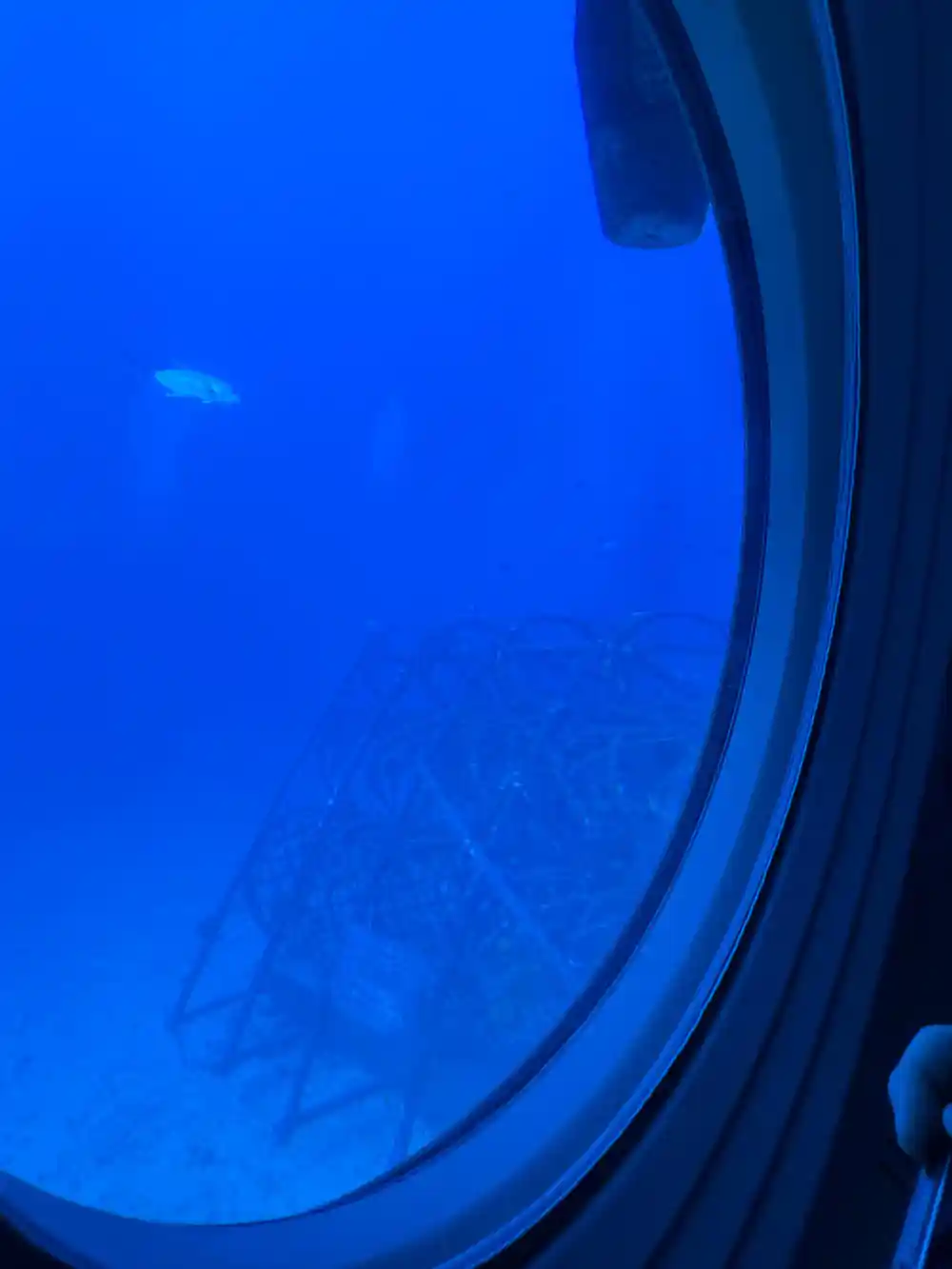
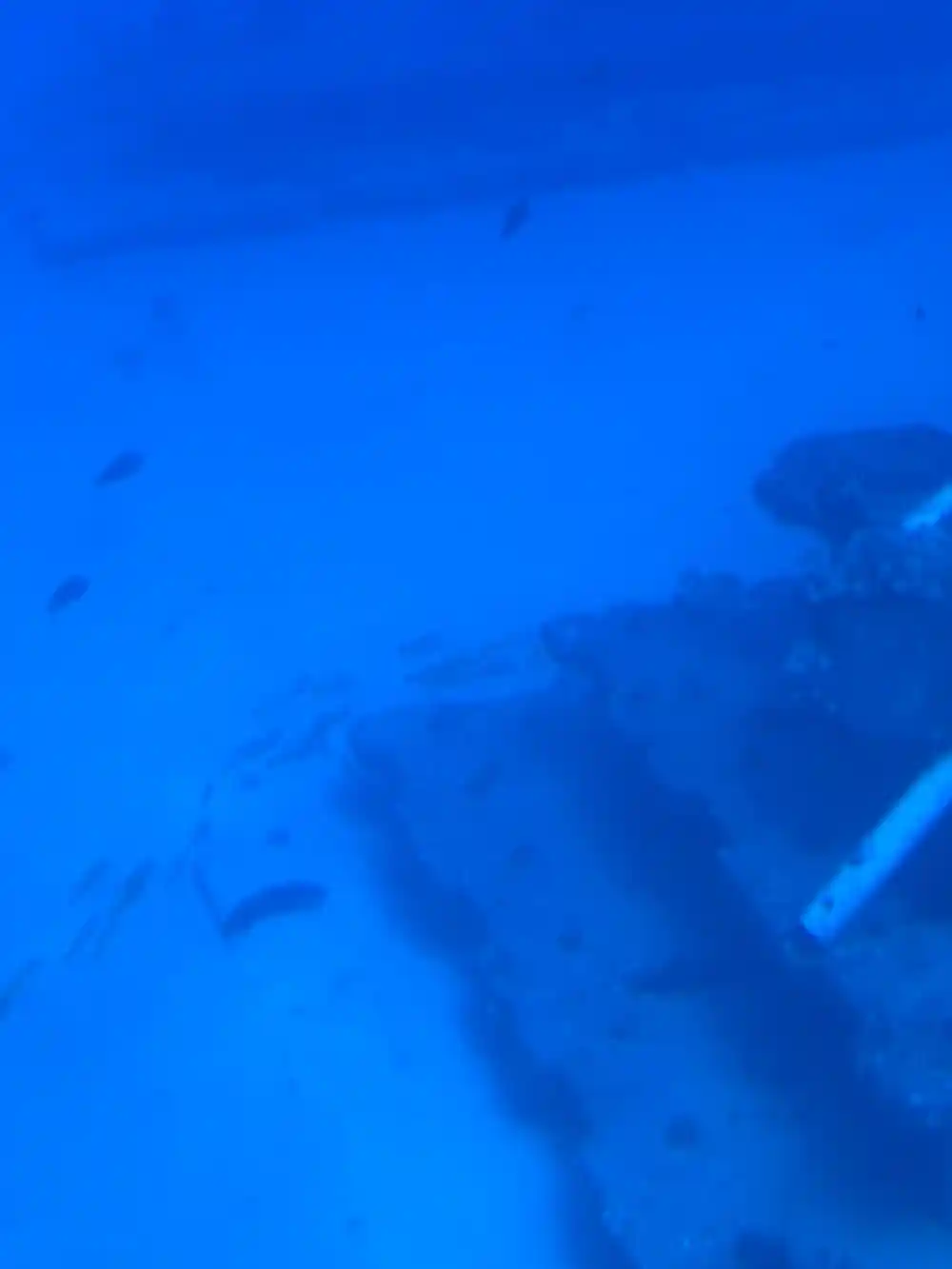
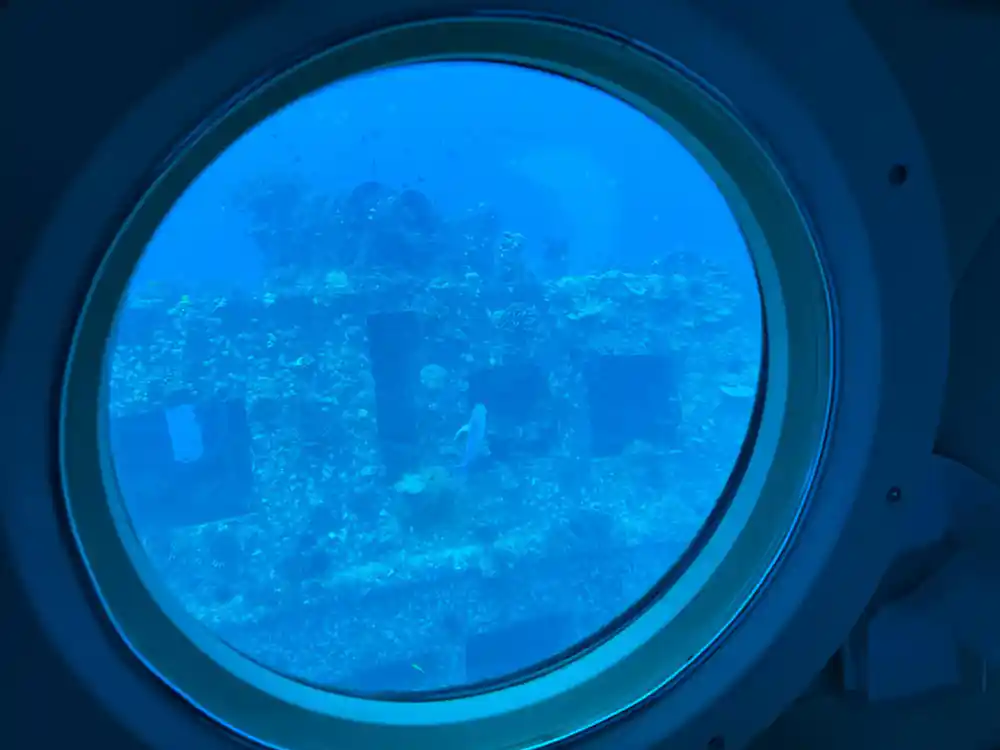
The wrecks are the headline. Sunken vessels lying on the sand, upright or listing, their frames and superstructures now furred with growth and swarming with fish. From a viewport you pass along the length of one at close range, which is a very different experience from the same wreck in a photograph.
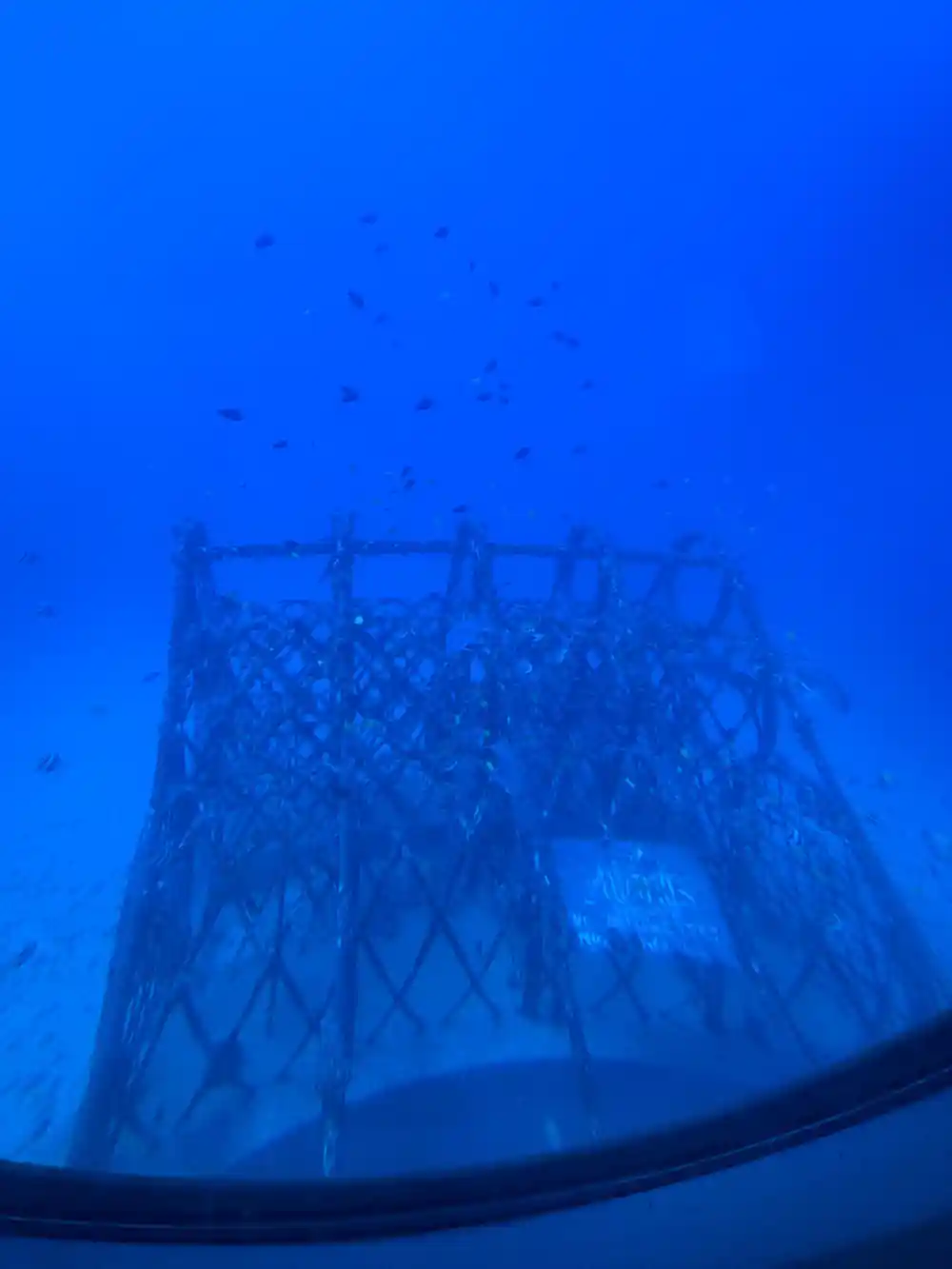
The aircraft is the part nobody expects. There are aeroplanes on this reef, put there for exactly the same reason as the ships, and coming across an aircraft fuselage on the seabed at a hundred feet is genuinely startling the first time.
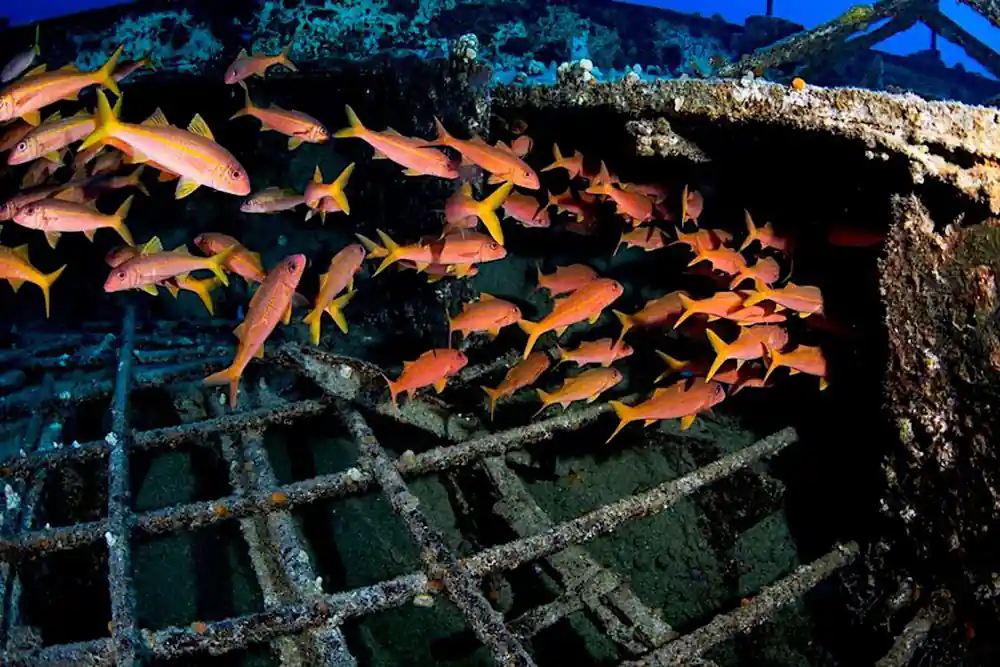
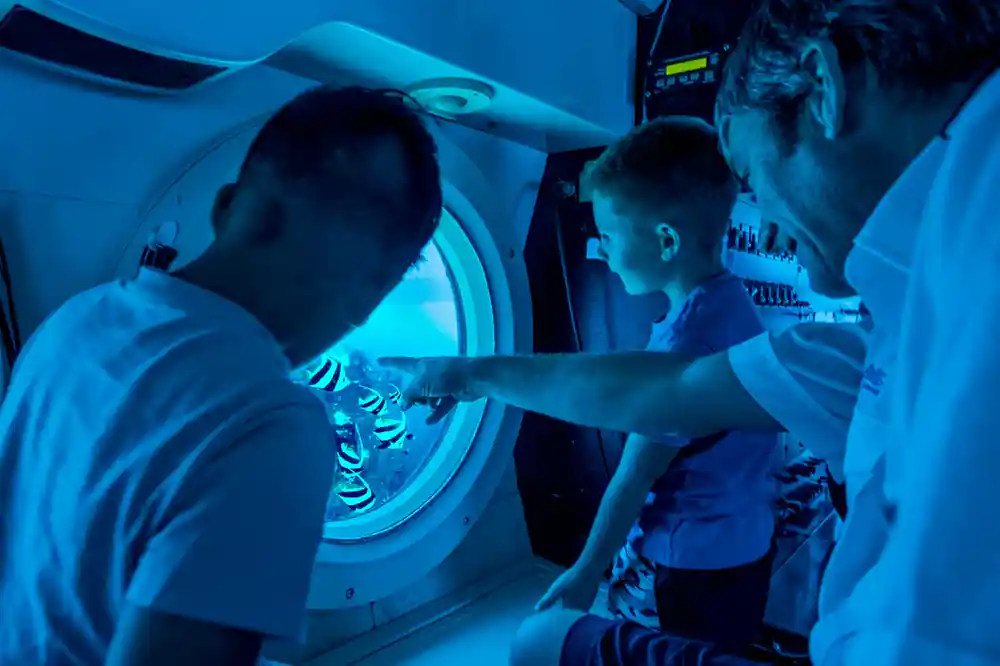
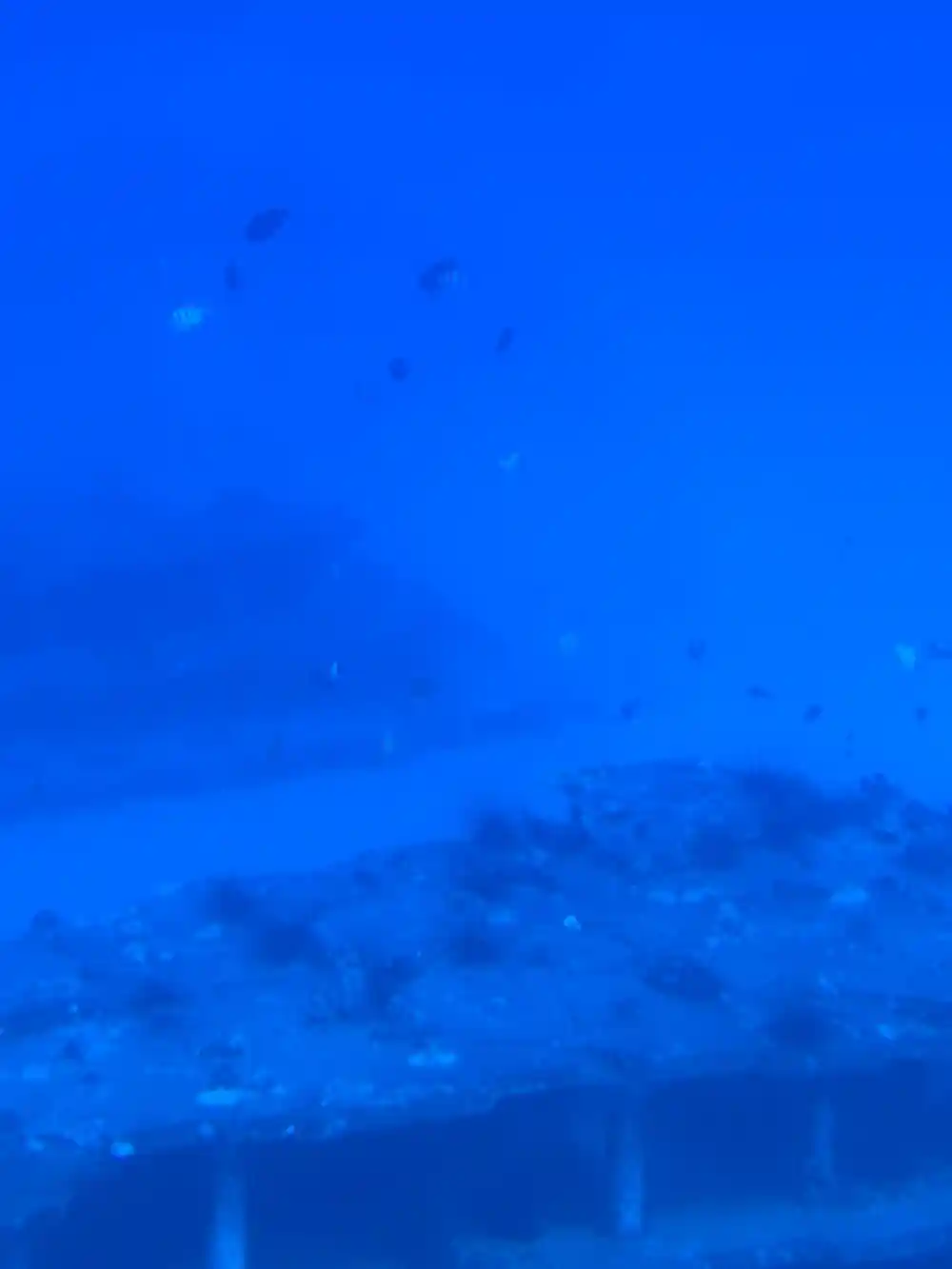
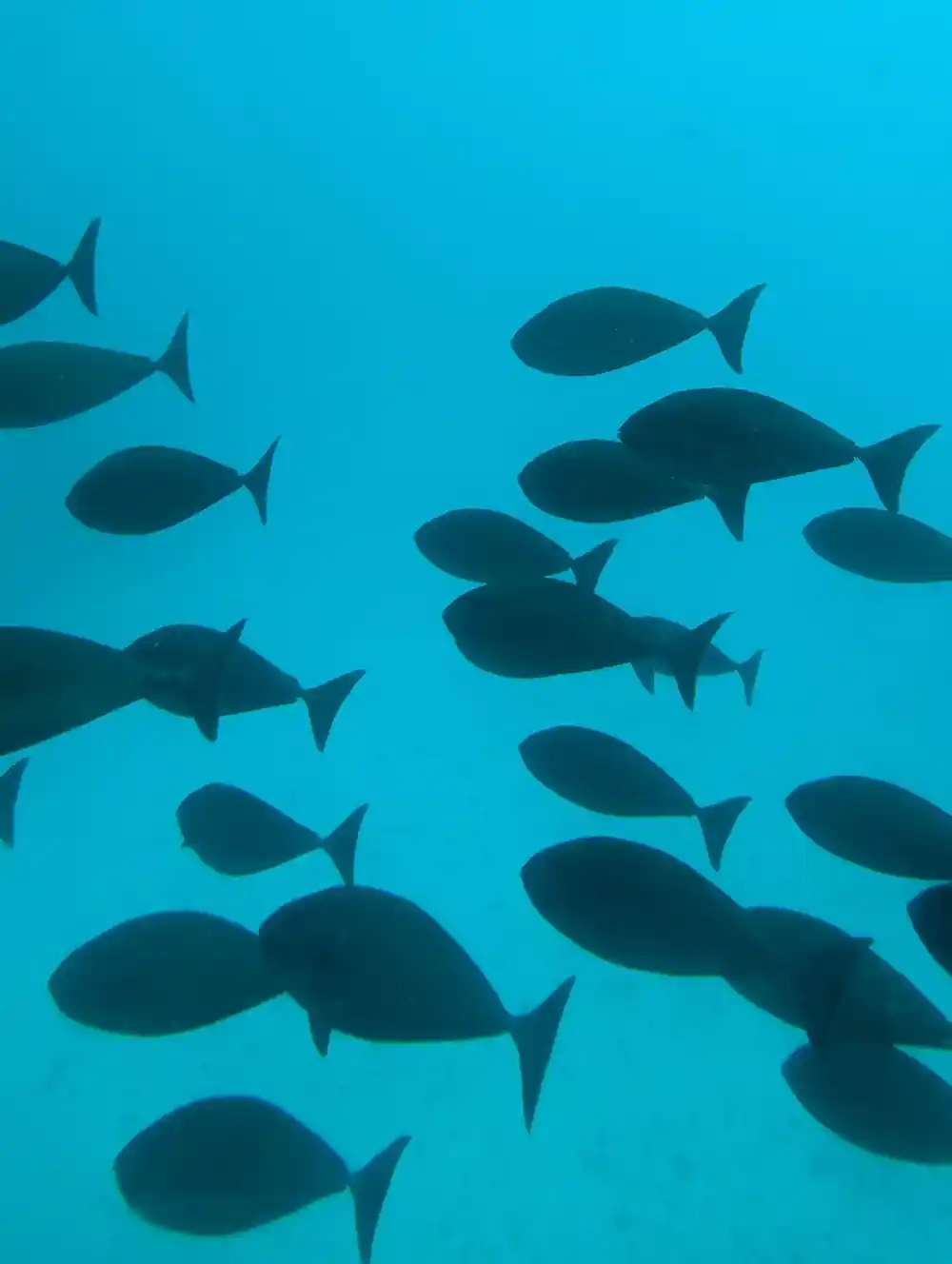
Both hold fish in ways bare sand never does. The most reliable thing to look for is not the structure itself but the cloud of orange soldierfish that packs into every shaded frame and opening on it.
Turtles, and the rest of the residents
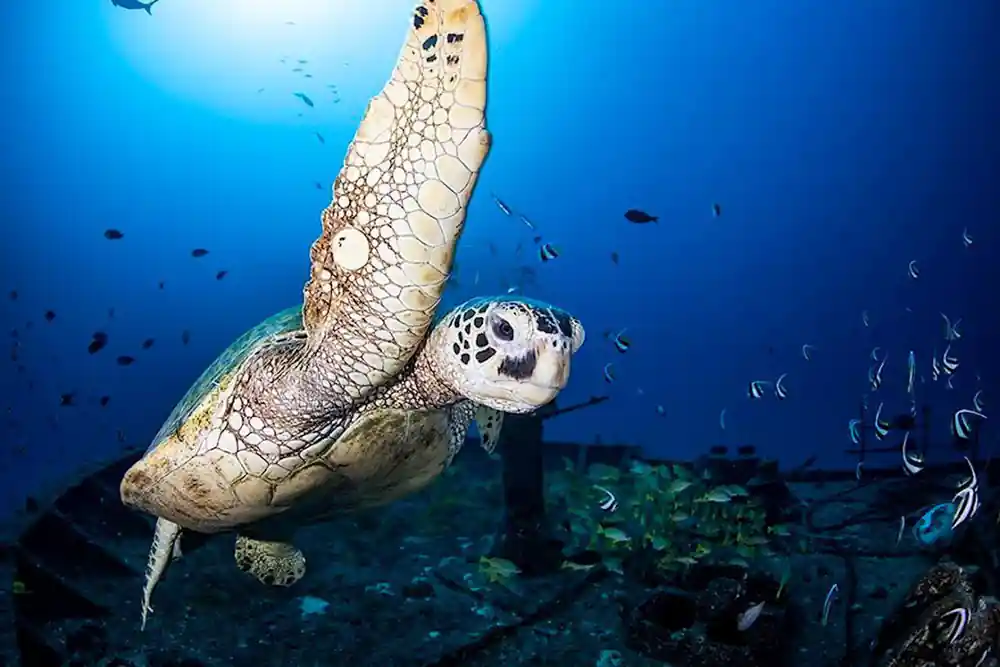
Green sea turtles - honu in Hawaiian - are resident at this site and are commonly seen, though nothing about wildlife is a guarantee. They are protected under both Hawaiian and federal law, they are entirely unbothered by the submarine, and they will occasionally come close enough to a viewport to look in.
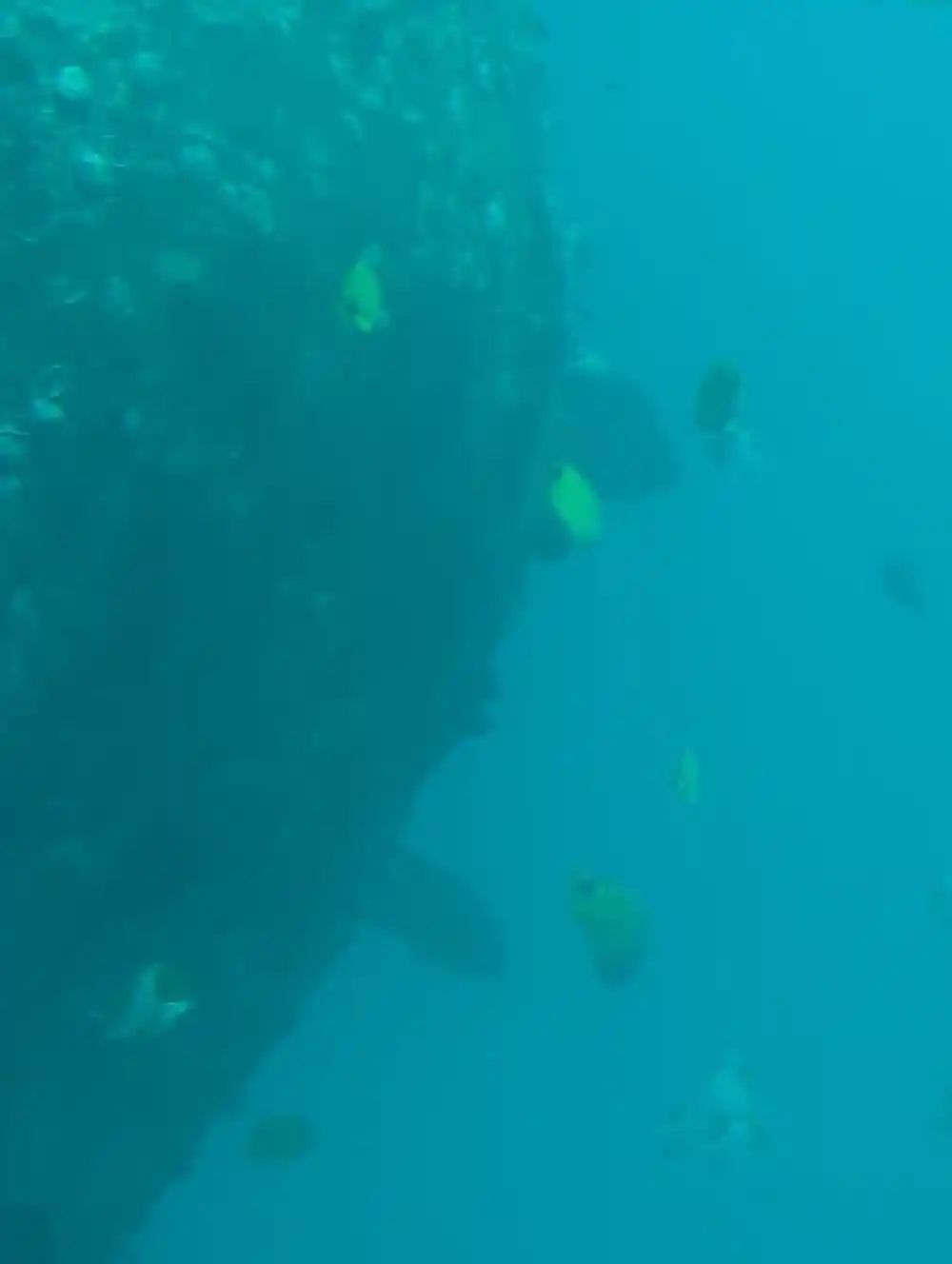
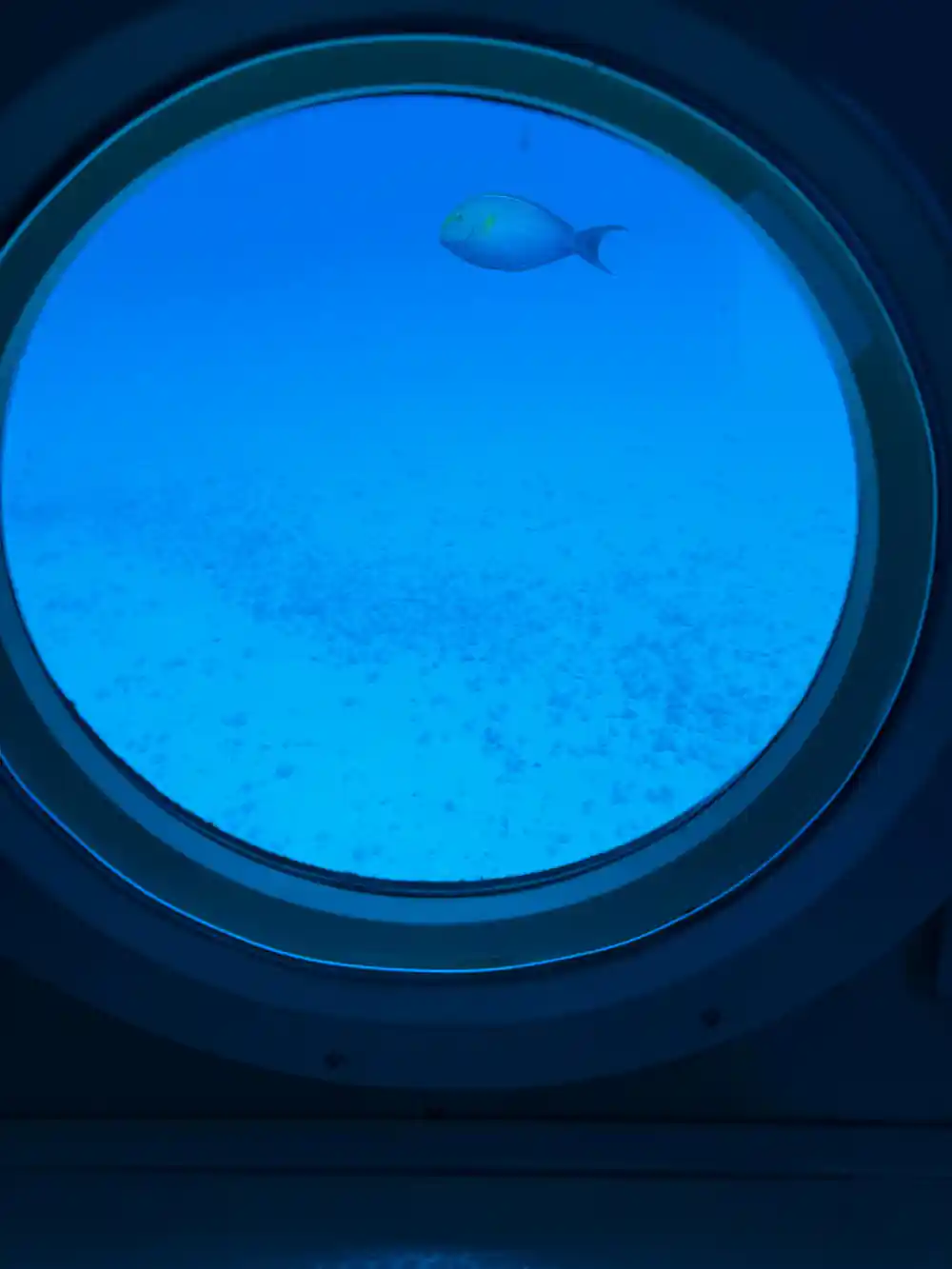
The fish are the constant. Yellow tangs, bright and unmistakable, moving over the structure in loose groups. Soldierfish massed in the shade of the wrecks. Butterflyfish along the frames. On any dive the number of individual animals is in the thousands.
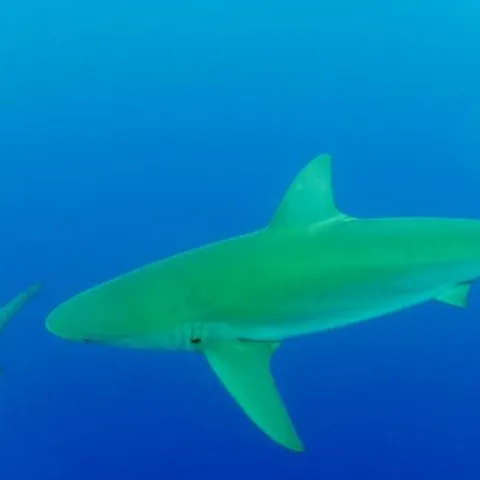
Sharks and eels are both possible and both are asked about constantly. Reef sharks occur along this coast and are shy; morays live in holes in the structure and spend most of the day in them. Neither is a hazard to anyone sealed inside a submarine, and both are a good day when they turn up.
What a hundred feet does to what you see
The world goes blue, and it is worth knowing why before you assume the water is dirty.
Water absorbs light by wavelength, and it takes the long wavelengths out first. Red is essentially gone within the first ten metres. Orange follows, then yellow. By the time you are at a hundred feet the only light left in any quantity is at the blue end, so everything down there - the wrecks, the sand, a turtle's shell - is rendered in blues and greys.
This is why photographs from a submarine look monochrome, and why the orange soldierfish that look vivid in the operator's lit photographs appear as dark shapes to the naked eye at depth. Nothing is wrong with the water. You are simply looking at a filtered version of the spectrum.
Visibility off Waikiki is generally good and varies with swell and season. On a clear day the structure resolves well before the submarine reaches it.
What this is not
It is worth being direct, because the commonest disappointment on this trip is an expectation that nobody corrected.
It is not a tropical coral garden. Hawaii's postcard coral is in shallow, bright, warm water, and this dive is a hundred feet down on a sand plain around structure. The palette is blue and grey and the subject is wrecks.
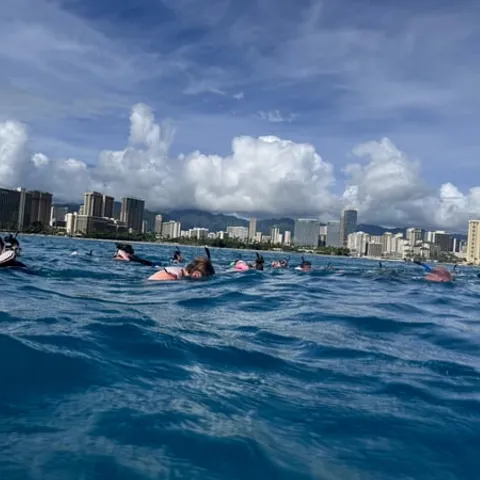
It is not snorkelling. You are behind glass at a fixed distance and moving at the submarine's pace, not yours. That trade hands you depth, dryness and access for people who could never snorkel, and takes away intimacy in return.
It is not a whale or dolphin trip. Those are surface animals on a different sort of tour.
What it is, is the only realistic way most people will ever look at a hundred feet of ocean, and a genuinely good wreck site at the end of it.
Dry, and open to almost anyone
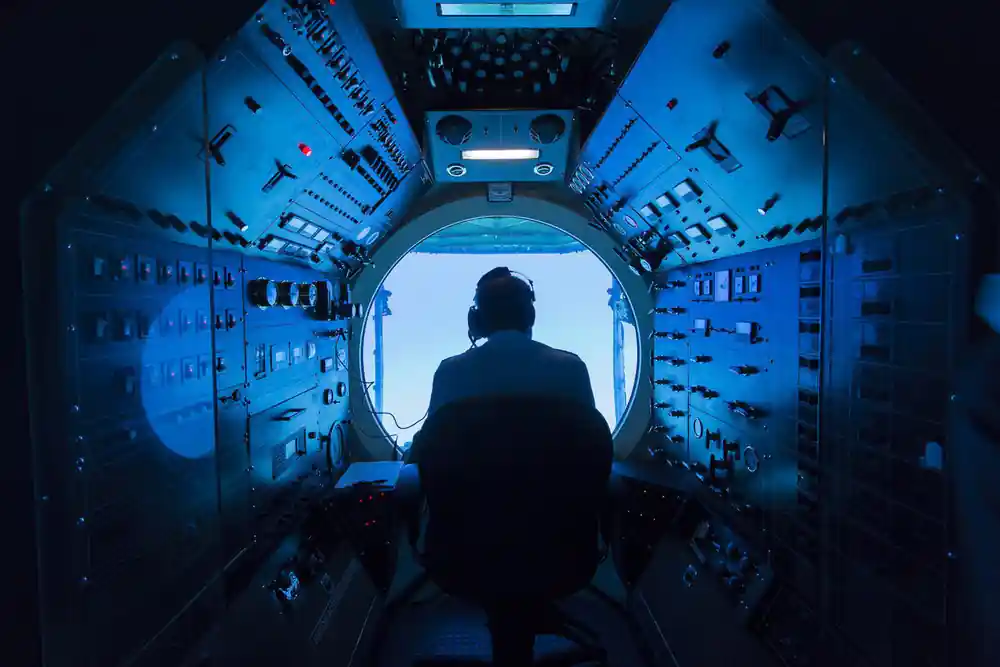
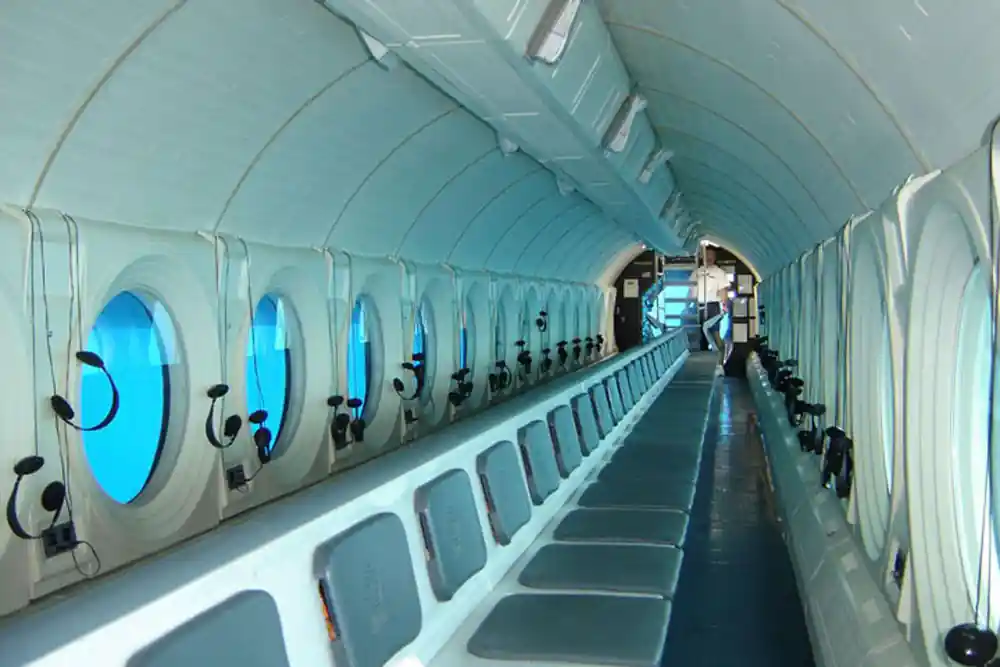
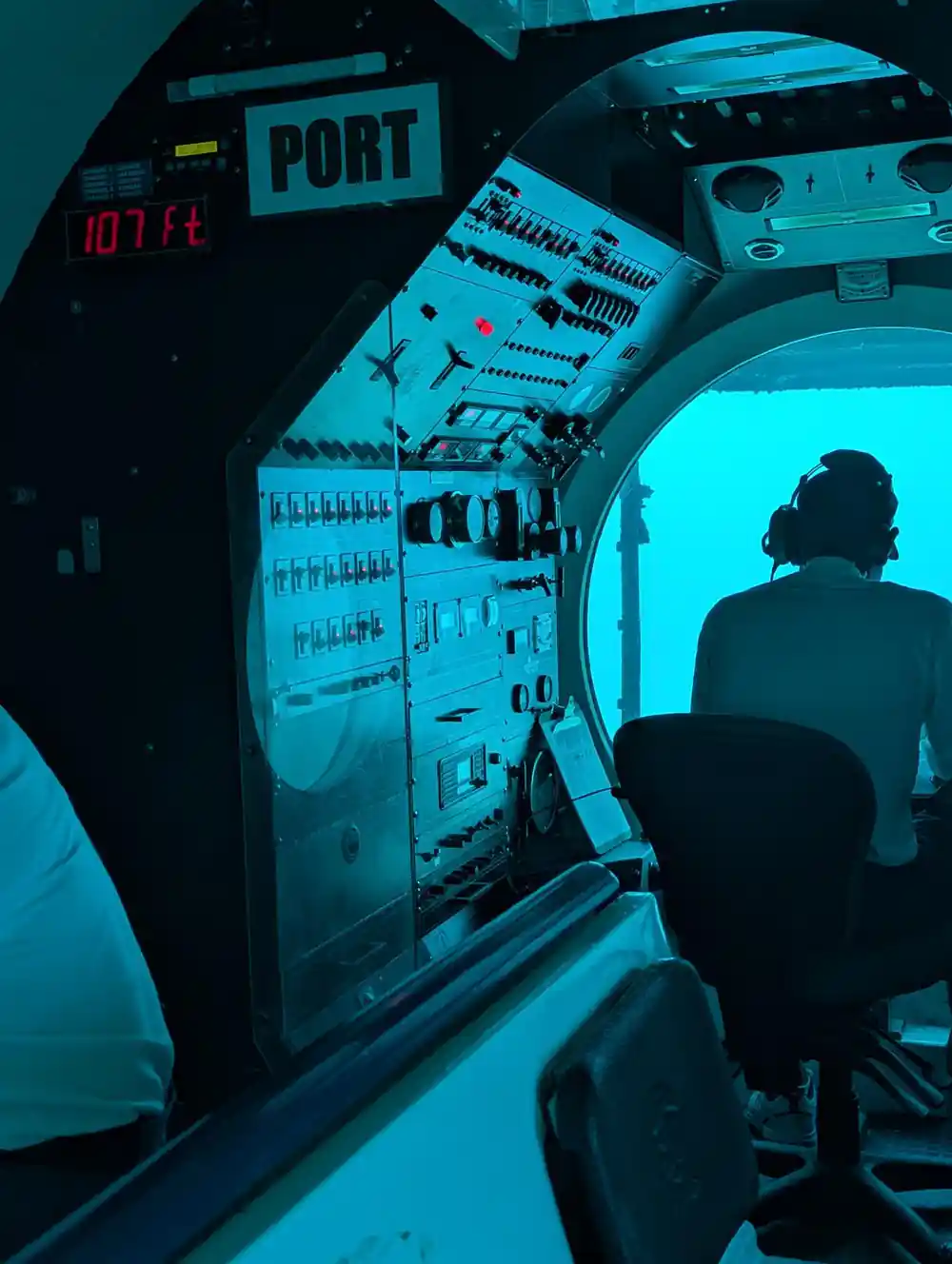
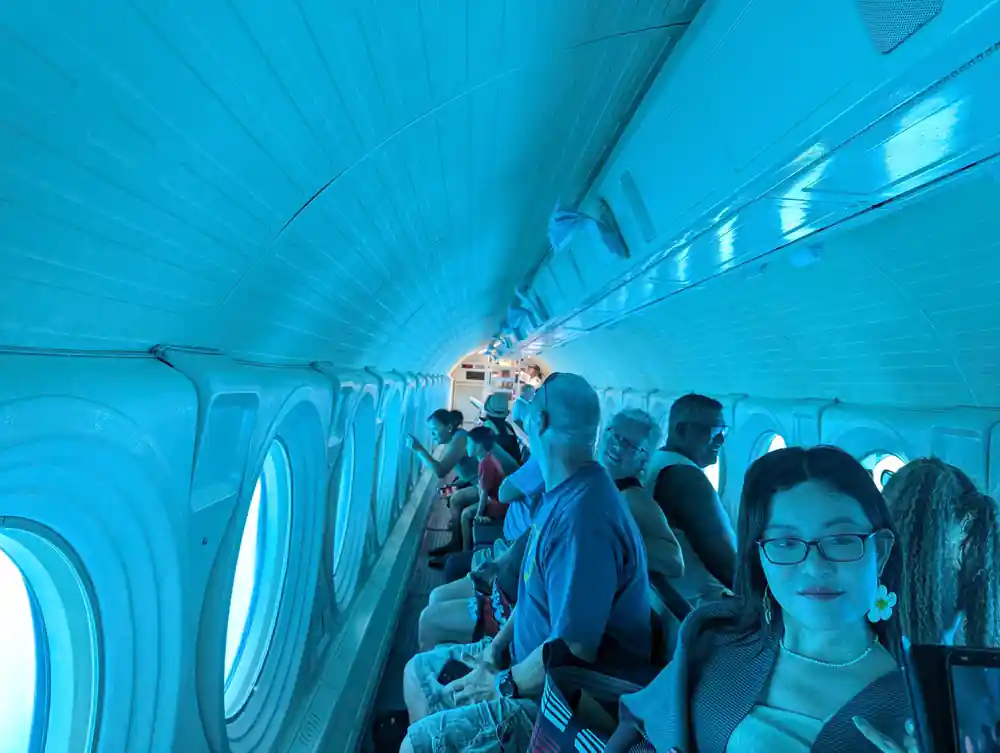
The submarine is pressurised at one atmosphere throughout, which means it stays at surface pressure the whole dive. There is no equalising, no equipment, no certification and nothing that happens to your ears.
You do not need to swim. You do not get wet. Nobody is fitted with anything.
That combination is why this trip reaches people that no dive or snorkel can: grandparents, non-swimmers, small children, anyone with a nervous relationship with open water. For a great many passengers it is the only time they will ever see a reef at depth, which is worth remembering when comparing it with a dive.