The main points
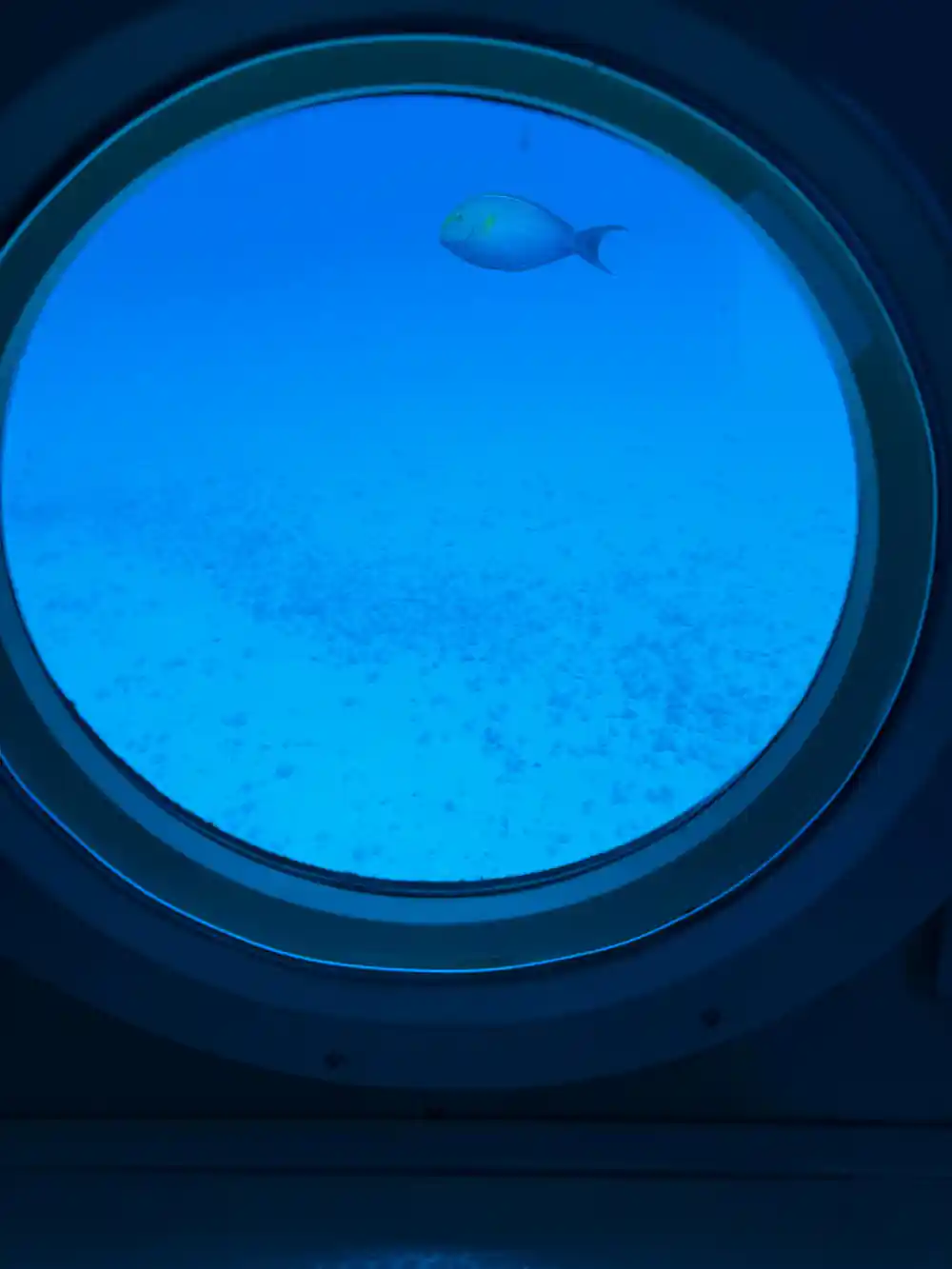
- Small, flat, and a yellow so saturated it survives the depth.
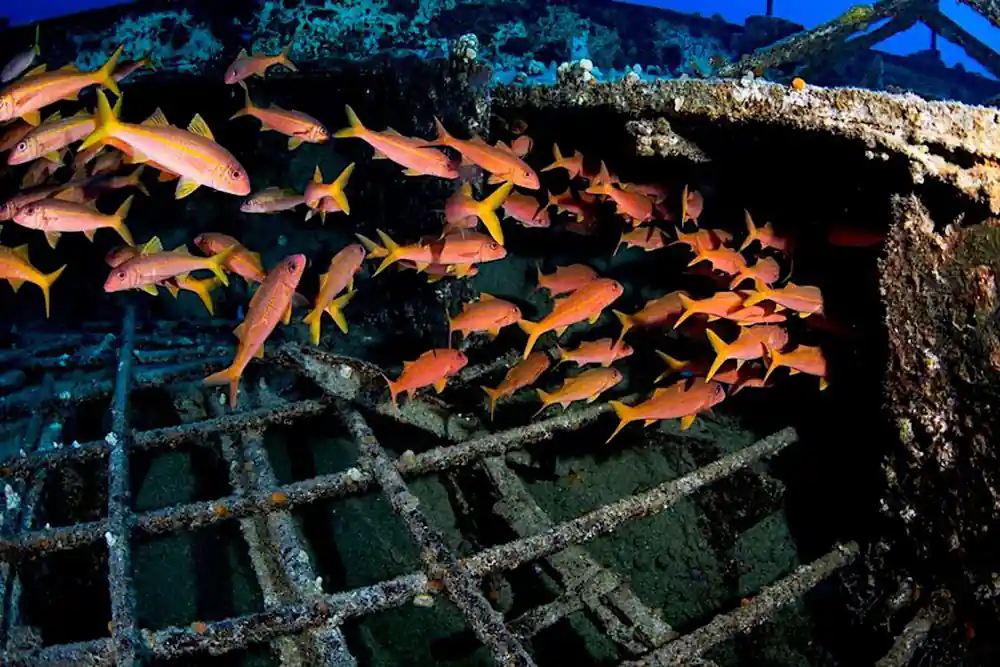
- Nocturnal, so they hang motionless in shade all day.
- The sand between is close to empty, which is the point.
- Slow, large and predictable reads as terrain rather than threat.
Why they are all in one place
The first thing to notice is the distribution rather than the species. Over open sand you see almost nothing. Over a wreck you see thousands of animals. The transition happens in seconds and it happens every time.
This is the whole logic of a reef, artificial or otherwise. Fish need somewhere to hide from the things that eat them, and structure is the only thing on a sand plain that provides it. Once shelter exists, small fish arrive; once small fish exist, the things that eat small fish arrive; and the whole assembly stacks up on a few hundred tonnes of sunk steel.
So the fish are not decoration on the wrecks. They are the reason the wrecks were put there.
The ones you will definitely see
Yellow tangs are the easiest and the most rewarding. A tang is a small disc-shaped fish, laterally flattened, and this species is a single uniform lemon yellow that is so saturated it remains visible at depth where almost every other colour has been stripped out by the water. They graze algae off hard surfaces, so they work the structure constantly in loose scattered groups. If you see a colour at all on this dive, it will be a tang.
Soldierfish are the mass. These are the orange fish that pack into every shaded opening on the wrecks, sometimes hundreds in a single frame, and they hardly move. The reason is that they are nocturnal: they spend the day hanging in the dark and come out at night to feed. A frame that reads as structure from a distance turns out to be entirely full of fish at close range, which is one of the better moments of the dive.
Butterflyfish work the edges. Small, disc-shaped, patterned, often in pairs, and constantly on the move over the surfaces picking at things.
And wrasses hunt everywhere. They are the elongated, restless, constantly-moving fish that never seem to settle, working over the debris at the base of a structure.
The ones that are a good day
Moray eels live in the holes. A moray spends most of the day with its body in a crevice and its head out, mouth opening and closing, which is respiration rather than menace. Spotting one is a matter of looking at openings rather than at open water.
Larger predators pass through: jacks and similar hunters that patrol the structure and move on. They are fast, they are usually silver, and they generally arrive as a group crossing the field of view rather than hanging about.
Rays occur over the sand rather than on the structure, and are worth watching the empty stretches for.
Reef sharks are possible and uncommon and shy, and they have their own page on this site because everybody asks.
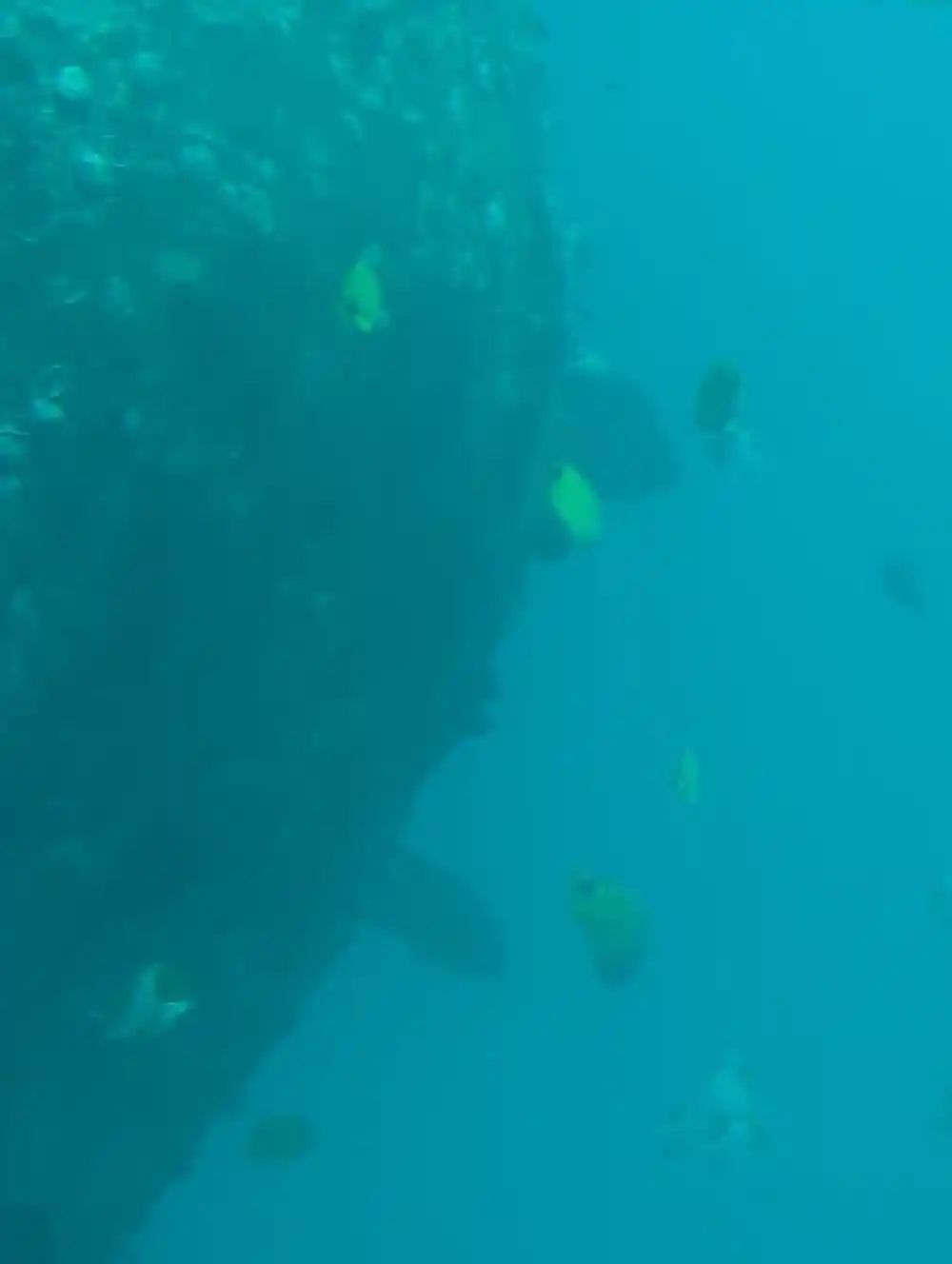
Soldierfish massed in the shaded frame of a wreck
Why the colours are wrong
The photographs in the operator's gallery show orange fish and yellow fish in vivid colour. Your eyes at a hundred feet will not.
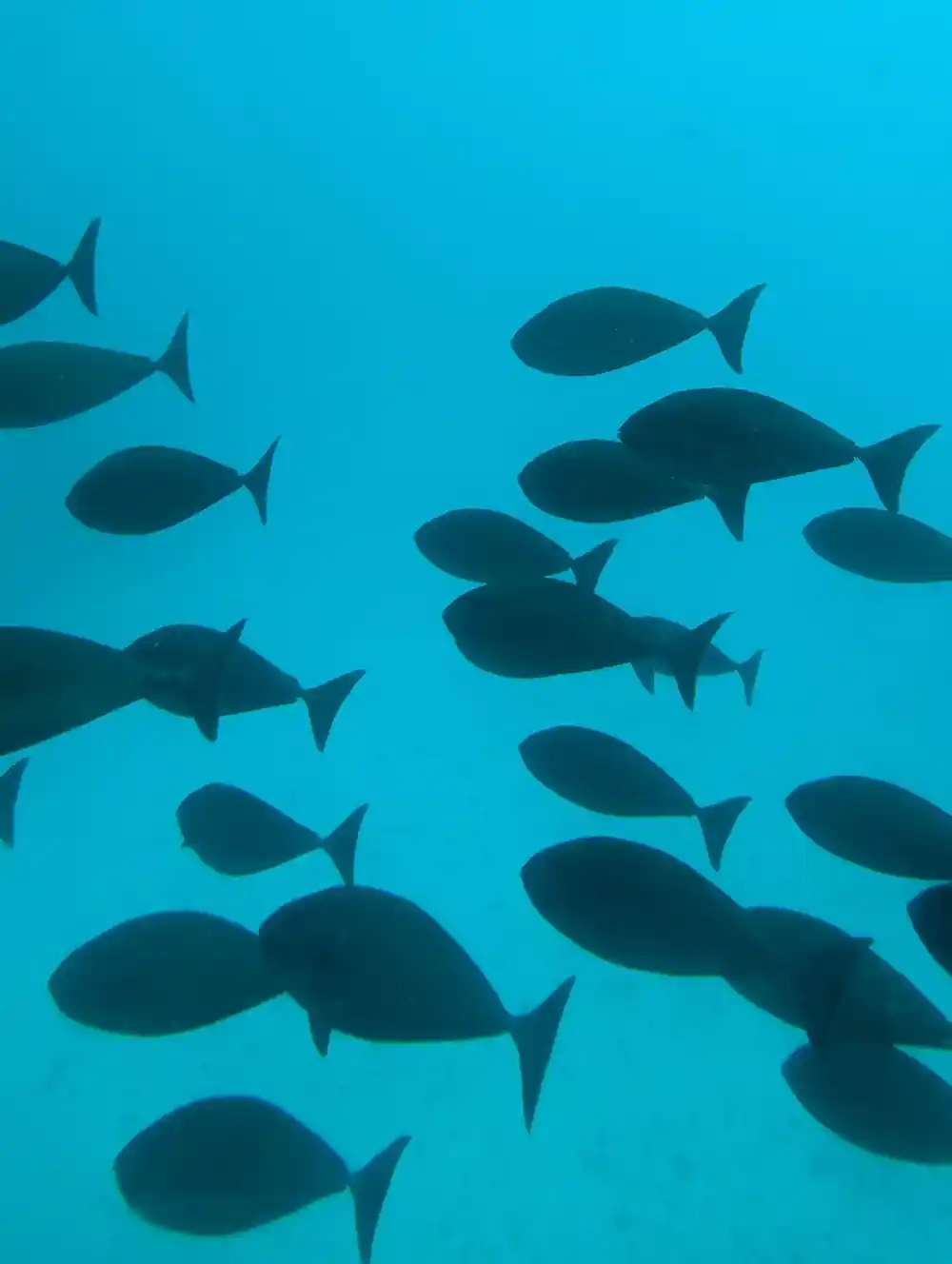
Water removes light by wavelength and it takes the red end first. By thirty metres red is essentially gone, orange is heavily reduced and yellow is fading. What is left is blue and green light, so the same soldierfish that photograph as bright orange under a strobe appear as dark grey-brown shapes to the naked eye.
Yellow survives better than red, which is why tangs remain recognisable at depth and soldierfish do not.
None of the gallery photographs are dishonest; they are lit, and lighting puts the red back. But it is worth arriving knowing that the naked-eye version of this dive is a study in blue with a few yellow accents, rather than the aquarium palette the pictures suggest.
Hawaii's unusual fish list
One thing worth knowing before you look: Hawaii's reef fish are not the same as everybody else's, and the difference is a consequence of geography.
The islands are about as isolated as land gets. Thousands of kilometres of open ocean separate them from any other reef system, which means very few species ever arrive, and the ones that do arrive have been evolving on their own ever since. The result is an unusually high proportion of fish found in Hawaii and nowhere else on earth.
For a visitor that has a practical consequence. A fish you recognise from the Caribbean or from the Red Sea is probably not the same species here, even when it looks broadly similar, and the local names are worth learning because they refer to the local animals.
It also means the artificial reef is populated entirely from a restricted local pool. Everything the submarine passes came from Hawaiian water, which makes a sunk hull off Waikiki a slightly different proposition from the same hull sunk off Florida.
Do they mind the submarine
Remarkably little, and this is one of the quiet advantages of the vehicle.
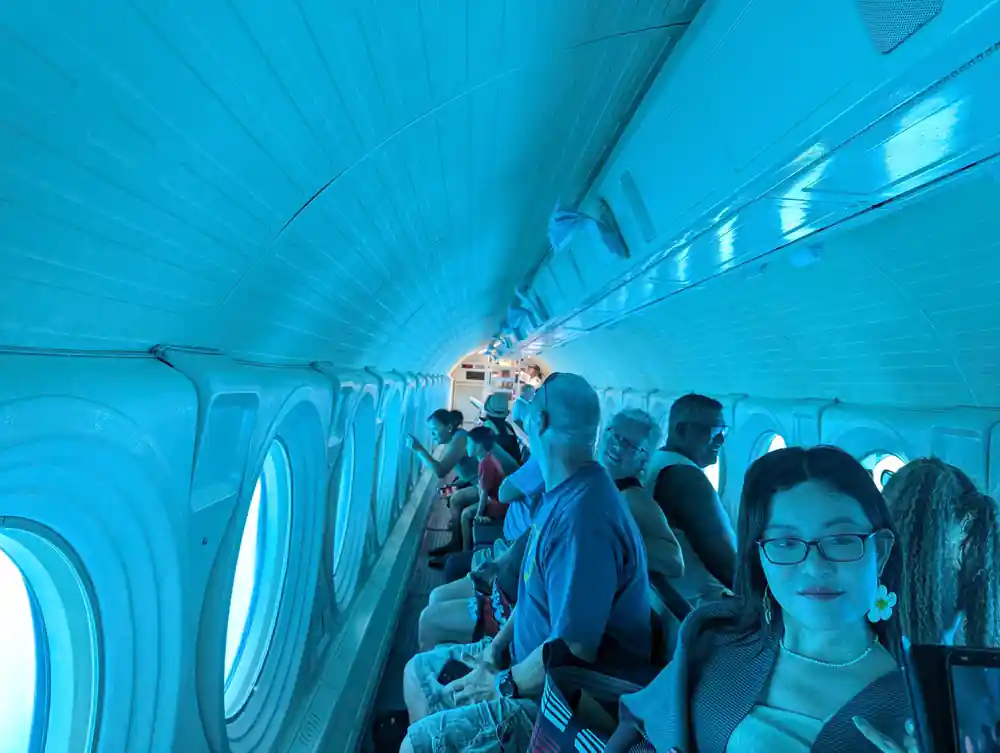
Fish respond to threat cues: sudden movement, erratic direction, bubbles, noise at close range. A diver on scuba produces all four. A large submarine moving slowly on a steady heading produces almost none of them, and the animals treat it much as they treat a passing cloud shadow.
The practical result is that you see undisturbed behaviour rather than fleeing behaviour. Shoals stay put. Turtles carry on resting. Morays do not withdraw.
It is a genuine trade against the intimacy of a dive: you are further away, but what you are looking at is behaving normally, and a diver often is not.
Thousands of fish, all on the structure
from US$168Reserve now & pay later