The main points
- Not coral. A reef community needs hard, complex, hole-filled surfaces.
- Films in days, invertebrates in weeks, fish almost immediately.
- Fuel, oil, wiring and anything that floats has to come out first.
- A reef can concentrate fish rather than create them. Siting and honesty matter.
The thing a sand plain lacks
It is tempting to think a reef is made of coral and that an artificial reef is therefore an attempt to grow some. That is not quite the logic.
What a reef community actually requires first is physical structure: something hard to attach to, something complex enough to create shade and current shadows, and above all something full of holes at a range of sizes so that animals of different sizes have somewhere to be that the things eating them cannot reach.
A sand plain has none of that. It is flat, mobile, and offers neither attachment nor shelter, which is why it supports a small number of specialists and almost nothing else.
Put a complex hard object on it and you have supplied the missing variable. Everything else follows from the surrounding ocean, which already contains the animals and only lacked somewhere to put them.
What happens, and how fast
The sequence is consistent enough to be predictable, and it is quicker than most people expect.
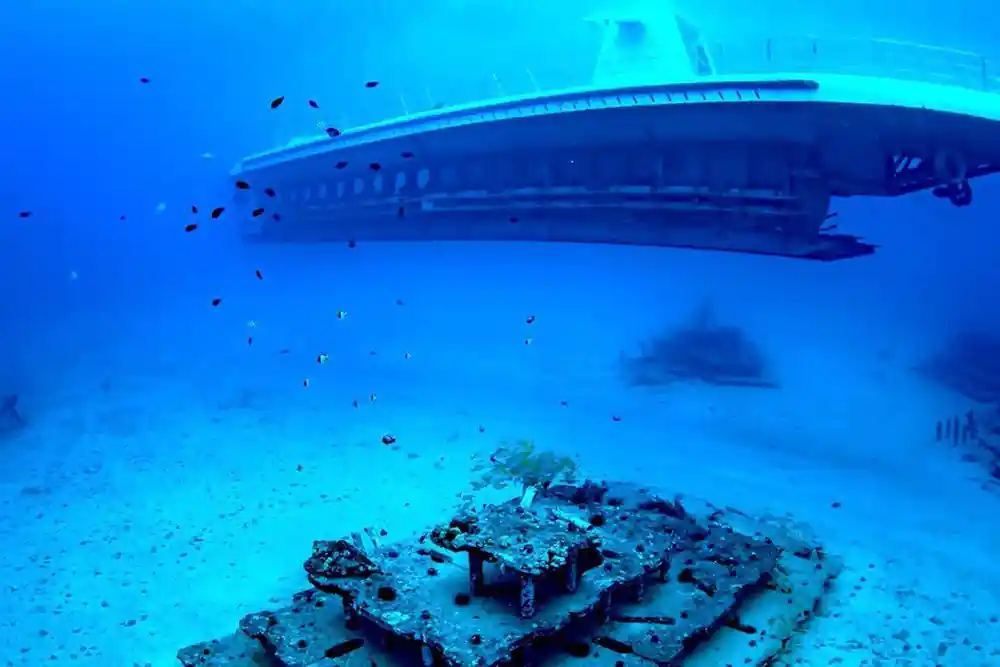
Within days, a biofilm of bacteria and diatoms covers every submerged surface. Within weeks, algae and the first invertebrate settlers - hydroids, bryozoans, small tube worms - are established. Within months there is a visible fur of growth and the first fish are using the structure for shelter.
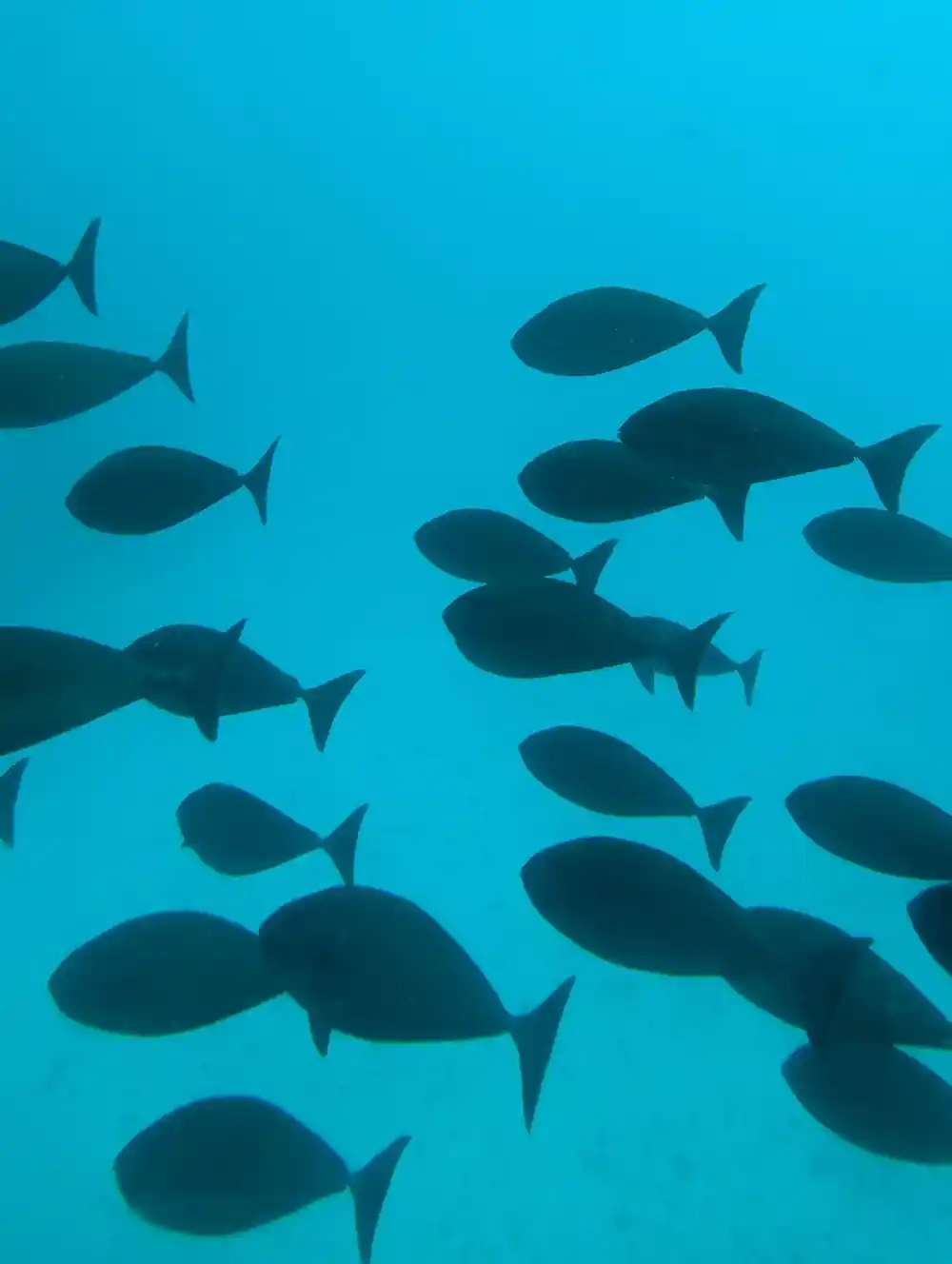
Fish arrive almost immediately, in fact, well before there is anything for them to eat on the structure itself. They come for the shelter, and they are drawn from the surrounding water within days of the thing landing.
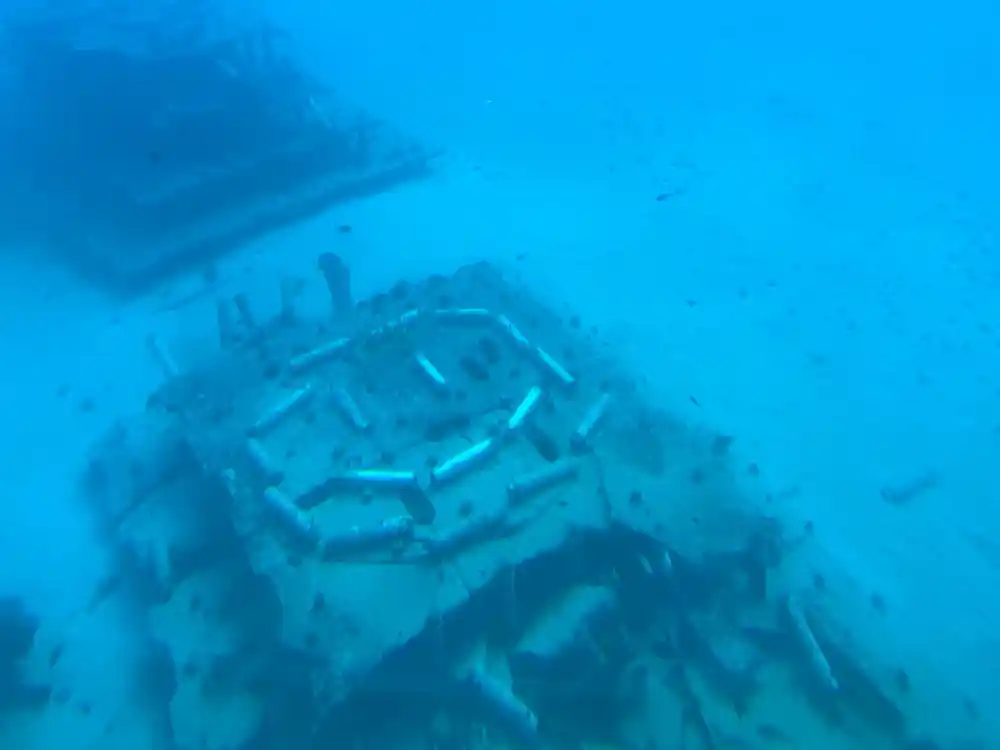
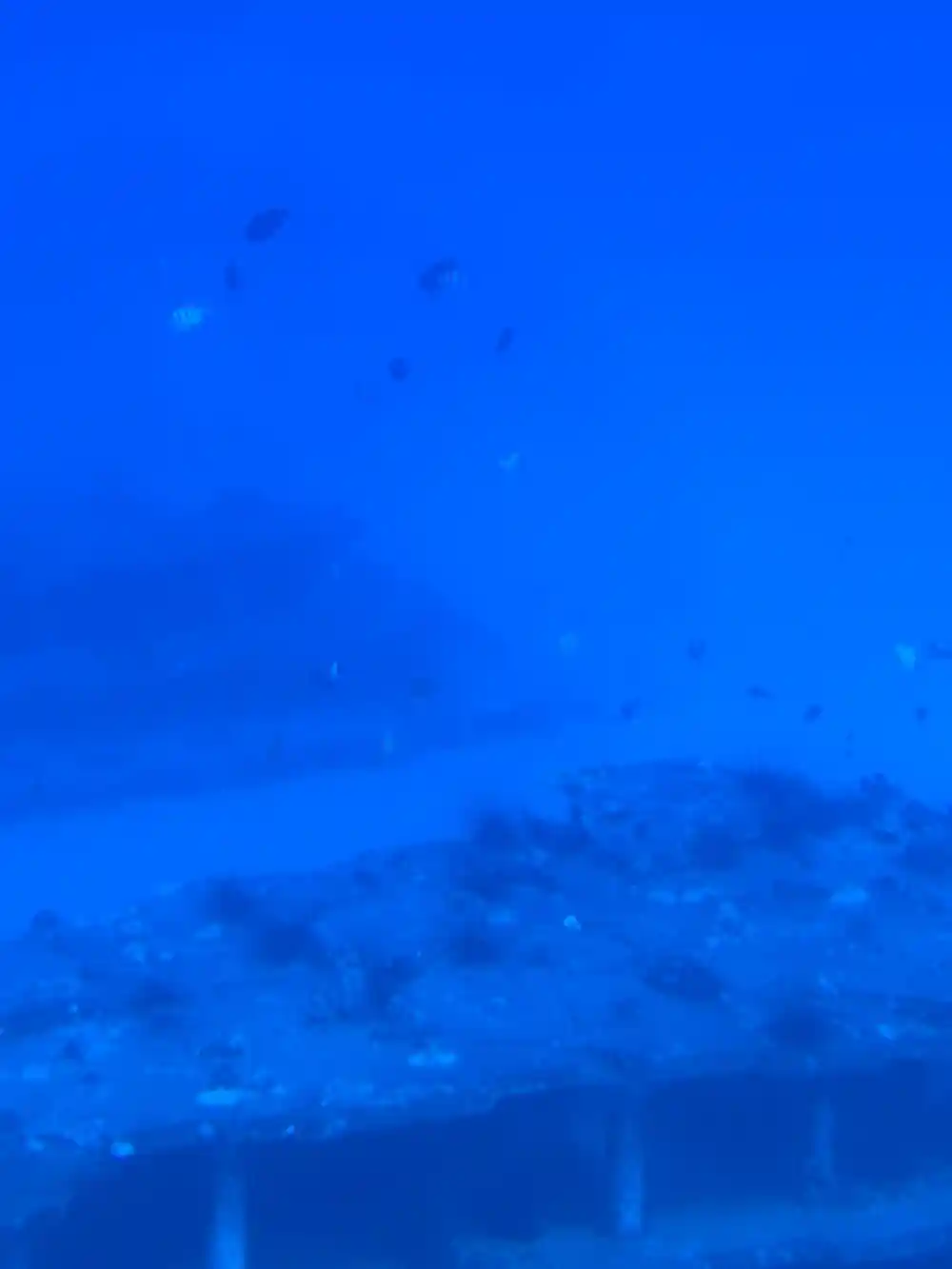
Over years the community matures. Encrusting growth thickens and diversifies. Corals settle. Corrosion opens new holes and each one is colonised. The fish population shifts from generalists to species with particular requirements, and predators establish.
A decade in, a sunken hull is not a ship with fish on it. It is a reef that happens to be ship-shaped.
Growth thickening on a sunken frame
The preparation, which is the expensive part
Sinking a vessel properly is a great deal of work and it is where responsible projects are distinguished from dumping.
Everything that could pollute comes out: fuel, lubricating oil, hydraulic fluid, coolant, batteries, and any material containing hazardous compounds. Wiring looms, insulation and foam are stripped because they degrade into fragments. Loose fittings, doors and anything that could break free and drift are removed or secured.
Then openings are cut deliberately. Large apertures are made through bulkheads and decks so that the interior floods evenly, so that fish and divers can move through without becoming trapped, and so that the hull does not create a maze with no exit.
Finally it is positioned. Towed to a surveyed site, held in place, and flooded in a controlled sequence so that it settles upright and where it is supposed to be, rather than rolling or drifting.
All of it takes real money and real work, and all of it is the difference between a reef and a liability.
Does it actually work
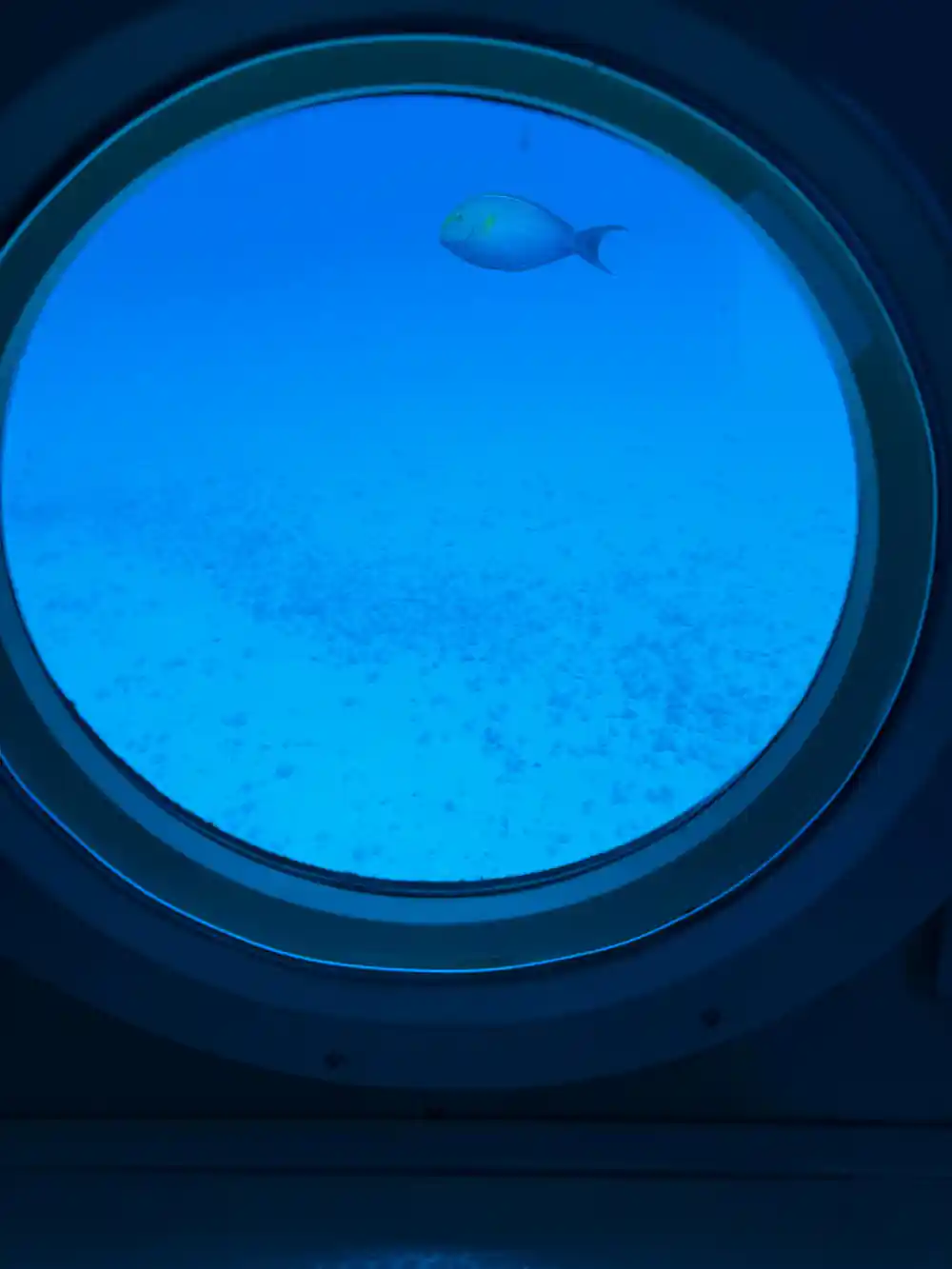
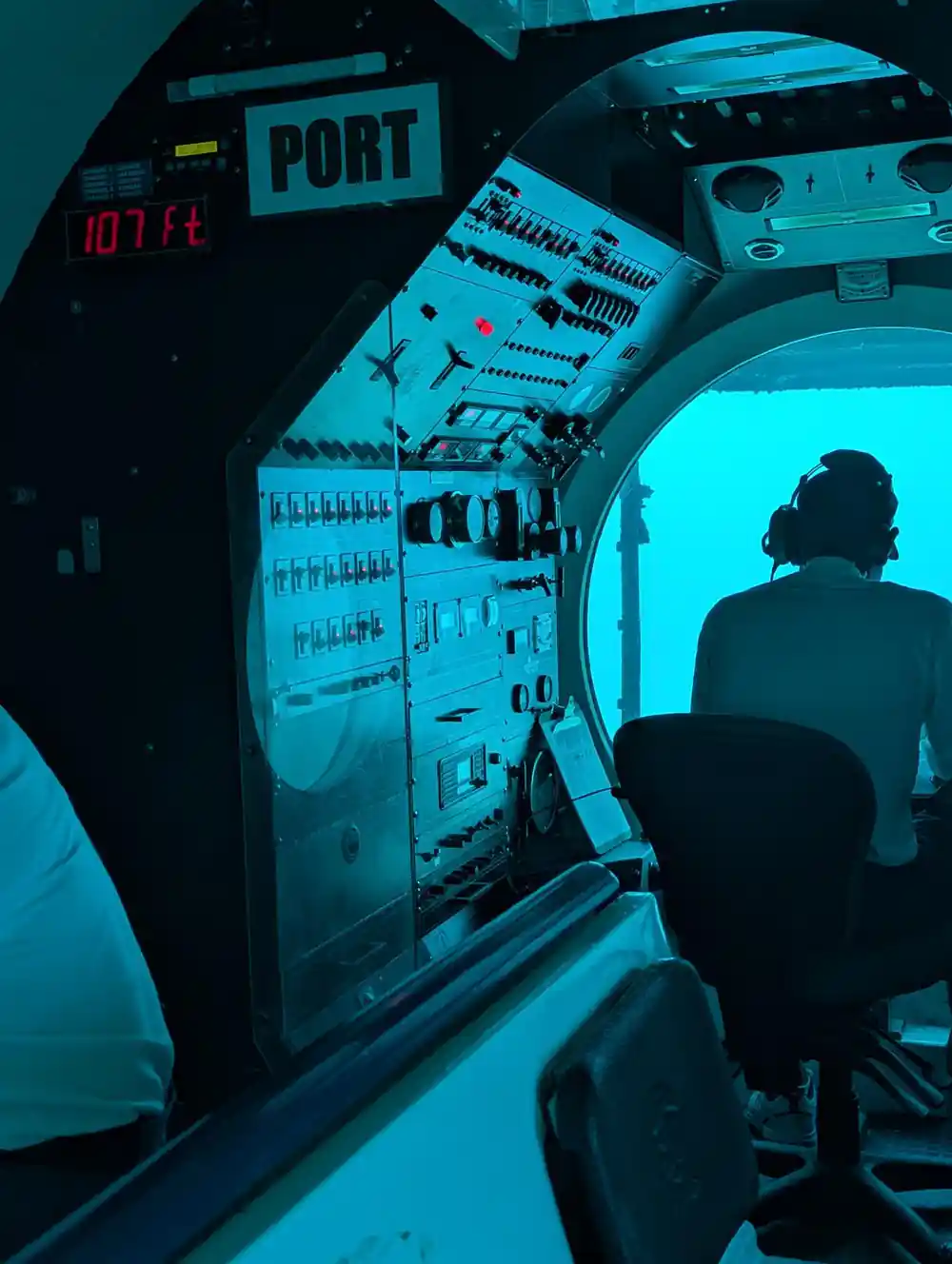
On the narrow question - does an artificial reef hold far more marine life than the bare bottom it replaced - the answer is unambiguous and is visible from the viewport. Empty sand, then a wall of fish, then empty sand again.
On the broader question there is a genuine and long-running scientific argument, and it is worth knowing rather than glossing over.
The concern is called attraction versus production. Does a new reef create additional fish, or does it merely gather up fish that already existed nearby and concentrate them in one place? If it is only concentration, then the reef has not helped the population and has arguably harmed it by making the fish easier to catch.
The evidence suggests it is genuinely both, in proportions that depend on the site, the species and the surrounding habitat. Where shelter was the limiting factor, new structure produces new fish. Where it was not, the reef mostly gathers.
The practical conclusion most researchers reach is that artificial reefs are a real tool that is easy to deploy badly, and that siting, preparation and honest monitoring are what separate the two outcomes.
The arguments against
There are several and none of them is silly.
Poorly prepared vessels leach contaminants, and there is a long history of material being sunk with insufficient cleaning. Badly sited reefs damage the seabed community that was already there, which is why nobody responsible puts a hull on living coral. Light structures move in storms and can end up somewhere destructive. And a reef built primarily to attract divers and fishing boats can increase pressure on the animals it gathers.
The answer to all of those is procedural rather than philosophical: clean properly, survey the site, choose the bottom carefully, weight adequately, and monitor afterwards.
It is also worth being clear about the honest motivation. Artificial reefs are usually built for several reasons at once - habitat, disposal, and creating somewhere for divers and submarines to go - and only the first of those is conservation. That is not a scandal. It is just worth saying out loud rather than pretending the tourism is incidental.
A sand plain, and then somewhere to live
from US$168Reserve now & pay later